



















How AI Search Is Changing SEO for Small Businesses in 2026
Discover how AI search is changing SEO for small businesses in 2026. Explore AI SEO strategies, local SEO, content optimization, and ways to generate more leads.
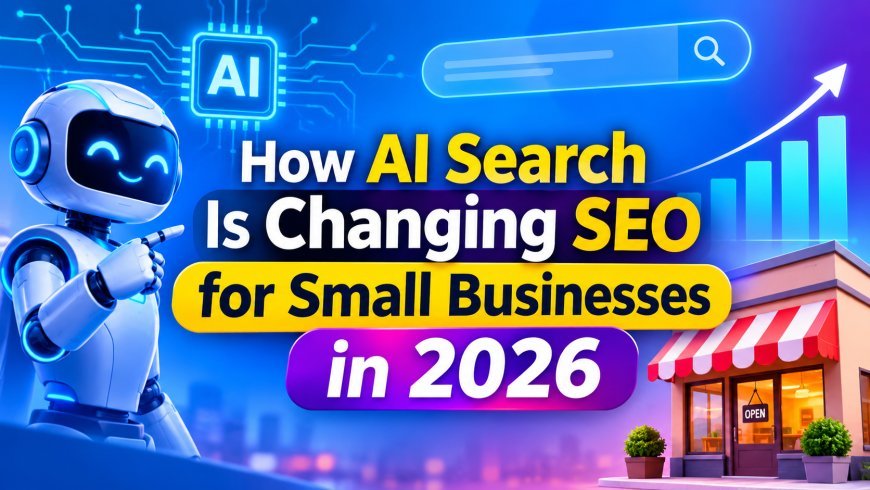
The way people search for products, services, and businesses online is changing rapidly. Traditional search engines are no longer the only places where customers discover brands. With the rise of artificial intelligence (AI), tools such as Google AI Overviews, Google AI Mode, ChatGPT, and other AI-powered search platforms are transforming how people find information and make purchasing decisions.
For small businesses, this shift brings both opportunities and challenges. Customers can now ask detailed questions, receive AI-generated recommendations, compare service providers, and discover local businesses without going through multiple traditional search results.
This means businesses need to rethink their digital marketing strategies. Ranking on Google's first page is still important, but building online authority, providing helpful information, maintaining accurate business details, and earning customer trust are becoming increasingly valuable.
In 2026, businesses that adapt to AI-driven search experiences can improve their online visibility, attract relevant audiences, and generate more qualified leads.
Let's explore how AI search is changing SEO for small businesses and what business owners can do to stay competitive.
1. Understanding the Rise of AI-Powered Search
Traditional search engines generally display a list of websites based on relevance, quality, and other ranking signals. Users browse those results, visit different websites, and compare information before making a decision.
AI-powered search is making this process more conversational.
Instead of searching for a short phrase such as "best plumbing company," a customer might ask:
- Which plumbing company offers affordable emergency services in my area?
- What should I consider before hiring a local plumber?
- Which service provider has the best customer reviews?
- How much does professional plumbing maintenance usually cost?
AI-powered search experiences can interpret these detailed questions and generate answers using information from multiple sources.
Google AI Overviews and AI Mode are examples of how this experience is evolving. They help users explore complex topics, discover relevant websites, and find information through conversational searches.
For small businesses, this creates another opportunity to become visible when potential customers are researching products or services.
The key is to publish useful, relevant, and trustworthy information that genuinely answers customer questions.
2. Traditional SEO Is Still Important, but the Strategy Is Evolving
One common misconception is that AI search has replaced traditional SEO. This is not true.
Search engine optimization remains the foundation of online visibility, even as AI-powered search experiences become more common.
Google's guidance continues to emphasize established SEO practices, including helpful content, technical accessibility, website usability, and relevant business information.
However, businesses must now think beyond traditional keyword rankings.
A successful SEO strategy should focus on:
- Creating content that answers real customer questions.
- Building topical authority within your industry.
- Improving website structure and navigation.
- Optimizing pages for relevant search intent.
- Maintaining accurate business information.
- Earning genuine reviews and relevant brand mentions.
- Providing a positive mobile browsing experience.
For example, a small accounting firm should not only target keywords such as "accounting services near me." It should also publish helpful resources explaining tax preparation, bookkeeping, financial planning, and common accounting challenges.
This approach helps establish the business as a useful source of information while supporting visibility across traditional and AI-powered search experiences.
3. AI Search Is Changing How Customers Discover Small Businesses
Customer discovery is becoming more conversational and research-driven.
People increasingly use natural-language questions to find businesses that match their specific needs. Instead of searching for a broad service category, they may describe their location, budget, requirements, and expectations in a single query.
Consider a customer looking for digital marketing services.
They might ask an AI search platform:
"Which digital marketing agency helps small businesses improve Google rankings and generate affordable leads?"
To become a potential recommendation, a business needs a clear online presence and credible information about its services.
Small businesses should make sure their websites clearly explain:
- What services they offer.
- Which customers they serve.
- What problems they solve.
- Which locations they cover.
- What makes their services different.
- How customers can contact them.
A well-organized website makes it easier for visitors and search systems to understand the business.
This is particularly important for service-based businesses that depend on local customers and qualified enquiries.
4. Local SEO Is Becoming More Valuable in the AI Search Era
Local search remains one of the most important digital marketing opportunities for small businesses.
When customers need a nearby service provider, they often look for businesses within their city, neighbourhood, or surrounding areas.
AI-powered search adds another layer to this discovery process by helping people find information about local services through detailed questions.
For example:
- Which SEO agency works with small businesses in New York?
- Where can I find an affordable electrician in Chicago?
- Which local bakery offers custom birthday cakes?
- What are the best-rated cleaning services near me?
To improve local visibility, small businesses should focus on the following activities:
Optimize Google Business Profile
Keep your business name, address, phone number, working hours, website, and service information accurate and updated.
Build Consistent Business Listings
Maintain consistent business information across relevant directories, industry platforms, and local websites.
Encourage Genuine Customer Reviews
Customer feedback helps potential buyers evaluate your business. Encourage satisfied customers to share honest experiences.
Create Location-Specific Website Content
Develop useful landing pages for the locations you actually serve. Include relevant local information rather than simply repeating city names.
Publish Local Content
Create articles about local industry challenges, customer needs, community activities, and relevant service topics.
A strong local SEO strategy can help small businesses attract customers who are actively looking for their services.
5. High-Quality Content Is Essential for AI Search Visibility
Content remains one of the strongest foundations of a successful SEO campaign.
However, publishing large numbers of generic blog posts is not enough. AI-powered search systems increasingly emphasize content that provides useful, original, and relevant information.
Small businesses should focus on answering the questions their customers genuinely ask.
For example, a small business website offering financial consulting could publish articles such as:
- How Can Startups Manage Their Monthly Expenses?
- What Are the Common Financial Mistakes Small Businesses Make?
- How Does Professional Bookkeeping Help Business Growth?
- When Should a Small Business Hire a Financial Consultant?
These topics address specific customer problems and provide opportunities to demonstrate industry expertise.
To improve content quality:
- Write clear and descriptive headings.
- Answer important questions directly.
- Include practical examples and actionable recommendations.
- Support claims with reliable information.
- Add original insights and professional experience.
- Keep information accurate and updated.
- Use relevant images, charts, and other helpful resources.
Avoid creating content solely to insert keywords or increase the number of indexed pages.
The objective should be to become a genuinely helpful resource within your industry.
6. Why Businesses Need to Focus on Topical Authority
Topical authority refers to the depth and consistency of information a website provides about a particular subject.
Instead of publishing unrelated articles, small businesses should develop a structured content strategy around their primary products and services.
For example, a company providing SEO services could create content around:
- Small business SEO strategies.
- Local SEO optimization.
- Technical SEO.
- Keyword research.
- On-page SEO.
- Content marketing.
- SEO reporting.
- Website optimization.
These related topics help build a comprehensive resource for customers interested in improving their online visibility.
Internal linking also plays an important role. Relevant blog posts should link naturally to supporting articles and service pages.
For example, an article about local SEO can link to a dedicated local SEO service page. Similarly, an educational guide about small business SEO can direct interested readers to a professional SEO services page.
This structure improves website navigation and helps visitors discover relevant services.
7. How AI Tools Are Transforming Keyword Research
Traditional keyword research often focuses on search volume, keyword difficulty, and competition.
AI tools are making it easier to explore customer questions, identify related topics, and understand search intent.
Small businesses can use AI-assisted research to discover:
- Long-tail keyword opportunities.
- Frequently asked customer questions.
- Related search topics.
- Competitor content gaps.
- Conversational search queries.
- Informational and commercial search intent.
For instance, instead of targeting only "small business SEO," a business can explore related questions such as:
- How does SEO help a small business grow?
- How much should a small business spend on SEO?
- How long does SEO take to generate leads?
- What should I look for when hiring an SEO agency?
These queries can become blog topics, FAQ sections, and supporting website content.
However, AI-generated keyword suggestions should always be reviewed against real customer needs and available search data.
The goal is not to target every possible keyword. It is to attract visitors who are genuinely interested in your products or services.
8. Why Choosing the Right SEO Partner Matters More Than Ever
SEO is becoming more complex as traditional search and AI-driven discovery continue to evolve.
Small business owners often have limited time, resources, and technical expertise to manage every aspect of digital marketing.
Working with a professional seo company for small business can help simplify the process by providing a structured strategy based on business goals.
An experienced SEO partner can help with:
- Website SEO audits.
- Keyword research and competitor analysis.
- On-page and technical optimization.
- Local SEO improvements.
- Content planning and development.
- Website performance monitoring.
- Organic traffic and lead generation strategies.
When selecting an SEO agency, businesses should look beyond promises of instant rankings.
A reliable provider should explain its strategy, communicate progress, focus on sustainable improvements, and connect SEO activities with measurable business outcomes.
The right seo company for small business should also understand the challenges of working with limited marketing budgets and prioritize activities that offer meaningful value.
Rather than focusing exclusively on traffic, businesses should measure qualified leads, enquiries, sales, and customer acquisition.
9. Website Experience and Technical SEO Still Matter
Even the most informative content may fail to generate business opportunities if visitors have a poor website experience.
AI search can help people discover a website, but the website itself must convince them to take the next step.
A well-optimized small business website should provide:
Mobile-Friendly Design: Ensure that visitors can easily browse your website on smartphones and tablets.
Fast Loading Speed: Optimize images, scripts, and other website elements to improve performance.
Clear Navigation: Organize service pages, blog posts, and important information logically.
Secure Browsing: Use HTTPS and maintain website security.
Accessible Content: Make important information easy to read and navigate.
Clear Calls to Action: Include visible contact details, enquiry forms, and service-related actions.
Technical SEO is equally important. Make sure important pages can be crawled and indexed, fix broken links, manage duplicate content, and use structured data where appropriate.
Structured data should accurately represent information that is visible on the page. It can help search engines interpret your content, although it does not guarantee inclusion in AI-generated answers.
10. Brand Reputation and Online Trust Influence Customer Decisions
Customers want to work with businesses they can trust.
This has always been important in digital marketing, but AI-driven discovery makes a consistent and credible online presence even more valuable.
Potential customers may encounter a business through its website, Google Business Profile, industry directories, customer reviews, articles, or third-party recommendations.
Small businesses should therefore build a consistent brand reputation across relevant platforms.
Here are some practical ways to improve online trust:
- Publish original and informative industry content.
- Collect genuine customer testimonials.
- Display accurate contact and business information.
- Showcase relevant projects and case studies.
- Maintain active and professional social media profiles.
- Earn mentions from relevant industry websites.
- Demonstrate expertise through helpful educational resources.
Avoid buying fake reviews or creating artificial brand mentions.
The goal is to build a reputation that customers can verify through real experiences and credible information.
A professional seo company for small business can help develop a long-term strategy for improving search visibility while strengthening the brand's digital presence.
11. Measuring SEO Performance in the Age of AI Search
Traditional SEO reporting often focuses on keyword rankings, impressions, clicks, and organic traffic.
These metrics remain useful, but small businesses should also pay attention to the quality of visitors and their contribution to business growth.
AI search experiences may change how people interact with search results. Some users may find answers directly within an AI-generated response, while others may click through to a website for additional details.
This means website owners should look beyond traffic numbers alone.
Important performance indicators include:
- Organic search impressions.
- Organic website clicks.
- Keyword visibility.
- Qualified website enquiries.
- Conversion rates.
- Phone calls and contact form submissions.
- Revenue generated through organic channels.
- Engagement with important service pages.
Google Search Console and Google Analytics can help monitor website performance and understand how visitors discover and interact with your content.
Where available, use the relevant Search Console reporting to monitor performance across Google's generative AI search experiences.
A good SEO strategy should connect these insights with measurable business objectives.
12. Practical AI SEO Strategies Small Businesses Should Follow in 2026
Adapting to AI search does not require a complete website redesign or an unlimited marketing budget.
Small businesses can begin with manageable improvements and gradually develop a stronger search presence.
Here are ten practical steps to consider:
- Audit Your Website: Identify technical issues, outdated pages, and missing content.
- Understand Your Audience: Research the questions customers ask before purchasing.
- Improve Existing Content: Update important pages with accurate, useful, and relevant information.
- Build Topic Clusters: Create related articles around your main services.
- Optimize Local Presence: Maintain an accurate Google Business Profile and consistent business listings.
- Improve Website Speed: Focus on mobile usability and overall page experience.
- Develop Original Content: Include industry insights, examples, and practical advice.
- Build Brand Credibility: Encourage genuine reviews and earn relevant industry mentions.
- Use AI Responsibly: Apply AI tools for research and productivity while ensuring human review and originality.
- Track Business Results: Measure leads, enquiries, conversions, and revenue rather than relying only on rankings.
These activities provide a practical foundation for improving visibility across traditional search engines and emerging AI-powered discovery platforms.
13. The Future of Small Business SEO: What to Expect Beyond 2026
AI-powered search is still evolving, and businesses should expect further changes in how customers discover and evaluate products and services.
Conversational search, personalized recommendations, multimodal discovery, and AI-assisted purchasing experiences are likely to influence digital marketing strategies.
Small businesses should prepare by focusing on a few long-term priorities.
Greater Focus on Search Intent
Understanding what customers want will be more important than simply targeting individual keywords.
More Valuable Original Content
Businesses that share real expertise, useful experiences, and original information can differentiate themselves from generic online content.
Stronger Local Business Information
Accurate service details, locations, contact information, and customer reviews will remain important for local discovery.
Better User Experiences
Fast, accessible, mobile-friendly websites will help turn search visibility into meaningful customer interactions.
A Stronger Brand Presence
Building trust across websites, industry platforms, and relevant online communities can support long-term discoverability.
Businesses that combine these priorities with established SEO fundamentals will be better positioned to adapt as search technology changes.
Conclusion
AI search is changing how customers discover businesses, research services, and make purchasing decisions. However, the fundamentals of successful SEO remain important.
Small businesses should continue investing in helpful content, technical optimization, local search visibility, brand credibility, and positive website experiences.
The biggest opportunity is to move beyond chasing rankings and focus on becoming a trusted resource that customers genuinely want to find.
If managing these activities seems challenging, partnering with a professional seo company for small business can help you develop a practical strategy, strengthen your online presence, and attract more relevant customers.
What's Your Reaction?
 Like
0
 Dislike
0
 Love
0
 Funny
0
 Angry
0
 Sad
0
 Wow
0