


















Hydraulic Hose Pipe Manufacturers in India: What to Check
Learn how to evaluate hydraulic hose pipe manufacturers in India by checking specifications, supplier documentation, quality control and delivery terms.
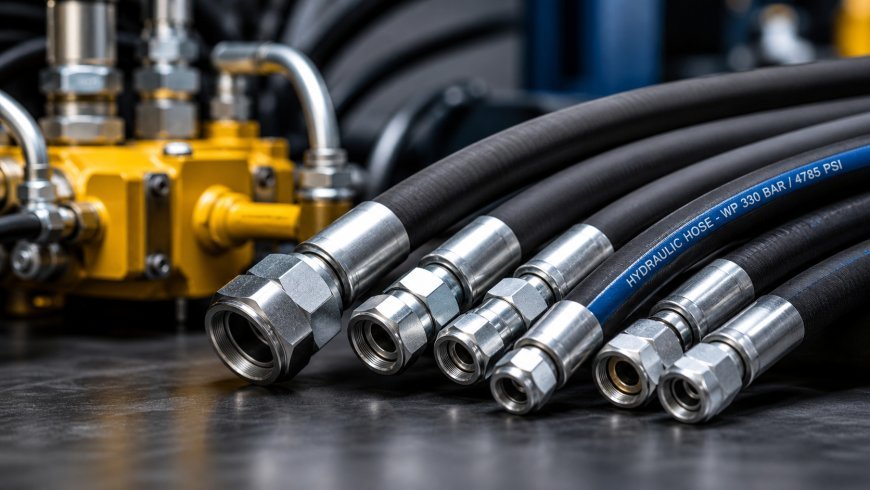
When a hydraulic hose fails after installation, the purchase price is rarely the only concern. Production interruptions, oil leakage, replacement labour and delayed dispatches can quickly outweigh the original cost of the hose. For procurement teams comparing Hydraulic Hose Pipe options in India, the real challenge is identifying a product that matches the equipment's operating requirements and a supplier who can document exactly what is being quoted.
Specification: What Should Buyers Verify?
Selecting a Hydraulic Hose Pipe starts with the equipment, not the catalogue description. Two hoses may appear similar but differ in pressure, flexibility, construction or connection compatibility. Those differences can affect installation and operating safety.
Working pressure and operating conditions
Confirm the required working pressure and any applicable pressure peaks. The hose assembly must be suitable for the system's operating conditions, including temperature, hydraulic fluid compatibility and routing.
Dimensions and end connections
Check the required inside diameter, overall length, end fitting type, thread details and connection orientation. A hose with the correct diameter but an incompatible fitting can delay installation or require an unplanned replacement.
Specification compliance
Record the approved hose specification in the purchase order. If an alternative product is proposed, request written confirmation of the differences before approving the substitution. A sample should be assessed against the actual application, not accepted simply because it fits the connection.
Objective: Five Criteria for Evaluating Suppliers
Comparing Hydraulic Hose Pipe Suppliers requires more than checking unit prices. Use these five criteria before shortlisting a vendor.
1. Technical understanding
-
Check: Can the supplier explain the required pressure, fluid compatibility, dimensions and fitting details?
-
Why it matters: Incorrect assumptions can result in an unsuitable hose assembly.
-
Good answer: A quotation linked to your documented requirements.
-
Warning sign: A recommendation based only on a photograph or an approximate size.
2. Documentation and traceability
-
Check: Ask which product datasheets, conformity documents and batch records are available.
-
Why it matters: Documentation helps procurement teams verify what they ordered.
-
Good answer: Clear identification of the offered product and applicable supporting records.
-
Warning sign: A certificate with no clear connection to the quoted product or manufacturer.
3. Sample approval and quality control
-
Check: Establish whether a sample can be reviewed and what inspection evidence is available.
-
Why it matters: A sample approved for dimensions alone may still leave pressure or fluid compatibility unresolved.
-
Good answer: Written acceptance criteria covering the relevant technical requirements.
-
Warning sign: Treating an initial sample as proof that every future production batch will be identical.
4. MOQ and commercial terms
-
Check: Confirm the minimum order quantity (MOQ), price breaks, payment terms and whether mixed sizes are permitted.
-
Why it matters: Excess inventory can tie up working capital, while frequent small orders may increase purchasing and freight costs.
-
Good answer: A quotation that separates unit price, order conditions and additional charges.
-
Warning sign: Accepting a bulk discount before checking storage requirements and actual consumption.
5. Lead time and order communication
-
Check: Request an estimated dispatch date, order confirmation and notification procedure for delays.
-
Why it matters: Maintenance teams and production planners need realistic replenishment dates.
-
Good answer: A written schedule with clear responsibility for communicating changes.
-
Warning sign: An unqualified delivery promise without confirming stock, assembly requirements or transport arrangements.
Benefits: What Better Supplier Selection Protects
A disciplined sourcing process can deliver six practical advantages:
-
Lower failure risk: Matching operating pressure, temperature and fluid requirements reduces the risk of selecting an unsuitable hose.
-
Fewer installation problems: Checking fittings, thread details and hose length before dispatch helps avoid last-minute modifications.
-
More predictable purchasing costs: Comparing complete quotations reveals the effect of freight, packaging and minimum quantities.
-
Better quality consistency: Documented acceptance criteria make differences between approved samples and subsequent batches easier to identify.
-
Less production disruption: Realistic replenishment planning gives maintenance teams more time to arrange replacements.
-
Clearer complaint resolution: Purchase orders, product identification and inspection records help establish what was supplied when a problem occurs.
There is a trade-off: a more thoroughly documented procurement process can take longer at the quotation stage. For critical hydraulic applications, however, skipping verification may create much greater costs later.
Availability: Plan Sourcing and Freight Before Ordering
India's industrial buyers may source hoses locally, regionally or from suppliers serving multiple states. The appropriate choice depends on product requirements, order quantity, transport arrangements and replenishment needs.
For buyers sourcing from Ghaziabad, proximity may simplify communication or collection, but it does not automatically mean a product is available for immediate dispatch.
About Us: N.T Associates
At N.T Associates, we work with hydraulic and industrial components for business requirements in India. Our website lists Hydraulic Hose Pipe, hydraulic hoses and fittings, and high-pressure hydraulic hose products within our hydraulic product range.
Request a Hydraulic Hose Pipe Quotation
We invite procurement teams, industrial buyers and resellers to share their requirements with us. To help us understand your enquiry, please include:
-
Required quantity and expected order frequency.
-
Hose dimensions, working pressure and application details.
-
Fluid type, operating temperature and fitting specifications.
-
Target market and delivery location.
-
Packaging requirements and any sampling or documentation needs.
Contact us at +91-76786-03764 or ntat@rocketmail.com.
Conclusion
Choosing among Hydraulic Hose Pipe Manufacturers in India requires a clear understanding of operating conditions, documented specifications, quality checks and realistic delivery commitments. Buyers should evaluate the complete hose assembly and total procurement cost rather than making decisions on unit price alone. As equipment requirements and replenishment patterns change, maintaining approved specifications and reliable supplier communication can make future purchasing decisions more predictable.
Frequently Asked Questions
1. What should I check before buying a Hydraulic Hose Pipe?
Verify working pressure, temperature range, fluid compatibility, inside diameter, hose length, fitting details and minimum bend radius. Match these requirements to the equipment manufacturer's recommendations.
2. How do I evaluate Hydraulic Hose Pipe Suppliers?
Compare technical understanding, product documentation, sample approval, quality-control evidence, commercial terms and dispatch communication. Request written clarification wherever a quotation leaves specifications unresolved.
3. Is the cheapest hydraulic hose the best option?
Not necessarily. A lower purchase price may be offset by unsuitable fittings, premature replacement, freight charges or installation delays. Compare the total expected procurement cost, while recognizing that a higher price alone does not prove better quality.
4. Should I request a sample before placing a bulk order?
For new suppliers or unfamiliar products, sample approval can help verify dimensions, fittings and other agreed criteria. However, a sample cannot establish the consistency of every subsequent batch without appropriate production and inspection controls.
5. What information should I provide when requesting a quotation?
Share the required quantity, operating pressure, fluid type, temperature, dimensions, fitting details, application, delivery location and packaging requirements. Drawings or existing part references may help clarify the specification, but confirm that the supplier can interpret them correctly.
What's Your Reaction?
 Like
0
 Dislike
0
 Love
0
 Funny
0
 Angry
0
 Sad
0
 Wow
0