























Minoxidil 2.5 mg Tablet for Hair Loss: Uses, Benefits, Dosage, and Side Effects
Minoxidil 2.5 mg tablets help with hair loss. Explore potential benefits, dosage, side effects, treatment duration, and safety precautions.
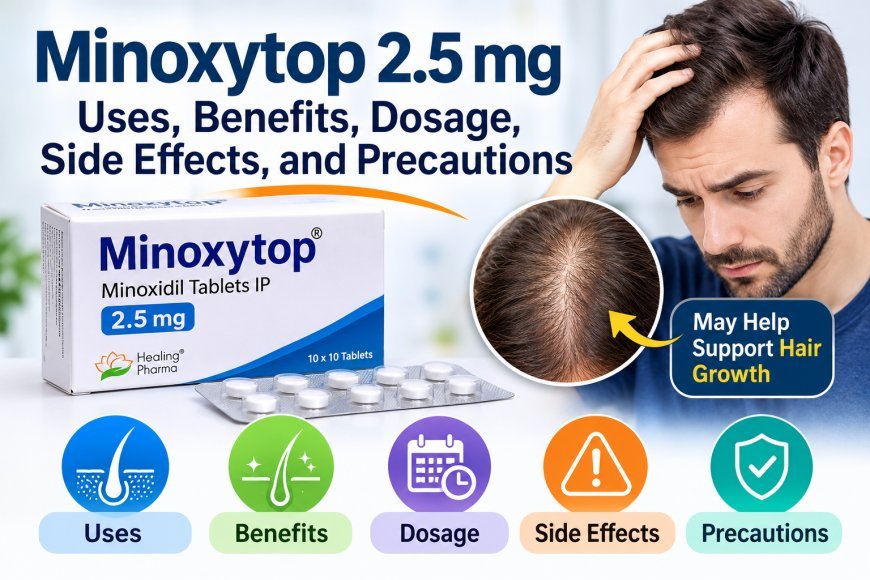
Hair loss can affect confidence and appearance, especially when hair starts becoming thinner around the hairline, crown, or top of the scalp. Genetic factors, hormonal changes, ageing, and certain health conditions can contribute to gradual hair thinning.
Minoxidil is one of the medicines used to manage hair loss and encourage hair regrowth. While topical minoxidil is applied directly to the scalp, oral minoxidil is available in tablet form and may be prescribed by dermatologists for certain hair loss conditions.
Minoxidil 2.5 mg tablets are a low-dose oral treatment option that may help improve hair thickness and density in some people. However, oral minoxidil is used off-label for hair loss and requires medical supervision.
In this article, we will explain how minoxidil 2.5 mg works, its potential benefits, dosage considerations, side effects, and how long it may take to see results.
What Is Minoxidil 2.5 mg Tablet?
Minoxidil 2.5 mg is an oral medication containing minoxidil as its active ingredient. It belongs to a class of medicines called vasodilators, which relax blood vessels and help improve blood flow.
Minoxidil was originally developed to treat severe high blood pressure. During its use, researchers noticed increased hair growth as an unexpected effect.
This discovery led to the use of minoxidil in hair loss treatment.
Dermatologists may prescribe low-dose oral minoxidil to people experiencing:
-
Male pattern baldness.
-
Female pattern hair loss.
-
Gradual hair thinning.
-
Certain types of non-scarring alopecia.
It is important to understand that oral minoxidil is not officially approved specifically for hair loss in many countries. Its use for this purpose is considered off-label.
How Does Minoxidil 2.5 mg Work for Hair Loss?
Minoxidil may support hair growth by influencing hair follicle activity and the natural hair growth cycle.
Although its exact mechanism is not fully understood, researchers have identified several possible ways it supports hair growth.
1. Supports Hair Follicle Activity
Minoxidil may help stimulate hair follicles that have become weakened or smaller because of pattern hair loss. This can encourage follicles to produce thicker hair strands.
2. Extends the Hair Growth Phase
Hair naturally passes through different stages, including growth, transition, and resting.
The active growth stage is called the anagen phase. Minoxidil may help extend this phase, allowing hair to grow for a longer period.
3. Helps Improve Hair Thickness
People experiencing pattern hair loss often develop thinner hair because their follicles gradually become smaller.
Minoxidil may help improve hair thickness and the appearance of hair density over time.
4. Supports Hair Regrowth
By influencing follicle activity and the hair growth cycle, minoxidil may encourage regrowth in some areas affected by hair thinning.
However, results depend on the cause and severity of hair loss, as well as individual response to treatment.
What Are the Benefits of Minoxidil 2.5 mg Tablets?
Low-dose oral minoxidil offers several potential benefits for people experiencing hair thinning.
May Improve Hair Density
Minoxidil may help increase the number of visible growing hairs in people with pattern hair loss. This can improve overall scalp coverage.
Supports Thicker Hair
Some people notice that previously thin hair strands become thicker with continued treatment.
Convenient Oral Treatment
Unlike topical products, which need to be applied directly to the scalp, oral minoxidil is taken as a tablet. This may be convenient for people who find topical applications difficult to use consistently.
Alternative to Topical Minoxidil
People who experience scalp irritation, itching, or difficulty applying topical minoxidil may be considered for oral treatment by their dermatologist.
However, oral treatment has a greater potential for systemic side effects and is not necessarily more effective for everyone.
What Is the Recommended Dosage of Minoxidil 2.5 mg?
The appropriate dose of oral minoxidil depends on several factors, including age, sex, medical history, blood pressure, and the type of hair loss.
Dermatologists may use different doses for men and women.
Commonly studied low-dose oral minoxidil ranges include:
|
Patient group |
Daily dose used in clinical practice |
|---|---|
|
Men |
1–5 mg |
|
Women |
0.5–1 mg initially in many treatment protocols |
Some women may be prescribed higher doses when appropriate.
A 2.5 mg tablet is not automatically suitable for everyone. Your dermatologist should determine the correct dose and whether the tablet needs to be adjusted.
Important: Do not start taking minoxidil 2.5 mg daily without medical advice. The dosage used for hair loss is different from the dosage used to treat high blood pressure.
What Are the Side Effects of Minoxidil 2.5 mg?
Although oral minoxidil may help with hair growth, it can also cause unwanted effects because it enters the bloodstream.
Some possible side effects include:
1. Unwanted Facial and Body Hair
Excessive hair growth, medically known as hypertrichosis, is one of the commonly reported side effects.
You may notice additional hair on the face, cheeks, forehead, arms, and legs.
2. Swelling in the Feet and Ankles
Oral minoxidil can cause fluid retention, resulting in swelling around the feet, ankles, or lower legs.
Sudden weight gain may also occur because of excess fluid.
3. Low Blood Pressure
Minoxidil relaxes blood vessels and may lower blood pressure.
Possible symptoms include:
-
Dizziness.
-
Light-headedness.
-
Weakness.
-
Feeling faint when standing up.
4. Increased Heart Rate
Some people experience a faster heartbeat or palpitations while taking oral minoxidil.
People with existing heart conditions should discuss the risks with their doctor before starting treatment.
5. Initial Hair Shedding
Some people experience temporary increased hair shedding during the early stages of treatment.
This may happen as hair follicles transition between different growth stages. Persistent or severe shedding should be evaluated by a dermatologist.
6. Serious Cardiovascular Side Effects
Rarely, oral minoxidil can cause serious complications, including fluid around the heart (pericardial effusion).
Seek urgent medical attention if you experience chest pain, difficulty breathing, fainting, or a persistent rapid or irregular heartbeat.
How Long Does Minoxidil 2.5 mg Take to Show Results?
Hair growth is a gradual process. Minoxidil needs time to influence the hair growth cycle, so you should not expect immediate results.
Here is a general timeline:
|
Treatment period |
What you may notice |
|---|---|
|
First 1–2 months |
Temporary increased shedding may occur |
|
Around 3 months |
Early improvements may become noticeable |
|
4–6 months |
Hair thickness and density may improve |
|
6–12 months |
More noticeable improvements may develop |
These timelines are estimates, not guaranteed results. Some people respond earlier, while others need more time.
Your dermatologist can assess treatment progress using scalp examinations and photographs.
Oral Minoxidil vs Topical Minoxidil
Both oral and topical minoxidil are used to manage hair loss, but they differ in how they are administered.
|
Feature |
Oral Minoxidil |
Topical Minoxidil |
|---|---|---|
|
Form |
Tablet |
Liquid or foam |
|
Application |
Taken by mouth |
Applied to scalp |
|
Action |
Systemic |
Primarily local |
|
Convenience |
Easy to take |
Requires regular application |
|
Common side effects |
Fluid retention, unwanted body hair, dizziness |
Scalp irritation, itching |
|
Medical supervision |
Important |
Also recommended |
A clinical trial published in 2024 compared oral minoxidil 5 mg with topical minoxidil 5% in men. It found no statistically significant overall superiority of oral treatment after 24 weeks.
Therefore, oral minoxidil is not necessarily a better choice than topical minoxidil. The appropriate option depends on individual circumstances.
Who Should Avoid Minoxidil 2.5 mg?
Oral minoxidil may not be suitable for everyone. Certain medical conditions can increase the risk of complications.
People with the following conditions should seek medical advice before considering treatment:
-
Heart failure or significant heart disease.
-
Low blood pressure.
-
Previous pericardial disease.
-
Kidney problems.
-
Certain heart rhythm disorders.
-
A history of fluid retention.
Pregnant or breastfeeding women should avoid using oral minoxidil for hair loss unless specifically advised by an appropriate specialist.
Tell your doctor about any prescription medicines or supplements you currently take, particularly medicines that affect blood pressure or fluid balance.
Can You Take Minoxidil 2.5 mg Long Term?
Some people use low-dose oral minoxidil for extended periods when it provides satisfactory results and remains well tolerated.
However, long-term use requires regular medical monitoring. Your healthcare professional may check your blood pressure, heart rate, body weight, and signs of fluid retention.
It is also important to understand that minoxidil does not permanently cure genetic hair loss. If you stop treatment, the benefits may gradually disappear and hair thinning can return.
Do not discontinue prescribed treatment without discussing it with your healthcare professional.
Frequently Asked Questions (FAQs)
1. Is Minoxidil 2.5 mg Good for Hair Loss?
Minoxidil 2.5 mg may help improve hair thickness and density in some people experiencing pattern hair loss. However, results vary, and oral treatment should only be used under medical supervision.
2. Can I Take Minoxidil 2.5 mg Every Day?
Dermatologists sometimes prescribe oral minoxidil daily for hair loss. However, the appropriate dose and treatment schedule depend on individual health and medical assessment.
3. Does Minoxidil 2.5 mg Cause Weight Gain?
Oral minoxidil can cause fluid retention, which may lead to weight gain and swelling around the ankles and feet. Report unexpected weight gain to your doctor.
4. Can Women Use Minoxidil 2.5 mg Tablets?
Some women are prescribed oral minoxidil for female pattern hair loss. However, treatment often starts at a lower dose because unwanted facial and body hair growth can occur.
5. What Happens If I Stop Taking Minoxidil?
If you stop taking oral minoxidil for hair loss, the improvements may gradually disappear over the following months. Hair may return to its previous thinning pattern.
Conclusion
Minoxidil 2.5 mg tablets may be a useful treatment option for people experiencing pattern hair loss. The medication can help stimulate hair follicles, improve hair thickness, and support hair regrowth in some patients.
However, oral minoxidil is not suitable for everyone. Possible side effects include unwanted body hair growth, fluid retention, dizziness, low blood pressure, and changes in heart rate.
Before starting treatment, consult a dermatologist to identify the cause of your hair loss and determine whether oral minoxidil is appropriate for you.
What's Your Reaction?
 Like
0
 Dislike
0
 Love
0
 Funny
0
 Angry
0
 Sad
0
 Wow
0