











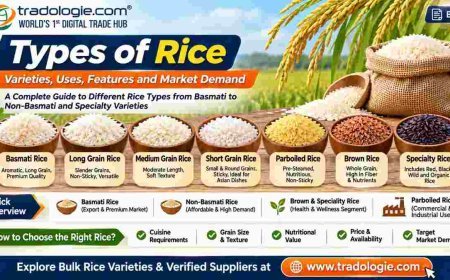










Types of Rice: Different Rice Varieties, Characteristics and Uses
Discover different types of rice, including basmati, non-basmati, long-grain, brown and parboiled rice. Learn their characteristics, uses and sourcing options.

Rice is a staple food consumed across the world and an important agricultural commodity in international trade. From aromatic basmati rice used in biryani to short-grain rice used in sushi, different rice varieties offer distinct flavours, textures, nutritional characteristics and cooking properties.
Understanding the different types of rice helps consumers, wholesalers, importers, food manufacturers and distributors select suitable varieties according to their requirements.
India produces numerous rice varieties, including basmati, non-basmati, Sona Masoori, Matta and parboiled rice, serving domestic consumption and international export markets.
What Are the Different Types of Rice?
Rice is primarily classified according to grain length, processing method, aroma, colour and cooking characteristics.
|
Type of Rice |
Characteristics |
Common Uses |
|---|---|---|
|
Basmati Rice |
Aromatic, elongated grains |
Biryani and pulao |
|
Long Grain Rice |
Slender, separate grains |
Fried rice and everyday meals |
|
Medium Grain Rice |
Tender, slightly sticky texture |
Rice bowls and regional dishes |
|
Short Grain Rice |
Short, plump grains |
Sushi and rice pudding |
|
Brown Rice |
Retains bran and germ |
Wholegrain meals |
|
White Rice |
Polished grains |
Everyday cooking |
|
Parboiled Rice |
Partially boiled before milling |
Commercial catering |
|
Black Rice |
Dark pigmentation |
Salads and speciality dishes |
|
Red Rice |
Reddish bran layer |
Traditional meals |
|
Jasmine Rice |
Naturally fragrant |
Southeast Asian cuisine |
|
Glutinous Rice |
Highly sticky when cooked |
Desserts and Asian dishes |
1. Basmati Rice
Basmati rice is a premium aromatic rice variety recognised for its long grains, distinctive fragrance and grain elongation during cooking.
It is particularly popular in Indian, Pakistani and Middle Eastern cuisines.
Popular Types of Basmati Rice
-
1121 Basmati Rice
-
1509 Basmati Rice
-
1401 Basmati Rice
-
1718 Basmati Rice
-
Traditional Basmati Rice
-
Pusa Basmati Rice
Golden Sella, White Sella and Steam Basmati are processing or commercial forms available across several basmati varieties.
Importers, wholesalers and distributors can explore the basmati rice marketplace for bulk sourcing opportunities.
2. Non-Basmati Rice
Non-basmati rice includes rice varieties that do not belong to the basmati group. These varieties differ in grain size, aroma, texture and commercial applications.
Popular non-basmati rice varieties include IR64, IR36, PR106, Sona Masoori and Matta rice.
Non-basmati rice is widely used for everyday meals, institutional catering, food processing and wholesale distribution.
Exporters can explore opportunities involving non-basmati rice buyers in Nigeria, subject to applicable import regulations.
3. Long Grain Rice
Long grain rice has slender grains that generally remain separate after cooking when prepared correctly. It is suitable for fried rice, pulao, commercial catering and everyday consumption.
Popular commercially traded varieties include IR64, IR36, PR106 and IRRI-6.
Businesses looking for bulk procurement can explore long grain rice suppliers through Tradologie.
4. Medium Grain Rice
Medium grain rice has shorter and wider grains than long grain rice. Depending on the variety, it develops a tender or slightly sticky texture after cooking.
Calrose and several regional Indian rice varieties fall within this category. Medium grain rice is commonly used in rice bowls, regional dishes and commercial food preparation.
5. Short Grain Rice
Short grain rice has compact, rounded grains that often become soft and sticky after cooking. It is commonly used in Japanese and Korean cuisines, sushi, rice pudding and traditional desserts.
Its cooking properties make it suitable for dishes requiring grains that hold together.
6. Brown Rice
Brown rice is wholegrain rice that retains its bran and germ after the outer husk is removed. Compared with polished white rice, it generally contains more dietary fibre.
Brown rice is available in long, medium and short-grain varieties and is commonly used in wholegrain meals, salads and speciality food products.
7. Parboiled Rice
Parboiled rice undergoes soaking, steaming and drying before milling. This processing method changes the grain's cooking characteristics and can improve its resistance to breakage during milling.
Parboiled rice is widely traded across African, Asian and Middle Eastern markets.
Golden Sella rice is a commercially recognised form of parboiled rice.
8. Black Rice
Black rice contains naturally occurring pigments called anthocyanins, which give its bran a dark purple or black appearance.
Chak-Hao, associated with Manipur, is a well-known Indian black rice variety. Black rice is commonly used in speciality meals, traditional desserts and premium packaged food products.
9. Red Rice
Red rice gets its distinctive colour from pigments present in the bran layer. It generally has a nutty flavour and a firmer texture than polished white rice.
Kerala Matta rice is a popular Indian rice variety known for its reddish bran and traditional culinary applications.
10. Jasmine Rice
Jasmine rice is a naturally aromatic, long-grain rice associated particularly with Thailand and other Southeast Asian countries.
It develops a soft, slightly sticky texture after cooking and is commonly served with curries, stir-fried vegetables and Asian dishes.
Popular Rice Varieties in India
|
Rice Variety |
Major Producing Regions |
Common Uses |
|---|---|---|
|
Basmati |
Punjab, Haryana, Uttar Pradesh |
Biryani and pulao |
|
Sona Masoori |
Telangana, Andhra Pradesh, Karnataka |
Everyday meals |
|
Matta Rice |
Kerala |
Traditional South Indian meals |
|
Gobindobhog |
West Bengal |
Traditional dishes and desserts |
|
Jeerakasala |
Kerala |
Malabar biryani |
|
Chak-Hao |
Manipur |
Traditional desserts |
|
Ambemohar |
Maharashtra |
Aromatic rice dishes |
|
Joha Rice |
Assam |
Traditional Assamese cuisine |
|
Ponni Rice |
Tamil Nadu |
Everyday consumption |
|
Kalanamak Rice |
Uttar Pradesh |
Aromatic rice dishes |
Difference Between Basmati and Non-Basmati Rice
|
Feature |
Basmati Rice |
Non-Basmati Rice |
|---|---|---|
|
Grain Length |
Generally long |
Varies by variety |
|
Aroma |
Distinctive natural fragrance |
Varies by variety |
|
Cooking Texture |
Typically fluffy and elongated |
Depends on variety |
|
Price |
Generally premium |
Available across price ranges |
|
Applications |
Biryani, pulao and premium meals |
Everyday meals and food processing |
|
Export Markets |
Middle East, Europe and North America |
Africa, Asia and other markets |
How to Choose the Right Type of Rice
Selecting suitable rice depends on cooking requirements, consumer preferences and commercial applications.
-
For biryani: 1121 or 1509 Basmati Rice.
-
For everyday meals: Sona Masoori or Ponni Rice.
-
For fried rice: Long-grain white rice.
-
For sushi: Suitable Japanese short-grain rice.
-
For wholegrain meals: Brown rice.
-
For commercial catering: Parboiled or suitable non-basmati rice.
-
For traditional Kerala meals: Matta rice.
Bulk buyers should also evaluate moisture content, broken percentage, grain consistency, milling quality, ageing, packaging and supplier reliability.
International Demand for Indian Rice Varieties
Indian rice exporters serve international markets across the Middle East, Africa, Europe and Asia.
Premium aromatic rice is popular in Gulf markets, while competitively priced non-basmati and parboiled varieties serve various African and Asian markets.
Businesses can explore country-specific trade opportunities through:
Exporters should consult APEDA and DGFT for official export information and applicable trade regulations.
Buy and Sell Different Types of Rice Through Tradologie
Tradologie is an AI-powered global B2B trade platform connecting verified rice manufacturers, exporters, importers, wholesalers and distributors.
The platform supports bulk rice procurement, live negotiations, buyer and supplier verification, trade documentation, logistics coordination and payment facilitation.
Rice manufacturers and exporters can complete their seller registration to explore international purchase enquiries.
Importers and wholesalers can complete their buyer registration to explore suitable bulk rice suppliers.
Frequently Asked Questions
How many types of rice are there?
There are thousands of rice varieties worldwide. Rice is commonly classified by grain length, processing method, aroma and colour.
Which rice is best for biryani?
1121 Basmati and 1509 Basmati are popular choices because of their aroma, grain length and cooking characteristics.
Which rice is best for daily consumption?
Sona Masoori, Ponni and other suitable non-basmati varieties are popular choices for everyday meals. Selection depends on dietary needs and personal preferences.
What are the three main types of rice based on grain length?
Long-grain rice, medium-grain rice and short-grain rice.
Is brown rice different from white rice?
Yes. Brown rice retains its bran and germ, whereas white rice undergoes further milling to remove these layers.
Which rice varieties are exported from India?
India exports several varieties, including 1121 Basmati, 1509 Basmati, Traditional Basmati, IR64, parboiled rice and other non-basmati varieties.
Where can I find international rice buyers?
Exporters can explore verified B2B trade platforms such as Tradologie, international trade exhibitions and established importer directories.
Conclusion
Understanding the different types of rice helps consumers and businesses make informed purchasing decisions. Each rice variety has distinctive characteristics, cooking properties and commercial applications.
Whether you are a rice manufacturer, exporter, wholesaler or international importer, Tradologie provides a digital platform to explore bulk rice trading opportunities.
Register as a Seller on Tradologie and expand your international rice trading network.
What's Your Reaction?
 Like
0
 Dislike
0
 Love
0
 Funny
0
 Angry
0
 Sad
0
 Wow
0