




















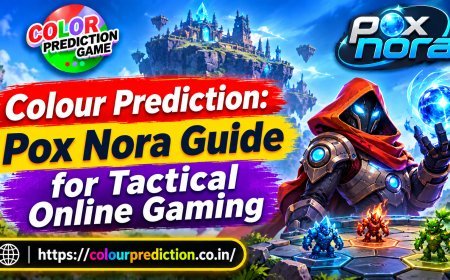


Colour Prediction: Pox Nora Guide for Tactical Online Gaming
Explore this Pox Nora guide covering factions, rune selection, battlegroup building, resource management, and tactical gameplay strategies.

Strategy games provide an exciting combination of planning, tactical decisions, resource management, and competitive challenges. Pox Nora is a fantasy-based online strategy game that combines collectible cards, role-playing elements, and turn-based battlefield combat. It allows players to build armies, command powerful champions, and use different abilities to defeat opponents.
Unlike traditional card games, Pox Nora focuses on controlling battlefield positions and making effective tactical moves. Players must manage resources, select suitable units, and understand the strengths of different factions. Every decision can influence the outcome of a match.
Whether you enjoy fantasy strategy games or want to explore tactical online gaming, this guide explains the main features, gameplay mechanics, deck-building techniques, and practical strategies for improving your experience. Players interested in exploring different digital gaming options can also consider Colour Prediction as part of their broader gaming interests.
1. Understanding Pox Nora Gameplay
Pox Nora is a collectible, turn-based strategy game in which players use runes to create battlegroups and fight against opponents. These runes represent different characters, spells, equipment, and structures that provide strategic advantages.
The main objective is to defeat the opponent's shrine while controlling important battlefield areas and managing available resources.
The game offers several gameplay options, including player-versus-player battles, AI matches, and single-player campaigns.
Important gameplay elements include:
-
Building a battlegroup using different runes.
-
Summoning champions onto the battlefield.
-
Capturing important resource locations.
-
Using spells and equipment strategically.
-
Managing resources during each turn.
-
Controlling battlefield positions.
-
Developing strategies against different factions.
Understanding these basic mechanics helps beginners make better decisions during battles.
2. Explore the Eight Factions
Factions are an important part of Pox Nora. Each faction has its own identity, abilities, strengths, and strategic possibilities.
Players can experiment with different factions to discover a playstyle that suits their preferences.
Some players prefer aggressive strategies that focus on attacking opponents quickly. Others enjoy defensive gameplay that uses positioning and special abilities to control the battlefield.
Pox Nora also allows players to build full-faction and split-faction battlegroups. A full-faction battlegroup focuses on one faction, while a split-faction setup combines two factions.
When selecting factions, consider the following factors:
-
Available champion abilities.
-
Offensive and defensive strengths.
-
Resource requirements.
-
Spell and equipment combinations.
-
Compatibility between different units.
Beginners should experiment with available options instead of choosing a faction only because it appears powerful. Understanding its mechanics is more important than following popular choices.
3. Understand the Different Types of Runes
Runes are the foundation of every battlegroup. A standard deck contains 30 runes, and each type serves a different purpose.
Champion Runes: Champions are the main units used during battles. They move across the battlefield, attack opponents, capture locations, and use special abilities. Champions can also gain experience and improve their effectiveness.
Spell Runes: Spells create different effects during gameplay. They can damage enemies, strengthen friendly champions, weaken opponents, or influence battlefield conditions.
Relic Runes: Relics are stationary units that provide useful effects. Depending on their abilities, they can support friendly champions, damage enemies, or create tactical advantages.
Equipment Runes: Equipment can be assigned to champions to improve their performance. Choosing suitable equipment can strengthen an existing strategy.
A balanced combination of these rune types can help create a more flexible battlegroup.
4. Build a Strong and Balanced Battlegroup
Deck building is one of the most important skills in Pox Nora. A carefully designed battlegroup can provide better options during different stages of a match.
Start by choosing a clear strategy. Decide whether you prefer aggressive attacks, defensive control, or a combination of different approaches.
Consider these deck-building principles:
Include enough champions: Champions are essential for controlling the battlefield. Make sure your battlegroup has enough units to maintain pressure and defend important positions.
Balance rune costs: Avoid selecting only expensive runes. Include options that allow you to respond effectively during different stages of a match.
Choose complementary abilities: Some runes work particularly well together. Look for combinations that improve movement, damage, protection, or resource management.
Avoid unnecessary additions: Every rune should contribute to your overall strategy. Remove options that do not provide meaningful value.
Test your battlegroup: Play different matches and identify weaknesses. Adjust your selection when certain situations repeatedly create problems.
A successful battlegroup should offer flexibility rather than depending entirely on one powerful champion.
5. Master Resource Management and Font Control
Resource management is essential for tactical success. Players need sufficient resources to deploy champions, use abilities, and maintain battlefield pressure.
One important gameplay objective is capturing Nora fonts. These locations provide additional resources and can also serve as deployment points for champions.
Controlling fonts can create long-term advantages. However, players should avoid moving every unit towards a single location and leaving other areas unprotected.
Use these practical techniques:
-
Prioritise important resource locations.
-
Protect captured fonts from enemy attacks.
-
Avoid spending resources without considering future turns.
-
Maintain enough champions to defend important positions.
-
Plan deployments according to your available resources.
Effective resource management helps maintain control and creates more opportunities throughout a match.
6. Improve Battlefield Positioning
Positioning can determine whether an attack succeeds or fails. Players must consider unit movement, terrain conditions, enemy abilities, and the location of important objectives.
Different map environments can influence champion movement and performance. Some units may receive advantages from particular terrain types, while certain areas can create movement restrictions or additional damage.
Before moving a champion, examine the surrounding battlefield. Consider possible enemy responses and avoid exposing valuable units without sufficient support.
Good positioning involves:
-
Protecting important champions.
-
Controlling narrow routes and strategic areas.
-
Supporting nearby friendly units.
-
Using terrain advantages.
-
Maintaining defensive coverage around important objectives.
Careful movement can help prevent unnecessary losses and improve your ability to control the battlefield.
7. Develop Effective Tactical Strategies
Winning consistently requires more than choosing powerful runes. Players must understand when to attack, defend, capture objectives, and use special abilities.
Study your opponent's battlegroup and identify possible weaknesses. Avoid repeating the same moves if the opponent has already developed an effective counter-strategy.
Try these approaches:
-
Build a strong opening position before launching major attacks.
-
Protect champions that provide important abilities.
-
Use spells when they create meaningful advantages.
-
Avoid unnecessary battles that waste resources.
-
Maintain pressure around important objectives.
-
Adapt your strategy when battlefield conditions change.
Reviewing unsuccessful matches can also reveal mistakes in positioning, resource management, and rune selection.
8. Tips for Beginners
New players should begin by learning the basic controls and understanding how different runes work.
The tutorial and faction walkthroughs can help introduce important gameplay mechanics. Public decks also provide a convenient starting point for players who are still learning how to build their own battlegroups.
Additional beginner tips include:
-
Start with one faction and learn its strengths.
-
Read champion and spell descriptions carefully.
-
Practise against AI opponents.
-
Learn how Nora fonts influence gameplay.
-
Experiment with different battlegroup combinations.
-
Observe experienced players to understand advanced tactics.
Gradual improvement is more effective than trying complicated strategies before understanding the fundamentals.
9. Account Safety and Responsible Online Gaming
Players exploring online gaming platforms should prioritise account security. Use strong passwords, avoid sharing personal information, and access websites through verified links.
The Colour Prediction login process should be handled carefully. Always check the website address before entering account details, and avoid suspicious messages requesting sensitive information.
If you use a Colour Prediction App, review its permissions, privacy policies, and security practices before installation. Download applications only from trusted sources.
Remember that gaming strategies cannot guarantee financial rewards. Avoid unrealistic promises and never spend money you cannot afford to lose. Responsible participation helps maintain a balanced online gaming experience.
10. Final Thoughts
Pox Nora offers a detailed tactical experience by combining collectible runes, fantasy factions, resource management, and turn-based combat. Its battlefield mechanics encourage players to think carefully about positioning, champion selection, and long-term strategy.
For readers interested in Colour Prediction, exploring different tactical gaming guides can provide useful knowledge about online gaming features and responsible participation. Focus on understanding the mechanics, experimenting with different strategies, and improving your decisions through regular practice.
What's Your Reaction?
 Like
0
 Dislike
0
 Love
0
 Funny
0
 Angry
0
 Sad
0
 Wow
0