
























Is Your Warehouse Security Prepared for Multiple Entry Point Threats?
Effective warehouse security requires businesses to understand how people and vehicles enter their premises, identify vulnerable locations and establish appropriate procedures for detecting suspicious activity.
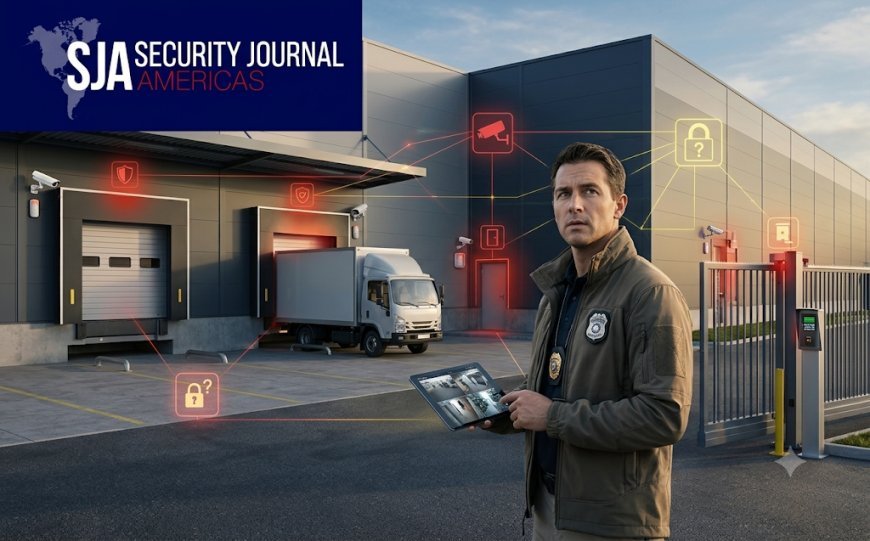
Warehouses often operate across large areas with several entrances, vehicle access points, emergency exits and designated loading zones. Although these access points are essential for maintaining efficient operations, they can also introduce security vulnerabilities when they are not properly managed.
A facility may have strong perimeter fencing and reliable surveillance equipment, yet still experience security problems through overlooked entrances or poorly monitored sections. These weaknesses can become particularly concerning when several access points are involved in a single security incident. Effective warehouse security requires businesses to understand how people and vehicles enter their premises, identify vulnerable locations and establish appropriate procedures for detecting suspicious activity.
Why Multiple Entry Points Create Security Challenges
Large warehouses frequently have separate entrances for employees, contractors, delivery vehicles and visitors. This arrangement supports operational efficiency but can make access management more complicated.
When different entrances operate under inconsistent procedures, businesses may struggle to maintain accurate records of who enters and leaves the facility.
Unmonitored side doors, emergency exits and secondary vehicle entrances can create additional concerns. Even when these locations are not regularly used, they should remain part of the overall security assessment.
A comprehensive warehouse security approach should consider every possible entry and exit rather than concentrating only on the main entrance.
Identifying Weaknesses Around the Warehouse Perimeter
The perimeter forms the first physical boundary between a warehouse and its surrounding environment.
Businesses should regularly inspect fencing, gates, boundary walls and external lighting to identify damage or conditions that could make unauthorised access easier.
Vegetation, poorly positioned equipment and stored materials may also obstruct surveillance coverage or create areas with limited visibility.
Security assessments should examine:
-
Damaged perimeter fencing.
-
Unsecured secondary gates.
-
Poorly illuminated external areas.
-
Blind spots around building corners.
-
Unmonitored emergency exits.
-
Inadequately controlled vehicle entrances.
Addressing these issues can improve visibility and strengthen the facility's overall protective arrangements.
The Importance of Access Control Systems
Access control helps businesses manage who can enter specific areas of a warehouse.
Different employees may require access to different operational zones, depending on their responsibilities. For example, inventory personnel may need to enter storage areas, while delivery drivers may only require access to designated loading sections.
Using individual access credentials makes it easier to monitor entry activity and identify unusual access patterns.
Businesses should also review permissions regularly, particularly when employees change roles or temporary workers complete their assignments.
An effective warehouse security programme should ensure that access permissions reflect actual operational requirements.
Integrating Surveillance and Intrusion Detection
Surveillance systems provide visibility across important sections of a warehouse and its surrounding perimeter.
Camera placement should prioritise entrances, loading bays, restricted storage rooms and other locations where unauthorised access could create significant risks.
Intrusion detection equipment can provide additional protection by identifying unexpected activity in designated areas.
Motion sensors, door contacts and alarm systems can help security personnel identify potential incidents and investigate them promptly.
However, these technologies are most effective when supported by clear monitoring responsibilities and established response procedures.
Businesses should regularly test their equipment to confirm that alerts are being generated and communicated correctly.
Preparing for Coordinated Security Incidents
A coordinated security incident may involve activity across several parts of a facility. This creates challenges for teams that rely on isolated monitoring systems or unclear reporting arrangements.
Businesses should establish an incident response plan that explains how suspicious activity is reported, assessed and escalated.
Employees should understand who is responsible for contacting security personnel, managing restricted areas and following emergency procedures.
Communication systems should also allow relevant personnel to share information quickly.
The objective is not simply to detect an incident but to ensure that employees can respond appropriately without creating additional risks.
Regular exercises can help identify weaknesses in communication and emergency arrangements.
Managing Visitors, Contractors and Delivery Personnel
External visitors and contractors introduce additional access management requirements.
Businesses should establish a visitor registration process that records relevant details, confirms the purpose of each visit and identifies the areas that individuals are permitted to access.
Temporary access credentials should have appropriate restrictions and should be withdrawn when no longer required.
Delivery personnel should follow designated vehicle routes and loading procedures to avoid unnecessary movement through operational areas.
These arrangements improve accountability while supporting safer and more controlled warehouse operations.
Reviewing Security Procedures as Facilities Change
Warehouse layouts and operational requirements rarely remain unchanged.
New storage sections, additional loading bays, expanded vehicle routes and changes in staffing can introduce vulnerabilities that were not present during earlier assessments.
Security reviews should therefore take place whenever significant operational changes occur.
Businesses should also examine previous incidents, access records and equipment performance to determine whether existing safeguards remain effective.
As highlighted in Security Journal Americas, protecting complex industrial environments requires security arrangements that adapt alongside operational developments.
Conclusion
Multiple entrances and access points are essential to the operation of modern warehouses, but they also require careful management. Unsecured secondary doors, poorly monitored loading areas and inconsistent access procedures can create weaknesses across an otherwise well-protected facility.
A proactive approach to warehouse security combines perimeter inspections, controlled entry procedures, surveillance coverage and effective incident response planning. By assessing every access point and regularly reviewing protective arrangements, businesses can improve visibility, reduce vulnerabilities and create a more secure working environment.
Frequently Asked Questions
1. Why are multiple warehouse entrances a security concern?
Multiple entrances increase the number of locations that must be monitored and controlled. Inconsistent procedures can create opportunities for unauthorised access.
2. What is perimeter security in a warehouse?
Perimeter security includes physical boundaries, gates, fencing, external lighting, surveillance and other measures designed to protect the facility's outer areas.
3. How do access control systems improve warehouse protection?
They restrict entry to authorised individuals, manage permissions and create records of access activity.
4. Where should warehouse surveillance cameras be installed?
Important locations include main entrances, loading bays, vehicle gates, restricted storage areas and other vulnerable sections.
5. How often should warehouse access arrangements be reviewed?
Businesses should review access arrangements regularly and whenever there are changes to staffing, building layouts or operational responsibilities.
What's Your Reaction?
 Like
0
 Dislike
0
 Love
0
 Funny
0
 Angry
0
 Sad
0
 Wow
0