




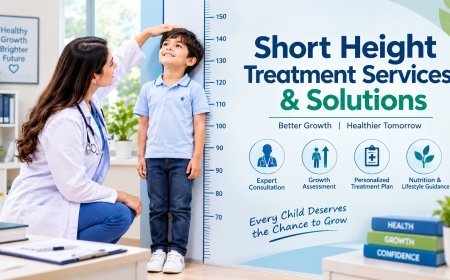

















Short Height Treatment Services & Solutions
Explore short height treatment services, professional growth assessments, medical evaluations, and personalized healthcare guidance to support healthy child growth and development.

Short Height Treatment Services & Solutions for Growth and Care
Height varies naturally from person to person, and being shorter than average does not always indicate a medical problem. However, when a child or teenager grows more slowly than expected, professional assessment can help identify possible causes. Growth patterns are influenced by genetics, nutrition, hormones, general health, and the timing of puberty. Understanding these factors is important before considering any treatment.
Choosing appropriate Short Height Treatment Services & Solutions begins with identifying the reason behind slower growth. A qualified healthcare professional can review medical history, examine growth patterns, and recommend suitable investigations. This approach helps families make informed decisions instead of relying on unsupported products or unrealistic promises.
Understanding Short Stature and Its Possible Causes
Short stature refers to a height that falls below the typical range for an individual's age and sex. It can be associated with family genetics, delayed puberty, nutritional deficiencies, hormonal conditions, or certain long-term illnesses.
Some children naturally follow a shorter growth pattern because their parents are also shorter. Others may experience delayed growth during childhood but develop normally later. In some cases, a medical condition affects the body's ability to grow at an expected rate.
Growth should therefore be evaluated over time rather than judged through a single height measurement. A healthcare professional may compare a child's measurements with standard growth charts and consider family height patterns.
Short Height Treatment Services & Solutions: Why Medical Assessment Matters
A proper assessment is the foundation of responsible growth care. Before recommending any intervention, a specialist needs to understand whether the person's growth pattern is normal or whether an underlying health concern requires attention.
The evaluation may include reviewing previous height and weight records, discussing birth and development history, examining nutritional habits, and checking the timing of puberty. Family medical history can also provide useful information.
Depending on the individual's circumstances, a doctor may recommend blood tests to investigate thyroid function, nutritional deficiencies, or hormone-related conditions. A bone-age X-ray of the hand and wrist may help estimate skeletal maturity and provide information about remaining growth potential.
Not every person with a shorter height needs medical treatment. Some individuals simply have a naturally shorter family growth pattern. An accurate diagnosis helps prevent unnecessary medication, testing, and expense.
The Role of Pediatricians and Endocrinologists
A pediatrician is often the first professional to consult when parents notice unusual growth patterns in a child. Pediatricians can monitor development, review growth charts, and identify signs that may require further investigation.
A pediatric endocrinologist focuses on diagnosing and treating hormonal disorders in children and teenagers. This specialist may assess problems involving growth hormone, thyroid hormones, puberty, and other endocrine functions.
Adults experiencing concerns about hormonal health may benefit from consulting an endocrinologist. The appropriate specialist depends on the person's age, symptoms, medical history, and examination findings.
Patients should check a healthcare professional's qualifications, registration, experience, and area of specialization before starting a treatment plan.
Treatment Options for Children and Teenagers
Treatment depends on the underlying cause of slower growth. When a nutritional deficiency is identified, improving dietary intake under professional guidance may support normal development. A balanced eating pattern can include protein sources, vegetables, fruits, whole grains, dairy products, and other foods that provide essential nutrients.
If a medical condition is affecting growth, treating that condition may help improve the person's overall health and development. For example, thyroid disorders or certain chronic illnesses may require specific medical management.
Growth hormone treatment may be considered for children with particular diagnosed conditions. However, it is not appropriate for every child who is shorter than average. Its use requires specialist assessment, suitable medical indications, regular monitoring, and careful consideration of potential benefits and risks.
Families should avoid giving children unverified height-increase medicines, supplements, or hormonal products. These may be ineffective or potentially harmful.
Nutrition, Sleep, and Physical Activity
Healthy daily habits support general development and well-being. Children and teenagers need sufficient calories, protein, vitamins, minerals, and hydration to maintain normal body functions.
Calcium and vitamin D are important for bone health, while protein supports tissue development. However, consuming excessive amounts of particular nutrients does not automatically increase height. Supplements should only be used when there is a genuine need or professional recommendation.
Sleep is another important part of healthy development. Establishing a consistent bedtime and maintaining a suitable sleep routine can support normal body functions.
Regular physical activity, including walking, cycling, swimming, and age-appropriate sports, supports muscle strength, bone health, and fitness. Exercise can improve posture and physical confidence, but it cannot lengthen bones beyond their natural growth potential.
Understanding Growth Plates and Adult Height
Growth plates are areas of developing cartilage located near the ends of certain bones. They allow bones to lengthen during childhood and adolescence. As skeletal development progresses, these plates gradually close.
Once growth plates have closed, natural bone-length growth generally stops. This means that exercises, stretching routines, special diets, and ordinary supplements cannot permanently increase an adult's skeletal height.
Adults who are concerned about their height should receive realistic medical information before considering any procedure. Limb-lengthening surgery is a complex orthopedic intervention that involves significant recovery, possible complications, and careful specialist assessment. It should never be treated as a simple cosmetic solution.
Personalized Care and Long-Term Growth Monitoring
Growth management requires consistent observation because development takes place over an extended period. Doctors may schedule follow-up visits to compare measurements, review test results, and evaluate whether a recommended intervention is working.
A personalized care plan should reflect the individual's age, diagnosis, growth history, and general health. Parents can support this process by keeping accurate records of height measurements and attending scheduled appointments.
Reliable Short Height Treatment Services & Solutions should focus on medical evidence, realistic expectations, and appropriate follow-up. Families should be cautious of providers who promise guaranteed results or recommend expensive products without first conducting a proper evaluation.
Choosing a Reliable Growth Specialist
Selecting the right healthcare professional is an important step. Patients and parents should consider the specialist's qualifications, clinical experience, communication style, and ability to explain treatment options clearly.
Before beginning care, ask whether the proposed assessment is suitable for the person's age and symptoms. Understand the purpose of recommended tests, the expected benefits of treatment, possible side effects, and the need for follow-up appointments.
A responsible provider will explain what can and cannot be achieved. They should also distinguish between normal family-related height patterns and growth concerns that require medical attention.
Frequently Asked Questions (FAQs)
1. What are Short Height Treatment Services & Solutions?
These refer to medical assessments, diagnostic tests, specialist consultations, and appropriate care plans designed to identify and manage conditions that may affect normal growth.
2. Which doctor should I consult for a child's growth concerns?
A pediatrician is usually a suitable starting point. If a hormone-related condition or unusual growth pattern is suspected, a pediatric endocrinologist may provide further evaluation.
3. Can nutrition and exercise increase height?
Good nutrition and regular physical activity support healthy development, particularly during childhood and adolescence. However, neither can guarantee additional height beyond a person's natural growth potential.
4. Is growth hormone suitable for every child with short stature?
No. Growth hormone is prescribed only for specific medical conditions when a specialist determines that treatment is appropriate. It requires ongoing medical supervision.
5. Can adults increase their height naturally?
After growth plates close, natural bone lengthening is no longer possible. Healthy habits can support posture and fitness, but they do not permanently increase skeletal height.
What's Your Reaction?
 Like
0
 Dislike
0
 Love
0
 Funny
0
 Angry
0
 Sad
0
 Wow
0