
























What Should Manufacturers Know About Zinc Stearate Applications?
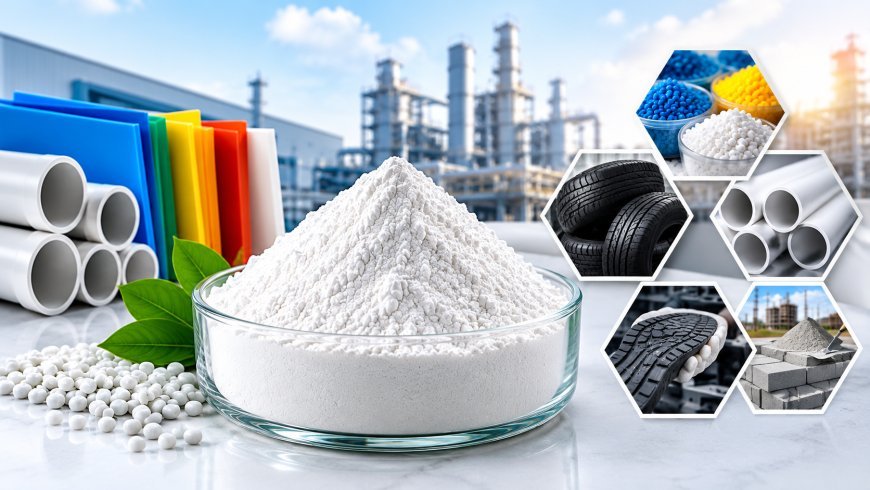
In today's competitive manufacturing industry, maintaining product quality while reducing production costs is a major challenge. Manufacturers often face problems such as material sticking, excessive friction, poor surface finishing, moisture absorption, and inconsistent product performance. Choosing the right industrial additives can help solve these issues. Zinc stearate is one such versatile material that supports smoother processing and better product quality across several industries, including plastics, rubber, paints, coatings, and construction.
For manufacturers looking to overcome these production challenges, selecting a reliable zinc stearate manufacturer in India is an important step. The quality and consistency of zinc stearate directly influence its performance in different applications. Using the wrong grade or an inconsistent material can create processing difficulties, increase production waste, and affect the final product. Therefore, understanding its applications, benefits, and selection criteria helps manufacturers make better purchasing decisions.
What Is Zinc Stearate and Why Is It Important?
Zinc stearate is a fine, white metallic soap made from zinc and stearic acid. It is widely recognised for its excellent lubricating, water-repellent, mould-release, and anti-blocking properties.
Because of these characteristics, it is used as a processing aid in various manufacturing operations. It helps reduce friction, prevents unwanted sticking, and improves material handling. When selected according to application requirements, zinc stearate can help manufacturers achieve smoother production and consistent product performance.
1. Zinc Stearate Applications in the Plastic Industry
Plastic manufacturers frequently experience problems related to friction, material flow, and mold sticking during production. These issues can affect processing speed and the appearance of finished products.
Zinc stearate works as an external lubricant and processing aid in suitable plastic formulations. It helps reduce friction between materials and processing equipment, making manufacturing operations smoother.
Problems it helps solve:
-
Reduces friction during plastic processing.
-
Helps prevent sticking to mould surfaces.
-
Supports smoother material flow.
-
Improves mold release and surface finishing.
Manufacturers should select the appropriate grade and dosage according to the polymer type and processing conditions.
2. Importance of Zinc Stearate in the Rubber Industry
Rubber manufacturing involves several processing stages where sticking and mould-release difficulties can affect productivity. Removing finished rubber products from moulds can become challenging when the right release solution is not used.
Zinc stearate helps reduce adhesion between rubber surfaces and molds in suitable applications. It can also act as a processing aid and help improve manufacturing convenience.
Key benefits include:
-
Easier removal of rubber products from moulds.
-
Reduced sticking during processing.
-
Better handling of rubber materials.
-
Improved production efficiency.
Using an application-specific grade helps manufacturers achieve better results without compromising product quality.
3. Role of Zinc Stearate in Paints and Coatings
Paint and coating manufacturers often face challenges related to powder flow, surface finishing, and moisture resistance.
Zinc stearate is used in selected coating formulations because of its water-repellent and surface-modifying properties. It can improve sanding characteristics, support powder flow, and contribute to a smoother finish.
It is particularly useful in certain powder coating and industrial coating applications. However, manufacturers should test compatibility with other formulation ingredients before large-scale production.
4. Zinc Stearate Applications in the Construction Industry
Moisture absorption is a common problem in construction materials. Excessive water absorption can affect the performance and durability of certain building products.
Due to its hydrophobic properties, zinc stearate is used in selected construction formulations to improve water resistance.
Some common applications include:
-
Waterproofing compounds.
-
Cement-based products.
-
Concrete and masonry formulations.
-
Dry construction mixtures.
By selecting the correct grade and dosage, manufacturers can develop products with improved moisture resistance and more consistent performance.
5. Uses of Zinc Stearate in Cosmetics
Cosmetic manufacturers require ingredients that provide smooth application, good texture, and consistent product quality.
Zinc stearate is used in certain powder-based cosmetic formulations because of its lubricating properties and soft, powdery texture. It helps improve the feel and application characteristics of products such as face powders.
For cosmetic applications, manufacturers must ensure that the material meets the required cosmetic-grade specifications and applicable safety standards.
Major Benefits of Zinc Stearate for Manufacturers
Using the right zinc stearate grade can help address several common manufacturing problems.
1. Improved Lubrication: It reduces friction between materials and equipment, supporting smoother processing.
2. Better Mould Release: Its release properties help prevent products from sticking to mould surfaces.
3. Water Resistance: Its hydrophobic nature helps reduce water absorption in suitable formulations.
4. Improved Surface Quality: It can support smoother finishing and better surface characteristics.
5. Anti-Blocking Performance: It helps reduce unwanted sticking between surfaces in selected applications.
How to Choose the Right Zinc Stearate for Your Application?
Selecting an unsuitable raw material can result in inconsistent production and unnecessary expenses. Manufacturers should consider these important factors before purchasing zinc stearate:
-
Product Purity: Check whether the material meets the required application specifications.
-
Particle Size: Ensure the particle size is suitable for proper dispersion and processing.
-
Moisture Content: Check moisture levels to maintain product quality and storage stability.
-
Application Requirements: Choose a grade suitable for your specific industry.
-
Batch Consistency: Consistent quality helps maintain reliable manufacturing performance.
-
Technical Support: Work with suppliers who can provide product specifications and application guidance.
It is also advisable to conduct small-scale production trials before introducing zinc stearate into large-scale manufacturing.
How Can Manufacturers Avoid Common Production Problems?
Manufacturers can improve their production processes by identifying the actual cause of operational difficulties before selecting an additive.
For example, if plastic products stick to moulds, evaluate the suitability of a mould-release grade. If a construction product absorbs excessive moisture, assess the compatibility of zinc stearate with the complete formulation. Similarly, if powder dispersion is inconsistent, check particle size and mixing conditions.
Correct grade selection, controlled dosage, proper storage, and regular quality testing can help minimise production issues.
Conclusion
Zinc stearate is an important industrial additive that offers multiple benefits across plastic, rubber, paint, coating, construction, and cosmetic manufacturing. Its lubricating, water-repellent, mould-release, and anti-blocking properties make it a useful solution for addressing common production challenges.
However, achieving the best results requires selecting the correct grade, maintaining appropriate dosage levels, and ensuring consistent raw material quality. Manufacturers who understand these factors can improve processing efficiency, reduce production difficulties, and maintain better product quality.
What's Your Reaction?
 Like
0
 Dislike
0
 Love
0
 Funny
0
 Angry
0
 Sad
0
 Wow
0