






















What Should You Consider Before Selecting Reinforced PTFE Materials?
Discover how to select the right carbon-filled PTFE material by evaluating wear resistance, mechanical strength, temperature, and industrial application needs.
Industrial components often operate under friction, mechanical pressure, chemical exposure, and changing temperatures. Choosing an unsuitable material can lead to excessive wear, deformation, frequent replacements, and unexpected equipment downtime. These problems can increase maintenance expenses and affect production efficiency. Understanding the operating environment and material properties before making a selection helps manufacturers improve component reliability and find practical solutions for demanding industrial applications.
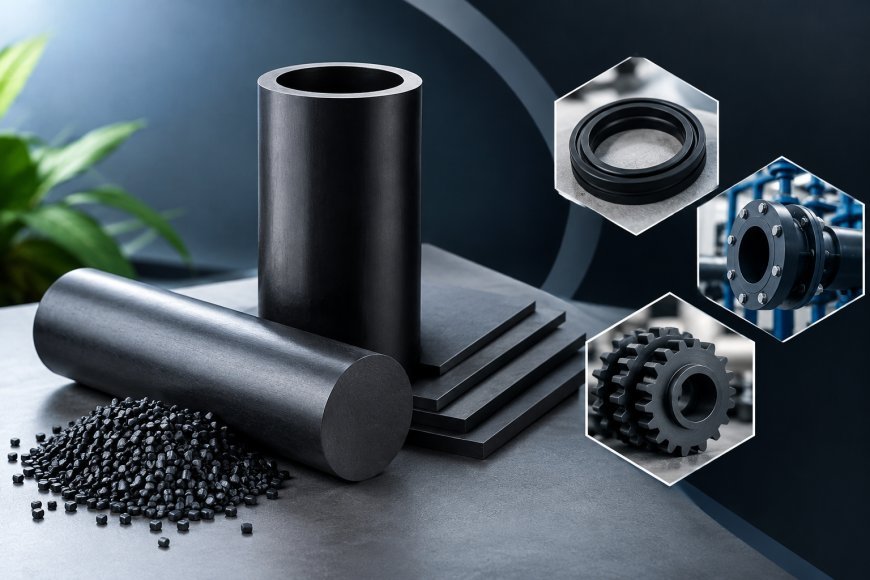
When standard PTFE does not provide the required mechanical performance, reinforced grades may be worth considering. Best Carbon Filled PTFE is a material option for applications that require improved wear performance, greater load-bearing capability, and reduced friction under suitable operating conditions. Carbon reinforcement changes the properties of PTFE, making it important to evaluate the specific formulation, component design, and working environment before choosing a grade.
1. Understand the Application Requirements
One of the most common mistakes when selecting reinforced PTFE is choosing a material without clearly defining its purpose. A component used in a sliding assembly may have different requirements from a seal, bearing, bush, or custom-machined part. Selecting a grade based on general product descriptions alone may lead to disappointing results.
Before making a decision, consider the component's function, movement, load, operating speed, and expected service life. These details help determine which material properties are most important. A clear understanding of the application also makes it easier to compare different reinforced PTFE grades and avoid unnecessary material costs.
2. Evaluate Friction and Wear Resistance
Friction is a major cause of wear in industrial machinery. Continuous contact between moving surfaces can generate heat, damage components, and reduce operational efficiency. In equipment that operates for extended periods, excessive wear may result in frequent maintenance and production interruptions.
Carbon-filled PTFE is often considered for applications where low friction and improved wear performance are important. However, the actual results depend on the carbon content, formulation, counterface material, load, and movement speed.
When selecting a material, examine the expected contact pressure and operating conditions. The surface finish of mating components and lubrication requirements should also be considered. These factors help determine whether a particular grade is suitable for the application.
3. Check Mechanical Strength and Load-Bearing Performance
Industrial components may experience continuous pressure, repeated loading, or mechanical stress. If a material cannot withstand these forces, it may deform or wear prematurely. Such failures can affect component dimensions and the performance of connected equipment.
Reinforcement can change the mechanical properties of PTFE and may improve performance in applications involving mechanical loads. Carbon-filled grades can be useful in certain demanding environments, but their suitability depends on the specific formulation and design requirements.
Before selecting a grade, review the component's load conditions, dimensions, and support structure. Consider whether the material must withstand static pressure, repeated movement, or impact. Matching these requirements with the manufacturer's technical specifications helps reduce the risk of premature failure.
4. Consider Temperature and Chemical Exposure
Industrial components may encounter high temperatures, temperature fluctuations, oils, solvents, cleaning agents, or other chemicals. A material that performs well under one set of conditions may not be suitable for another. Temperature can influence mechanical performance, while chemical compatibility depends on the substance and the material formulation.
PTFE is known for its broad chemical resistance, but reinforced grades should still be evaluated for the intended environment. Carbon reinforcement and other formulation details may influence the suitability of a material for particular applications.
Review the expected operating temperature range and identify every chemical that may contact the component. Check the technical information for the specific grade rather than assuming that all reinforced PTFE products offer identical performance.
5. Review Dimensional Stability and Machining Requirements
Precision-machined components must maintain the required dimensions and tolerances to function correctly. Changes in dimensions can affect alignment, clearances, sealing performance, and the movement of machine parts. The material's composition can also influence machining behaviour and finished surface quality.
Carbon-filled PTFE grades may offer useful mechanical characteristics for certain machined components. However, the correct grade must be selected according to the component geometry, dimensional requirements, and manufacturing process.
Discuss critical tolerances, surface finish, and machining requirements before production begins. Suitable cutting tools and machining parameters are also important because reinforcement can affect tool wear. Careful inspection of finished components helps confirm that they meet the required specifications.
6. Compare Material Quality and Long-Term Costs
Choosing a material based only on its initial price can create additional expenses later. A low-cost option may require more frequent replacement or may not deliver the expected performance under operating conditions. Conversely, selecting a more expensive grade without a clear technical reason may increase procurement costs unnecessarily.
Compare the expected service life, maintenance requirements, machining costs, and operating conditions of available materials. Ask suppliers for product specifications and relevant technical data to understand the differences between grades.
A balanced assessment of performance and cost helps businesses choose materials that meet their requirements without over-specifying the component.
7. Choose a Reliable PTFE Supplier
Supplier selection is another important factor when sourcing reinforced PTFE materials. Product consistency, accurate dimensions, clear specifications, and responsive technical support can influence the quality of finished components.
Goa Polymer provides PTFE solutions for industrial and engineering applications, including PTFE Gaskets, PTFE Sheets, PTFE Rods, PTFE Bushes, Glass-Filled PTFE, PTFE Glass-Filled Rods, PTFE Valve Seats, and customized PTFE components.
When evaluating a supplier, explain your application requirements and ask about available grades, dimensions, and material specifications. Clear communication helps identify suitable products for industrial sealing, machining, and other engineering needs.
Conclusion
Selecting reinforced PTFE materials requires careful consideration of friction, wear resistance, mechanical loads, temperature, chemical exposure, dimensional stability, and machining requirements. No single material grade is ideal for every industrial application.
By understanding the operating environment and comparing technical specifications, manufacturers can reduce avoidable wear, improve component reliability, and make more informed purchasing decisions. Working with a knowledgeable supplier such as Goa Polymer can help businesses assess available PTFE options and identify materials suited to their specific industrial requirements.
What's Your Reaction?
 Like
0
 Dislike
0
 Love
0
 Funny
0
 Angry
0
 Sad
0
 Wow
0