























Allen Bolt Use in Industrial Machinery Applications
Discover how Allen Bolt selection affects machinery performance, sourcing decisions, and operational efficiency. Learn what buyers should verify.

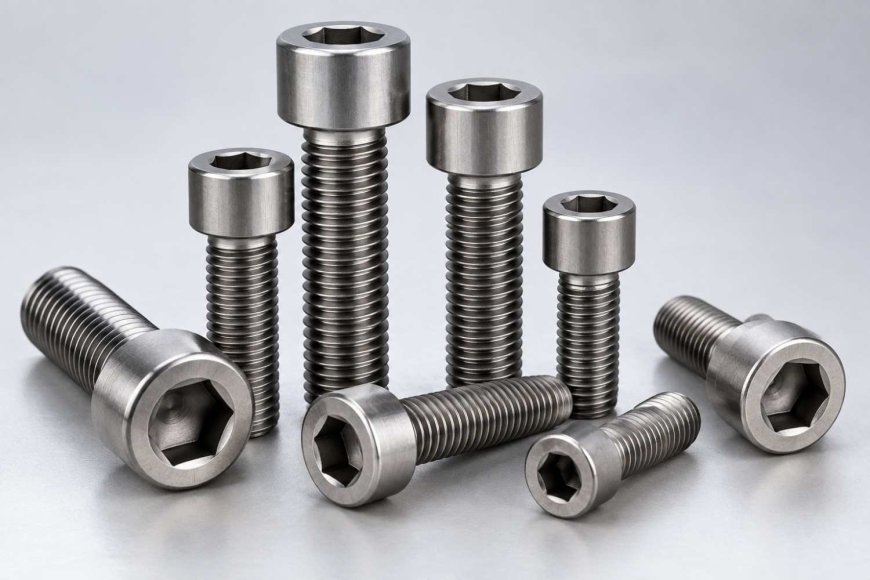
Neither was causing the vibration issue. After several hours, the actual problem came to light—a batch of poorly machined Allen Bolt fasteners that failed to maintain consistent clamping force under operating conditions. The repair cost wasn't enormous. The production downtime was.
That's a lesson many buyers learn after the purchase order has already been closed.
As industrial machinery becomes more compact, automated, and performance-driven, the Allen Bolt has moved far beyond being a simple fastening component. For wholesalers, procurement managers, and brand owners, the ability to source reliable fasteners now plays a direct role in machinery reliability, maintenance schedules, and long-term operating costs.
Why Allen Bolt Performance Matters More Than Many Buyers Realize
An Allen Bolt is often selected based on dimensions, material grade, and price.
That approach is incomplete.
Most machinery failures linked to fasteners don't begin with obvious defects. They begin with small variations that gradually affect assembly integrity.
Torque Retention Is Not Just a Specification
A properly manufactured Allen Bolt helps maintain consistent clamping force over extended operating cycles.
When manufacturing tolerances drift, vibration resistance can suffer. Machinery operating at high speeds is especially sensitive to those inconsistencies.
Socket Accuracy Influences Maintenance Efficiency
Maintenance technicians depend on reliable tool engagement.
Nobody tells you how quickly a maintenance schedule can fall behind when technicians struggle with inconsistent socket dimensions across hundreds of fasteners.
Material Selection Changes Performance
Common materials include:
-
Carbon Steel
-
Alloy Steel
-
Stainless Steel
Each material serves a different operating environment. Selecting the cheapest option without considering application requirements is a buyer mistake that appears repeatedly across industrial projects.
The Detail Buyers Frequently Ignore
Many purchasing teams verify thread specifications but overlook hardness consistency.
That omission becomes visible only after machinery enters service.
The Supplier Evaluation Question Most Procurement Teams Ask Too Late
A reliable Allen Bolt supplier should be evaluated before price comparisons begin.
Yet many buyers do the opposite.
They compare quotations first and investigate manufacturing controls later.
That's backwards.
1. How Is Hardness Verified?
A capable supplier can explain testing procedures and provide documentation.
A weak answer sounds like:
"Our material supplier handles that."
Quality responsibility cannot be outsourced.
2. What Inspection Equipment Is Used?
Ask specific questions.
A supplier unable to explain measurement processes may not be controlling critical dimensions consistently.
3. Are Batch Records Available?
Traceability helps resolve issues quickly.
Without records, investigations become slower and more expensive.
4. How Are Customer Complaints Managed?
A supplier who says "We'll review the issue after delivery" does not have a clear corrective-action process.
That's a risk procurement teams should avoid.
5. What Is the Actual Lead-Time Performance?
Many suppliers quote optimistic schedules without checking production loading.
That practice creates avoidable supply-chain disruption.
How Precision Fasteners Reduce Machinery Ownership Costs
The value of a well-manufactured Allen Bolt extends far beyond the purchase price.
Reduced Downtime
Consistent fastening performance helps machinery maintain operational stability.
Lower Maintenance Costs
Reliable dimensions simplify installation and future servicing.
Improved Equipment Reliability
Fasteners that maintain clamping force reduce the likelihood of vibration-related issues.
Better Inventory Planning
Predictable supply helps procurement teams manage stock levels more effectively.
Reduced Warranty Exposure
Assembly consistency supports product reliability and customer satisfaction.
One quality issue in a production batch can consume more budget than a year of procurement savings.
Why Location Is a Supply Chain Decision, Not Just an Address
India continues to be a major manufacturing destination for engineering products, supported by industrial clusters that contribute to machining, heat treatment, and logistics capabilities.
For buyers evaluating Allen Bolt Manufacturers in India, supplier location influences more than transportation costs. It affects communication speed, production flexibility, and delivery responsiveness.
Kiran Industries operates from:
Sr. No. 211, Narmada Pipe Gate, Tal. Kotda Sangani, Plot No. 3, Essen Road, At, Shapar, Rajkot, Gujarat 360024, India
Rajkot's engineering ecosystem supports a wide range of industrial manufacturing activities. Buyers researching Allen Bolts Suppliers in India, Allen Bolts Wholesalers in India, and Allen Bolts Dealers in India often prioritize suppliers located within established manufacturing regions because those networks typically support stronger supply-chain coordination.
About Us
Since 1985, we've manufactured industrial fasteners for buyers who expect consistency rather than explanations after a problem occurs.
We're ISO-certified, and experience has taught us that process discipline matters long before final inspection. Several years ago, we paused production on a large order after dimensional readings began approaching tolerance limits. The delay cost us a day. Shipping parts we weren't fully confident about would have cost much more.
That's how we've chosen to operate for decades.
Share Technical Requirements Before Requesting a Quotation
We can prepare more accurate pricing and lead-time estimates when buyers provide:
-
Technical drawing
-
Product dimensions
-
Material grade
-
Surface finish requirement
-
Delivery destination
-
Annual consumption estimate
We generally respond within one business day.
Our MOQ varies according to size, production complexity, and manufacturing requirements. We've found that detailed technical discussions early in the process prevent costly misunderstandings later.
Conclusion
Industrial machinery continues to demand greater precision, reliability, and operational consistency from every component involved in assembly. Buyers who evaluate manufacturing processes rather than relying solely on quotations usually achieve stronger long-term results. As machinery systems become more advanced, experienced Allen Bolt Manufacturers will continue to play a critical role in supporting dependable industrial performance.
FAQs
How should buyers compare Allen Bolts Suppliers during supplier evaluation?
Review inspection procedures, traceability systems, production capacity, and documented quality controls. Pricing should be only one part of the decision.
Are Allen Bolts Dealers a good option for urgent requirements?
They often are, especially when inventory is available. The trade-off is that customization options may be more limited than direct manufacturing arrangements.
Do Allen Bolts Wholesalers help improve inventory availability?
In many cases, yes. Buyers should still verify actual stock commitments because inventory levels can change quickly.
Why do companies prefer Allen Bolt Manufacturers in India?
India offers established engineering infrastructure, manufacturing expertise, and industrial supply-chain support that benefits machinery and equipment producers.
What should procurement teams ask Allen Bolts Suppliers in India before approving a supplier?
Request inspection records, hardness verification procedures, traceability documentation, and lead-time performance information. Those details often reveal more than the quotation itself.
What's Your Reaction?
 Like
0
Like
0
 Dislike
0
Dislike
0
 Love
0
Love
0
 Funny
0
Funny
0
 Angry
0
Angry
0
 Sad
0
Sad
0
 Wow
0
Wow
0