

















How to Turn Regular Pickleball Practice Into Match Preparation

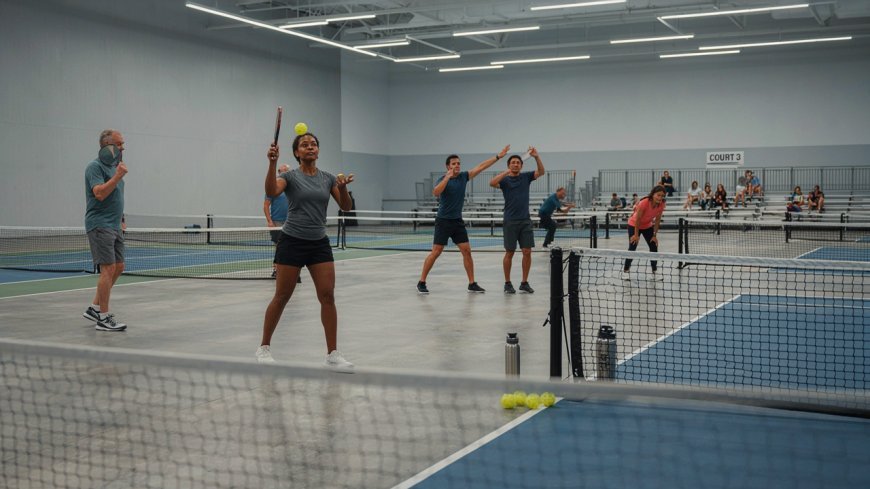
Regular pickleball practice can improve your strokes, footwork, and consistency, but playing well in a match requires more than simply hitting the ball repeatedly. Competitive players need to make decisions under pressure, adjust to opponents, communicate with partners, and maintain focus when every point matters.
The good news is that your normal practice sessions can become much more valuable with a few intentional changes. By adding realistic situations and competitive goals, you can transform ordinary practice into effective pickleball match preparation.
Whether you are preparing for your first tournament or looking to become a more confident competitive player, the goal is to make practice feel more like the situations you will face on game day.
1. Practice With a Specific Match Goal
One of the easiest ways to improve practice is to stop treating every session as simply “playing pickleball.” Before stepping onto the court, choose one or two skills you want to develop.
For example, your goal might be improving third-shot drops, becoming more consistent at the kitchen line, or reducing unforced errors. You could also focus on returning serves deep or making better decisions during fast exchanges.
A specific objective gives your practice direction. Instead of measuring success only by who wins, you can evaluate whether you executed the skill correctly.
During competitive pickleball training, this approach is especially useful because matches rarely give you unlimited opportunities to work on one technique. Focused practice helps build confidence before competition.
2. Add Scoring and Pressure to Your Drills
Technical drills are valuable, but they do not always reproduce the pressure of a real match. Once you become comfortable with a particular skill, introduce scoring.
For example, create a drill where a player earns a point only after successfully completing a third-shot drop and reaching the kitchen line. Another drill could reward a team for winning a rally after establishing control at the non-volley zone.
You can also start games at different scores, such as 8–8 or 9–9. This forces players to experience the mental pressure that comes with important points.
Pressure-based practice teaches you to stay composed instead of changing your technique when the score becomes close. That mental adjustment can make a major difference during tournament play.
3. Recreate Real Match Situations
Good tournament practice should include situations that regularly occur during competition.
Instead of always starting games at 0–0, create specific scenarios. Start a game when your team is behind by several points. Practice protecting a lead. Play points where one mistake ends the drill. Try playing against opponents who attack differently from your usual practice partners.
You can also rehearse common tactical situations, such as defending against aggressive drives, handling repeated shots to your backhand, or responding when opponents target the weaker player.
The more situations you experience during practice, the less unfamiliar they will feel during an actual tournament.
4. Work on Strategy, Not Just Technique
A strong pickleball player does not simply hit good shots. They understand when and why to use them.
During practice games, pay attention to your shot selection. Ask yourself whether a particular shot creates an advantage or simply keeps the rally going.
For example, a soft shot may be more effective than a hard drive when your opponents are positioned at the kitchen line. A deep return may give your team more time to establish court position. Sometimes the smartest decision is to play another controlled shot rather than attempting a low-percentage winner.
Practice should therefore include tactical conversations. After a rally, briefly discuss what happened and what could have been done differently.
For doubles players, communication is equally important. Practice calling shots, switching positions, covering the middle, and deciding who takes difficult balls. These habits become especially valuable when matches become fast and stressful.
5. Make Practice More Competitive
Friendly games are enjoyable, but competitive players should occasionally raise the intensity of practice.
Set small challenges throughout the session. You might play a short game where every unforced error costs a point, or create a target that requires a team to win several rallies consecutively before earning a bonus.
Another useful method is to keep track of specific statistics. Count successful third-shot drops, unforced errors, deep returns, successful kitchen-line exchanges, or points won after reaching the non-volley zone.
These measurements can reveal weaknesses that the final score does not show.
For example, you might win a practice game while still struggling with serve returns. Tracking individual performance helps you identify what needs attention before competition.
6. Finish With Match-Like Games
The final portion of practice should bring everything together.
Play a complete game using normal tournament rules and routines. Take your time between points, communicate with your partner, follow a consistent pre-serve routine, and treat important points seriously.
Avoid restarting points simply because something went wrong. Instead, learn to recover and move forward. This is an important part of pickleball match preparation because mistakes are unavoidable during real competition.
After the game, take a few minutes to review your performance. Identify two things that worked well and one or two areas that need improvement. Keep the review practical rather than overly critical.
Over time, these short post-practice evaluations can help you recognize patterns in your game and make smarter training decisions.
Turning Practice Into a Competitive Advantage
Effective pickleball practice is not necessarily about spending more hours on the court. It is about making those hours more purposeful.
By adding specific goals, pressure situations, realistic scoring, tactical decision-making, partner communication, and match-like games, ordinary practice can become a powerful form of competitive pickleball training.
The best preparation also includes learning how to handle mistakes, manage emotions, and make good decisions when the score is close. These skills cannot always be developed through repetitive drills alone.
If you are preparing for a local tournament, start gradually. Choose one or two match situations to introduce into your next practice session. As those situations become comfortable, add new challenges.
With consistent, purposeful training, the transition from practice court to tournament court becomes much smoother. You are not simply preparing to hit better shots—you are preparing to compete with confidence, adapt to pressure, and make smart decisions when every point counts.
What's Your Reaction?
 Like
0
Like
0
 Dislike
0
Dislike
0
 Love
0
Love
0
 Funny
0
Funny
0
 Angry
0
Angry
0
 Sad
0
Sad
0
 Wow
0
Wow
0