

























Bill O’Reilly: A Controversial Titan of Broadcast Journalism
Bill O’Reilly stands as one of the most consequential and controversial figures in the history of American cable news.

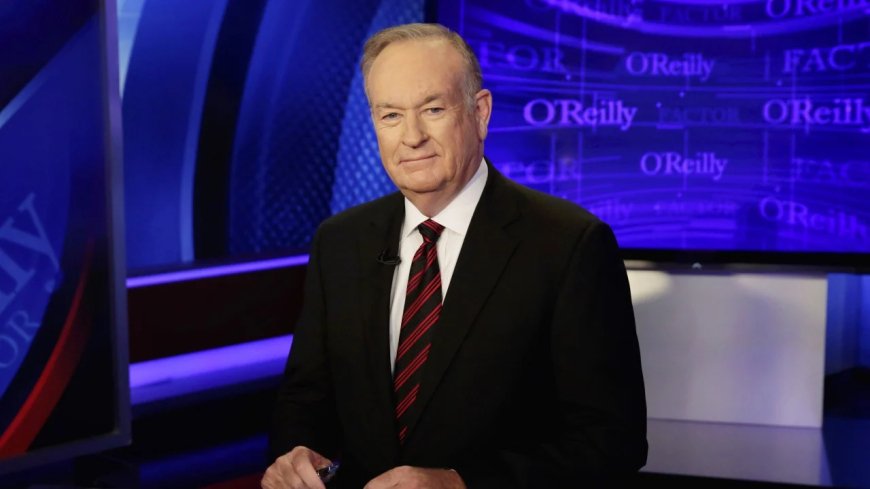
Bill O’Reilly is one of the most recognizable and controversial figures in American television journalism. For more than two decades, he occupied a prominent place in the national media landscape, becoming known for his forceful interviews, conservative political commentary, confrontational style, and ability to attract a large television audience. His career has been marked by both remarkable professional success and serious controversy, making him a complicated figure whose influence extends beyond his years at Fox News. Supporters have viewed him as a strong advocate for traditional American values and a powerful critic of political correctness, while critics have accused him of using inflammatory rhetoric, oversimplifying complex political issues, and contributing to the increasingly combative nature of cable news click here.
O’Reilly story is therefore not simply one of a successful television host. It is also a story about the transformation of American journalism, the rise of opinion-driven cable news, the growing political division of the United States, and the enormous influence that a single television personality can exercise over public discussion. His career provides an important lens through which to examine how news, entertainment, politics, and personality became increasingly intertwined.
Early Life and Education
William James O’Reilly Jr. was born on September 10, 1949, in New York City. He grew up in a middle-class Catholic family and spent part of his childhood in Westbury, New York. His early experiences helped shape the disciplined and assertive personality that would later become central to his public image.
O’Reilly attended Chaminade High School, a private Catholic school on Long Island. He later attended Marist College, where he earned a bachelor's degree in history. His interest in education and public affairs eventually led him to pursue graduate studies. He earned a master's degree in broadcast journalism from Boston University and later obtained another master's degree in public administration from Harvard University's John F. Kennedy School of Government.
His academic background was notable because it combined journalism with history and public administration. These areas would become important throughout his career. O’Reilly frequently approached political and social questions through the language of history, government, institutions, and public responsibility.
The Beginning of His Broadcasting Career
Before becoming a household name, O’Reilly worked for a number of television stations across the United States. His early career included positions in cities such as Scranton, Dallas, Denver, and Boston. During these years, he worked as a reporter and anchor and gained practical experience in the fast-paced world of television news.
One of the most important aspects of O’Reilly's early career was his willingness to move between different television markets and organizations. These experiences allowed him to develop the interviewing and presentation skills that later became hallmarks of his career.
He eventually joined CBS News and later worked for ABC News. At ABC, he became a correspondent for programs including World News Tonight and Nightline. His work earned him recognition within the television industry, and he received several awards during the earlier stages of his career.
O’Reilly was not initially known primarily as a political commentator. Like many television journalists, he began by covering news events and reporting stories. His later transformation into one of America's most prominent opinion hosts represented a significant change in both his career and the television industry itself.
Rise to National Prominence
O’Reilly's major breakthrough came when he joined the Fox News Channel in the mid-1990s. The network had launched in 1996 with the goal of providing a different approach to cable news, particularly one that appealed to viewers who believed existing television networks had a liberal bias.
O’Reilly became the host of The O’Reilly Report, which was soon renamed The O’Reilly Factor. The program quickly became one of the network's most successful shows.
The O’Reilly Factor combined news reporting, interviews, political commentary, and opinion. Rather than presenting itself as a traditional news program, it placed O’Reilly's personality at the center of the broadcast. He frequently challenged guests, interrupted arguments he considered weak, and pushed interview subjects to defend their positions.
This approach helped distinguish the program from conventional television news. O’Reilly became known for his direct style, sharp questioning, and repeated use of phrases that became associated with his television persona. His method appealed strongly to viewers who wanted political commentary that was confident and confrontational rather than cautious or neutral.
The Power of “The O’Reilly Factor”
For many years, The O’Reilly Factor was one of the highest-rated programs in cable news. Its success demonstrated that audiences were willing to watch television personalities not merely for information but also for interpretation, argument, and entertainment.
O’Reilly's influence extended beyond television ratings. His program became a significant part of America's political conversation. Politicians, activists, journalists, and ordinary viewers often responded to topics discussed on the show.
The program also demonstrated the commercial value of political personality. O’Reilly was not simply presenting the news; he had become a recognizable brand. His name, voice, opinions, mannerisms, and interviewing style were all part of the program's identity.
This development reflected a broader change in American media. Cable television increasingly moved away from the idea that news had to be delivered in a purely detached format. Opinion programs became increasingly important, and personalities became powerful enough to influence political debates.
A Distinctive Interviewing Style
Perhaps the most recognizable feature of O’Reilly's career was his interviewing style. He often approached interviews as confrontations rather than traditional conversations. Guests could expect direct questions, challenges to their claims, and little patience for answers he considered evasive.
Supporters argued that this approach was one of his greatest strengths. They believed that O’Reilly asked questions other journalists were unwilling to ask. His interviews often placed politicians, celebrities, academics, and activists under significant pressure.
Critics saw the same style differently. They argued that his interviews sometimes became performances in which winning an argument appeared more important than exploring an issue. Some critics also accused him of reducing complicated questions to simple divisions between opposing political camps.
Regardless of one's assessment, the style was effective television. It created tension, drama, and strong emotional reactions. In an increasingly competitive cable-news environment, those qualities were valuable.
Political Identity and Conservative Commentary
O’Reilly became strongly associated with American conservatism, although he sometimes described his political position as independent rather than strictly Republican. His commentary frequently focused on crime, national security, immigration, cultural issues, government policy, and what he viewed as declining standards in American society.
He became particularly well known for criticizing what he regarded as excessive political correctness. He argued that social pressure often prevented people from expressing opinions openly. His discussions of cultural and political correctness became a recurring part of his public identity.
At the same time, O’Reilly occasionally criticized Republican politicians and conservative institutions. This helped him present himself as an independent commentator rather than simply a representative of one political party.
His political influence was especially strong during periods of intense national debate. Whether discussing presidential elections, terrorism, social policy, or cultural controversies, O’Reilly frequently framed issues in terms that resonated with his audience.
For more information check now.
Success as an Author
O’Reilly's influence was not limited to television. He became a successful author, publishing numerous books covering history, politics, and American culture.
His books often reached the top of bestseller lists. One of his most successful projects was the “Killing” series, written with Martin Dugard. The books examined historical events and figures through a dramatic narrative style.
Titles such as Killing Lincoln, Killing Kennedy, Killing Jesus, Killing Patton, and Killing Reagan attracted large audiences. The books were designed to make historical subjects accessible to a broad readership, combining historical research with suspenseful storytelling.
The success of these books demonstrated the strength of O’Reilly's personal brand. His television audience followed him into publishing, while his books introduced his historical interpretations to readers who might not regularly watch cable news.
Influence on American Political Media
O’Reilly's career helped establish a model that became increasingly common in American television: the star political commentator whose personality could be as important as the news itself.
His success helped demonstrate that viewers could become deeply attached to individual hosts. This changed the economics of cable news and influenced the development of other political programs.
The model was not limited to conservative media. Progressive and liberal networks and commentators also developed personality-driven programs. In this sense, O’Reilly's influence was broader than his own political perspective.
His career also contributed to the normalization of highly confrontational political television. Debate programs increasingly featured opposing personalities, dramatic disagreements, and strong ideological positions.
This approach could make politics more engaging, but it also contributed to concerns about polarization. When political disagreement becomes entertainment, there is a risk that conflict itself becomes more valuable than understanding.
Controversies Surrounding O’Reilly
Despite his enormous professional success, O’Reilly's career was repeatedly surrounded by controversy. His aggressive commentary and statements about political and cultural subjects often generated criticism.
One of the most serious controversies involved allegations of sexual harassment during his time at Fox News. In 2017, reports emerged that O’Reilly and the network had reached settlements with several women who had accused him of inappropriate conduct. O’Reilly denied the allegations.
The controversy became a major corporate and public-relations crisis for Fox News. Advertisers began withdrawing from his program, and pressure on the network increased. In April 2017, Fox News announced that O’Reilly would leave the network.
His departure marked the end of an era. For approximately two decades, he had been one of the defining personalities of American cable news. The decision demonstrated how quickly a major media career could be transformed by allegations, advertiser pressure, and changing public expectations.
The End of His Fox News Era
O’Reilly's departure from Fox News was particularly significant because of the scale of his previous success. The O’Reilly Factor had been a major ratings leader, and his influence had made him one of the most recognizable personalities on television.
His exit also reflected a broader transformation in media culture. Public attitudes toward workplace behavior and harassment were changing, and media organizations faced growing pressure to respond to allegations involving prominent personalities.
Although O’Reilly left Fox News, his media career did not end. He continued to communicate with his audience through digital platforms, podcasts, books, interviews, and other forms of media.
This transition illustrated another important development in modern journalism: a prominent media personality no longer needs a traditional television network to maintain an audience.
The Digital Era and “No Spin” Media
After leaving Fox News, O’Reilly expanded his presence through digital media. His online programs and podcasting efforts allowed him to communicate directly with audiences without depending entirely on a traditional television network.
His “No Spin” branding remained central to his identity. The concept reflected his longstanding argument that mainstream news organizations frequently presented information through ideological or political filters.
Digital media provided O’Reilly with greater freedom over the topics he discussed and the format in which he presented them. It also allowed him to maintain contact with supporters who had followed him throughout his television career.
At the same time, the digital environment created a much more crowded marketplace. Traditional television personalities now compete with independent commentators, podcasters, online personalities, political influencers, and social-media creators.
O’Reilly and the Changing Meaning of Journalism
One of the most interesting questions surrounding O’Reilly is whether he should primarily be considered a journalist, a commentator, or a media personality.
His early career clearly involved traditional journalism. He worked as a reporter, correspondent, and news anchor. However, his later career focused increasingly on analysis and opinion.
This distinction matters because traditional journalism generally places strong emphasis on reporting facts, verifying information, presenting multiple perspectives, and maintaining professional distance from the subject. Opinion journalism, by contrast, openly interprets events and often allows the personality of the commentator to shape the presentation.
O’Reilly's career occupied the space between these approaches. He frequently discussed real news events and interviewed newsmakers, but he also expressed strong opinions about what those events meant.
That combination was one of the reasons for his popularity. Viewers were not simply tuning in for information; they were tuning in to hear O’Reilly's interpretation.
His Impact on Cable News
The impact of O’Reilly on cable news can hardly be separated from the rise of Fox News itself. He became one of the network's most important early stars and helped establish the commercial viability of personality-driven conservative programming.
His success encouraged other broadcasters to develop strong on-air identities. Cable news increasingly became a place where viewers could choose programs based on ideological preferences and personal loyalty.
This had both advantages and disadvantages. On the positive side, political television became more engaging for audiences that might otherwise have ignored public affairs. O’Reilly's programs encouraged viewers to pay attention to political issues and participate in national debates.
On the negative side, the growing emphasis on partisan commentary contributed to an environment in which audiences could receive very different interpretations of the same event depending on the network or personality they followed.
Relationship With His Audience
One reason for O’Reilly's longevity was his ability to create a strong relationship with his audience. He frequently spoke directly to viewers and presented himself as an ordinary American voice challenging powerful institutions.
His supporters often appreciated his willingness to confront politicians, celebrities, media organizations, and activists. The sense that he was speaking directly to viewers helped create loyalty.
This relationship also explains why his career continued after television. Audiences that had followed him for years could move with him to books, websites, podcasts, and other platforms.
In modern media, audience loyalty is often one of a personality's most valuable assets. O’Reilly demonstrated this long before social-media influencers became a dominant force.
Criticism and Public Debate
Criticism of O’Reilly has often centered on the tone and substance of his commentary. Opponents have accused him of sensationalism, exaggeration, ideological bias, and creating unnecessary political conflict.
Some critics have also questioned the accuracy or context of certain claims made on his programs. Such criticism reflects a broader debate about the responsibilities of television commentators.
Supporters, however, have argued that his critics sometimes objected simply because they disagreed with his political perspective. They viewed his willingness to challenge prevailing opinions as evidence of independence rather than irresponsibility.
The debate surrounding O’Reilly therefore reflects a larger argument in American journalism: Should political commentators prioritize neutrality, or should they openly express strong opinions and allow audiences to judge those opinions for themselves?
There is no simple answer to that question, but O’Reilly's career demonstrates how powerful opinion journalism can become when combined with a large platform and a distinctive personality.
A Complicated Legacy
Bill O’Reilly's legacy is difficult to summarize in a single sentence. He was a highly successful television host, bestselling author, influential political commentator, and controversial public figure.
His achievements are substantial. He helped build one of cable television's most successful programs, reached millions of viewers, sold millions of books, and influenced the style of political broadcasting in the United States.
His controversies are equally important. Allegations of sexual harassment and the circumstances surrounding his departure from Fox News became defining parts of the later period of his television career. His confrontational political style also made him a frequent target of criticism.
A fair assessment of his career must acknowledge both sides. Ignoring his influence would underestimate his importance to American media. Ignoring the controversies would provide an incomplete account of why his career changed so dramatically.
Why Bill O’Reilly Still Matters
O’Reilly remains significant because the media environment he helped shape continues to influence American public life. Political commentary has become more personality-driven, television audiences are increasingly divided by ideology, and digital platforms allow commentators to build direct relationships with their followers.
The basic formula that contributed to O’Reilly's success remains familiar: a recognizable personality, strong opinions, contentious interviews, emotionally charged subjects, and an audience that identifies with the host's worldview.
His career also demonstrates the risks associated with becoming a media institution built around one personality. When the personality succeeds, the entire program can thrive. When that personality becomes controversial, the consequences can be equally dramatic.
In this sense, O’Reilly's story is larger than Bill O’Reilly himself. It is part of the story of modern American media.
Conclusion
Bill O’Reilly stands as one of the most consequential and controversial figures in the history of American cable news. From his beginnings as a local reporter to his rise as the host of The O’Reilly Factor, he transformed himself into a media figure whose opinions reached a massive national audience.
His direct and confrontational broadcasting style made him popular with millions of viewers and helped establish a new model for political television. His bestselling books extended his influence into the publishing world, while his later digital work showed his ability to maintain an audience outside traditional television.
Yet his career cannot be understood only through professional achievements. The controversies surrounding him, particularly the allegations that contributed to his departure from Fox News, became an important part of his public legacy. His career illustrates both the power and vulnerability of celebrity-driven journalism.
Ultimately, Bill O’Reilly's importance lies in the way his career reflected broader changes in American media. He was part journalist, part political commentator, part entertainer, and part media brand. His success helped demonstrate the enormous influence that a strong television personality could have over political discussion. His controversies, meanwhile, showed the risks that accompany such influence.
Whether viewed as a powerful conservative commentator, a skilled broadcaster, a controversial journalist, or a symbol of America's polarized media culture, O’Reilly remains an important figure in understanding the evolution of broadcast journalism. His career represents an era when cable television became a central force in political life and when the personality behind the news could become nearly as important as the news itself.
What's Your Reaction?
 Like
0
Like
0
 Dislike
0
Dislike
0
 Love
0
Love
0
 Funny
0
Funny
0
 Angry
0
Angry
0
 Sad
0
Sad
0
 Wow
0
Wow
0