

























Inpatient vs. Outpatient Meth Treatment in California: How to Know Which You Need
Learn how inpatient and outpatient meth treatment in California differ, including care levels, benefits, and key factors that can help you choose the right option.
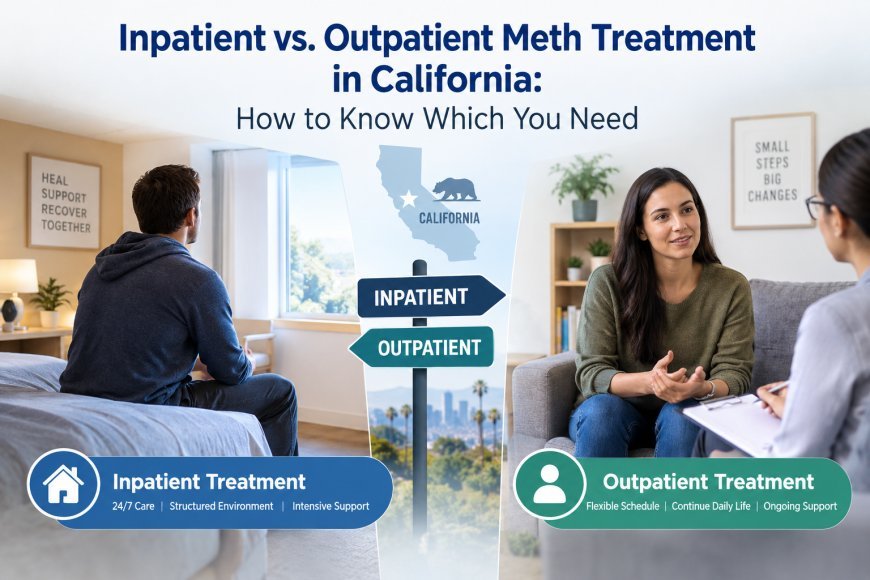
Inpatient and outpatient meth treatment depends on your current drug use, relapse history, mental health, home environment, and ability to stay away from meth while living at home. Inpatient care provides a structured setting with round-the-clock support, while outpatient care lets you receive therapy and other services while continuing to live at home. A qualified addiction treatment professional can assess your situation and recommend the right level of care.
Choosing the right california meth treatment can be a tough decision. You may need to think about your job, family, children, and what will happen to your usual routine while you get help. Some people feel that staying at a treatment center gives them the space and structure they need, while others prefer outpatient care so they can keep living at home. The best option depends on your drug use, health, home situation, and how much support you have around you.
What Is Inpatient Meth Treatment?
Inpatient treatment places a person in a treatment facility for a set period. Depending on the program, care may include medical monitoring, individual counseling, group therapy, behavioral treatment, psychiatric services, recovery planning, and support with daily routines.
Residential treatment can also provide a live-in setting without the same hospital-level medical care associated with inpatient services. California treatment providers may offer different levels of residential and outpatient care, so patients should ask exactly what medical and behavioral services a facility provides. California's Department of Health Care Services licenses and monitors qualifying residential and outpatient substance use disorder programs.
Inpatient or residential care may suit someone who:
- Uses meth frequently or in large amounts
- Has tried to quit several times and returned to meth
- Faces strong cravings that make staying home difficult
- Lives around people who use drugs
- Lacks a safe or stable home environment
- Experiences severe anxiety, paranoia, confusion, or other psychiatric symptoms
- Has another substance use problem that complicates recovery
- Needs a structured daily routine
- Cannot maintain treatment while managing normal home responsibilities
A residential setting removes many day-to-day triggers and gives the person more distance from people, places, and routines connected with drug use.
What Is Outpatient Meth Treatment?
Outpatient treatment allows a person to live at home while attending scheduled treatment sessions. Programs can vary from standard outpatient counseling to intensive outpatient programs with several treatment sessions each week.
Treatment may include individual counseling, group sessions, behavioral therapy, drug testing, relapse-prevention work, family support, and care for co-occurring mental health conditions.
Outpatient care may work well for someone who:
- Has a safe and stable place to live
- Can avoid meth and other drugs between appointments
- Has supportive family members or friends
- Can attend scheduled sessions consistently
- Has work, school, or childcare responsibilities
- Has enough stability to manage cravings outside the facility
- Has not experienced serious psychiatric symptoms related to meth use
- Wants to continue living at home while receiving treatment
Outpatient care does not mean a person receives less serious treatment. Some outpatient programs provide several hours of structured services each week and use evidence-based behavioral approaches. NIDA identifies contingency management as an effective treatment approach for stimulant use disorders, including methamphetamine use disorder. Behavioral therapies can also form an important part of treatment.
Inpatient vs. Outpatient: What Is the Main Difference?
The biggest difference involves where you live during treatment and how much structure surrounds your recovery.
| Factor | Inpatient/Residential | Outpatient |
|---|---|---|
| Living arrangement | You stay at the facility | You live at home |
| Daily structure | High | Moderate to high, depending on program |
| Outside triggers | Limited during treatment | Still present |
| Family contact | Structured in many programs | Usually easier to maintain |
| Work or school | Often requires time away | May continue with planning |
| Treatment intensity | Usually higher | Varies by program |
| Home support | Less important during stay | Very important |
| Privacy and routine | More controlled | More flexible |
The right choice depends less on which program sounds stronger and more on whether the setting matches your current needs.
When Inpatient Care May Make More Sense
Repeated relapse can signal a need for greater structure. If you stop using meth for a short period but quickly return to it after going home, an inpatient or residential setting may give you the separation you need to build new routines.
Your home environment also matters. If someone in your household uses meth, keeps drugs nearby, or does not support your recovery, outpatient treatment can become difficult. A residential program can provide temporary distance from those pressures.
Mental health symptoms also deserve attention. Meth use can contribute to anxiety, agitation, paranoia, sleep problems, and psychotic symptoms. Anyone experiencing severe confusion, hallucinations, suicidal thoughts, violent behavior, chest pain, seizures, or other urgent symptoms should seek emergency medical care rather than trying to manage the situation alone.
When Outpatient Care May Be a Good Fit
Outpatient treatment can work well when a person has a stable home and can follow a treatment schedule. It can also help people maintain employment, attend school, care for children, or remain connected with family.
A person who has already stopped using meth and can manage cravings with support may benefit from regular counseling and recovery services without moving into a residential facility.
Outpatient treatment also gives people opportunities to practice recovery skills in their normal environment. They can identify triggers at home, work on healthier routines, attend therapy, and then discuss real-life challenges during their next session.
If outpatient treatment does not provide enough support, a provider can reassess the situation and recommend a higher level of care.
How Mental Health Affects the Decision
Methamphetamine use often overlaps with mental health concerns. Depression, anxiety, trauma, sleep problems, and psychotic symptoms can affect treatment decisions.
A treatment provider should assess both substance use and mental health rather than focusing on meth alone. Integrated care can help address the conditions that may contribute to continued drug use.
If a person develops hallucinations, extreme paranoia, severe agitation, suicidal thoughts, or a risk of harming someone else, medical professionals should assess the situation immediately. In an emergency, call 911. For a mental health crisis or suicidal thoughts in the United States, call or text 988.
What Happens During Meth Treatment?
Treatment plans vary, but many programs use behavioral therapies and recovery support. A provider may assess drug use patterns, physical health, mental health, previous treatment attempts, family circumstances, housing, and other factors before selecting a level of care.
Treatment can include:
- Individual counseling
- Group therapy
- Cognitive behavioral approaches
- Contingency management
- Family counseling
- Relapse-prevention planning
- Mental health care
- Recovery support services
- Drug testing when clinically appropriate
- Aftercare planning
There is currently no FDA-approved medication specifically for methamphetamine use disorder. Researchers continue to study medication options, while behavioral approaches remain central to treatment.
How Long Do You Need Treatment?
There is no single treatment length that works for everyone. Some people need a short residential stay followed by outpatient care. Others may benefit from longer residential support or ongoing outpatient counseling.
The important issue involves maintaining care after the initial treatment period. Leaving a residential program does not mean treatment has to stop. Many people move from residential care to outpatient counseling, recovery groups, family support, or other community services.
California provides residential and outpatient substance use disorder services through licensed and certified programs. People can use the California Department of Health Care Services directories to find licensed or certified providers and county referral resources.
Final Thoughts
Inpatient and outpatient meth treatment can both provide meaningful support, but they serve different needs. Inpatient or residential care can provide a controlled setting for people who need greater structure, while outpatient care can fit people who have stable housing and enough support to manage recovery at home.
Do not choose a program based only on cost, convenience, or how long the program lasts. Ask a qualified treatment professional to assess your substance use, physical and mental health, home environment, relapse history, and support system. California also maintains directories of licensed and certified substance use disorder programs that can help people identify available services.
FAQs About Inpatient and Outpatient Meth Treatment
1. Is inpatient rehab better than outpatient treatment for meth addiction?
Not necessarily. The right level of care depends on the person's needs. Inpatient or residential treatment may suit someone who needs distance from triggers, greater structure, or a stable drug-free setting. Outpatient care may suit someone with a safe home, reliable support, and enough stability to attend treatment while living at home.
2. Can outpatient treatment work if I keep relapsing?
It can, but repeated relapse may show that you need a different level of support. A provider may recommend intensive outpatient care, residential treatment, or another service based on your treatment history, current drug use, mental health, and living situation. People on Reddit often raise this exact concern when deciding between outpatient and residential care.
3. How long do people stay in inpatient meth rehab?
The length varies by program and individual needs. Some programs offer short residential stays, while others provide longer treatment. A provider should assess your situation and create a treatment plan based on your clinical needs rather than choosing a fixed period for everyone.
4. Can I keep working while receiving outpatient meth treatment?
Often, yes. Outpatient programs allow many people to continue working or attending school because they return home after treatment sessions. However, treatment schedules can vary, and intensive outpatient programs may require several sessions each week. Discuss your work schedule with the provider before enrolling.
If you or someone close to you struggles with methamphetamine use, seeking professional help can provide a safer path toward recovery. In an immediate medical or mental health emergency, call (844) 547-3153
What's Your Reaction?
 Like
0
Like
0
 Dislike
0
Dislike
0
 Love
0
Love
0
 Funny
0
Funny
0
 Angry
0
Angry
0
 Sad
0
Sad
0
 Wow
0
Wow
0