























Amblyopia Therapy for Adults: Modern Approaches to Improving Lazy Eye
Explore how amblyopia therapy for adults may help improve lazy eye, visual coordination, and binocular vision. Discover modern vision therapy options and personalised care at Vasudeva Vision.

Do you have one eye that sees less clearly than the other? Have you been diagnosed with lazy eye and wondered whether treatment is still possible in adulthood? You are not alone. Many adults live with amblyopia for years without knowing that they may have options to improve certain aspects of their visual function.
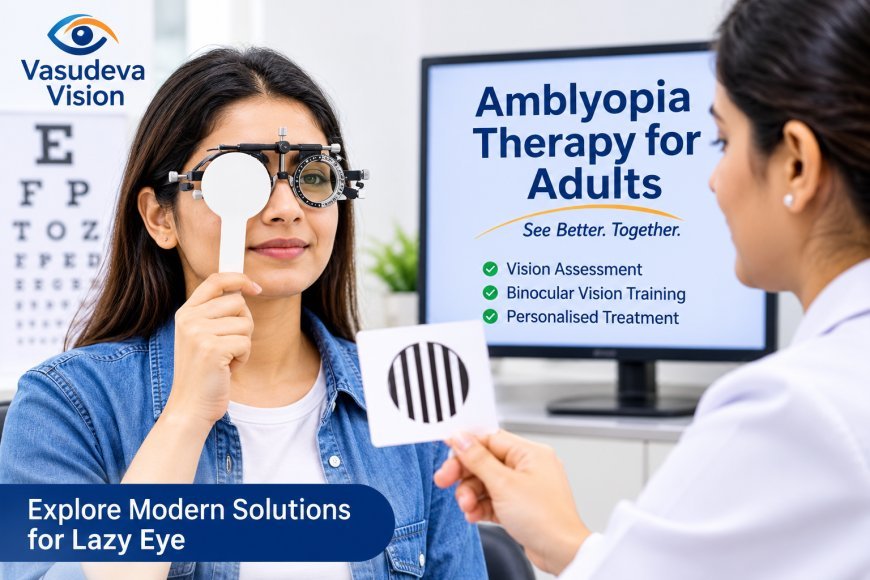
focuses on evaluating and improving visual performance through suitable treatment approaches. Although lazy eye is commonly associated with childhood, adults can also undergo a detailed assessment to explore available treatment options.
At Vasudeva Vision, we believe that understanding your visual condition is the first step towards better eye care. With structured vision therapy and appropriate guidance, selected adults may work towards improving their visual coordination and binocular vision.
What Happens to Your Eyes When You Have Amblyopia?
Amblyopia, also called lazy eye, develops when the brain favours one eye over the other during visual development. This can result in reduced vision in the affected eye, even when the eye itself appears healthy.
The condition can affect everyday activities such as:
-
Reading books or working on a computer.
-
Judging distances while driving.
-
Participating in sports.
-
Recognising objects clearly.
-
Performing activities that require depth perception.
Many adults assume that these difficulties cannot be addressed later in life. However, modern approaches to vision care allow specialists to assess whether any improvement may be possible.
Why Should Adults Consider Amblyopia Therapy?
Amblyopia can continue into adulthood if it is not adequately treated during childhood. However, the brain retains some capacity for visual adaptation and learning throughout life.
This ability, known as neuroplasticity, has encouraged interest in treatment approaches designed to improve visual processing.
Considering amblyopia therapy for adults may be worthwhile if you:
-
Have reduced vision in one eye.
-
Have a history of lazy eye from childhood.
-
Experience difficulties with binocular vision.
-
Have reduced depth perception.
-
Want to explore non-surgical vision therapy options.
A professional assessment is important because treatment suitability and expected results vary from person to person.
Different Approaches Used in Adult Amblyopia Treatment
Treatment for adult amblyopia depends on the cause and severity of the condition. An eye care professional may recommend a combination of approaches.
1. Corrective Eyewear
Some individuals have unequal refractive errors between their eyes. Appropriate spectacles or contact lenses can help provide clearer visual input and are often an important part of treatment.
2. Binocular Vision Training
Binocular vision training involves activities that encourage both eyes to work together. Depending on the individual's condition, these activities may help improve binocular coordination.
3. Computer-Based Vision Therapy
Modern vision therapy may include specially designed computer-based activities that provide visual stimulation to both eyes.
These exercises are selected according to individual visual needs and may be used as part of a supervised therapy programme.
4. Guided Visual Exercises
Specific visual activities may be recommended to work on visual processing, coordination and other relevant visual skills.
These exercises should be selected by a qualified professional rather than performed randomly at home.
Can Amblyopia Therapy for Adults Improve Vision?
One of the most common questions adults ask is whether lazy eye can actually improve after many years.
The answer depends on individual circumstances. Some adults may experience improvements in visual acuity or binocular visual function through appropriate treatment. Others may experience limited changes.
Factors that influence treatment outcomes include:
-
The severity of amblyopia.
-
The age at which treatment begins.
-
The underlying cause.
-
Previous treatment history.
-
Consistency with the recommended programme.
-
The presence of other eye conditions.
It is important to have realistic expectations. Vision therapy does not guarantee complete recovery or normal vision in every adult.
What Makes Adult Amblyopia Therapy Different from Childhood Treatment?
Children's visual systems are still developing, which generally makes early amblyopia treatment particularly important.
Adults, on the other hand, have an established visual system. Their treatment plans may therefore focus on visual function, binocular coordination and the potential for visual improvement.
Adult treatment may involve:
-
Detailed binocular vision assessments.
-
Individualised therapy programmes.
-
Computer-based visual training.
-
Regular progress evaluations.
-
Professional guidance throughout treatment.
The goal is to identify the most suitable approach for each patient's visual needs.
How Does Vasudeva Vision Help Adults with Lazy Eye?
At Vasudeva Vision, we understand that every patient has different visual requirements. Our approach focuses on assessing individual needs and recommending suitable vision care solutions.
Our amblyopia therapy services aim to support patients through structured visual activities and personalised therapy approaches.
Patients can explore:
-
Comprehensive vision assessments.
-
Individualised vision therapy.
-
Binocular vision training.
-
Software-based visual exercises.
-
Regular monitoring and professional guidance.
If you have been living with lazy eye for years, an assessment can help you understand your current visual condition and available options.
Frequently Asked Questions
1. Can a 30-year-old receive amblyopia therapy?
Yes. Adults in their 30s can undergo an amblyopia assessment and explore appropriate treatment options. The possibility and extent of improvement depend on individual visual conditions.
2. Does lazy eye become permanent in adulthood?
Amblyopia that continues into adulthood can be long-standing. However, this does not automatically mean that treatment is impossible. Some adults may benefit from suitable vision therapy.
3. Is computer-based vision therapy useful for adult amblyopia?
Computer-based vision therapy may be used to provide structured visual activities, including binocular training. Its suitability depends on the patient's condition and should be determined by a vision care professional.
4. Can both eyes learn to work together again?
In selected cases, binocular vision therapy may help improve the coordination between both eyes. Results depend on the type and severity of the visual condition.
5. How can I start treatment for adult lazy eye?
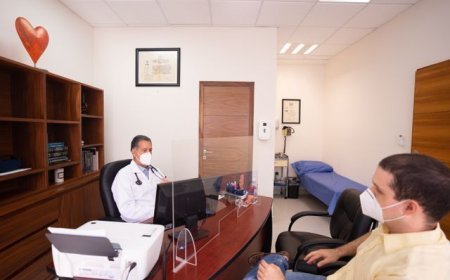
The first step is to schedule a comprehensive eye and binocular vision assessment. A specialist can evaluate your condition and recommend an appropriate treatment programme.
Conclusion
Living with lazy eye as an adult can affect your confidence and everyday visual activities. However, you do not have to assume that nothing can be done.
With modern vision care approaches, amblyopia therapy for adults provides an opportunity to explore treatment options that may improve visual performance and binocular coordination in suitable cases.
At Vasudeva Vision, we encourage adults with amblyopia to seek professional guidance and understand the possibilities available for their individual condition.
Take the first step towards understanding your vision. Contact Vasudeva Vision and book your consultation today.
Explore our service: https://vasudevavision.com/services/amblyopia-therapy/
What's Your Reaction?
 Like
0
 Dislike
0
 Love
0
 Funny
0
 Angry
0
 Sad
0
 Wow
0