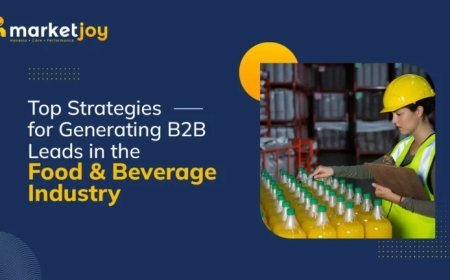













B2B Food and Beverage Growth Strategies for 2026
Explore B2B food and beverage growth strategies for 2026, from intent data to multi-channel outreach and personalization. Book a free call with MarketJoy.
Heading into 2026, food and beverage brands face a market that rewards precision more than ever. Buyers are busy, supply chains are complex, and expectations around health and sustainability keep rising. In b2b food and beverage, the companies that grow fastest are the ones that reach the right buyers with the right message at the right moment.
This article outlines practical growth strategies for the year ahead, built around the tactics that help F&B brands, distributors, and suppliers turn interest into long-term partnerships.
The Market Backdrop for 2026
Business research insights estimate that the B2B foodservice market was worth about USD 45 billion in 2024. It is forecast to reach USD 47.7 billion in 2025 and surpass USD 75 billion by 2033, growing at a rate near 6% a year across 2025 to 2033.
That steady growth is encouraging, but it also means competition is rising. More brands are chasing the same distributors, retailers, and foodservice buyers, and those buyers see more pitches than ever. Traditional cold outreach and generic campaigns no longer deliver the results they once did. Brands are moving to data-driven strategies, multi-channel outreach, and AI-powered tools, which is the direction modern food and beverage lead generation is taking.
Growth Strategy 1: Aim at Narrower, Better-Fit Segments
Growth does not always come from a bigger audience. Often it comes from a better-defined one. Not every retailer, distributor, or foodservice provider is right for your product line, and trying to reach all of them spreads your effort thin.
Use account-based marketing to build custom lists of decision-makers. Focus on regional or niche distributors that specialize in your category, such as organic snacks, functional beverages, or frozen foods. A plant-based beverage startup, for example, can grow faster by targeting regional distributors that serve health food chains than by chasing large mainstream supermarket suppliers.
Narrow targeting leads to faster adoption, better market fit, and a pipeline built on buyers who genuinely want what you sell.
Growth Strategy 2: Use Buyer Intent to Time Your Outreach
Timing separates a welcome message from an ignored one. Buyer intent data helps you identify which companies are actively seeking new food and beverage partners right now.
When you contact a company during an active search, your outreach feels relevant instead of intrusive. In 2026, as inboxes grow more crowded, this timing advantage matters more. Pair intent signals with account lists, and you can prioritize the prospects most likely to respond, rather than spreading effort evenly across everyone.
Growth Strategy 3: Run Coordinated Multi-Channel Campaigns
Relying on a single outreach method, like cold email, limits your reach. A coordinated, multi-channel approach shows up where buyers spend their time.
A strong plan blends personalized emails with industry-specific messaging, LinkedIn outreach to procurement managers and foodservice buyers, follow-up calls that build trust, and industry platforms and directories. One workable path begins with a cold email, moves to a LinkedIn connection request, then a product sample or virtual demo, and ends with a call about a distribution agreement. Repeated, relevant touches make your brand familiar and raise the odds of a reply.
Growth Strategy 4: Make Personalization Standard
Buyers receive hundreds of outreach messages, and generic notes rarely break through. Personalization is the differentiator that keeps your message from being deleted.
Segment prospects by region, business size, or market niche. Customize campaigns with offers that match each segment, such as an exclusive organic distribution partnership for East Coast markets, or a premium beverage line for quick service restaurant chains. AI-driven tools can analyze buyer behavior and help tailor your message at scale.
When a buyer sees that you understand their business, trust follows, and trust is what moves a first conversation toward a contract.
Growth Strategy 5: Build Credibility Through Partnerships
Influencer and partnership marketing is a growth lever that many B2B brands overlook. Chefs, nutritionists, and industry experts bring trust that advertising cannot buy. Real-world proof from restaurants, cafes, and distributors already using your products adds further weight.
Complementary brand collaborations can also open new segments. A beverage brand teaming up with a snack company for bundled promotions, for instance, introduces each brand to the other's buyers. As noise in the market increases, borrowed credibility becomes a competitive advantage in b2b food and beverage.
Growth Strategy 6: Make Events Part of a Longer Campaign
Trade shows and food expos remain valuable because they put you face to face with decision-makers actively looking for new brands. Natural Products Expo West, the Summer Fancy Food Show, and Specialty Coffee Expo are examples of events where these meetings happen.
To grow from events, treat them as the start of a campaign, not the end. Capture leads with QR codes, digital sign-ups, and mobile apps, offer samples and demos, and launch a personalized follow-up campaign immediately. The combination of in-person engagement and digital follow-up maximizes the return on every event you attend.
Growth Strategy 7: Prioritize With AI-Powered Lead Scoring
As your pipeline grows, so does the challenge of deciding who to contact first. AI-powered lead scoring helps by prioritizing the most engaged and high-intent leads, so your team concentrates on buyers who are ready to talk.
Alongside scoring, content marketing and referral programs can strengthen the pipeline. Whitepapers, case studies, and trend reports tailored for distributors build authority, while referral incentives encourage current partners to recommend your brand.
Choosing the Right Partner for Growth
Executing these strategies takes time, expertise, and the right tools. Many brands find it more effective to work with a specialist than to build everything internally. MarketJoy offers industry-specific expertise in food distribution and beverages, a combination of AI-driven insights and human intelligence for lead accuracy, multi-channel campaigns customized for F&B, and compliance-first processes that protect data privacy.
When you outsource targeted prospecting, your team can focus on product innovation and customer relationships. Our food and beverage lead generation services are built to help brands expand their pipelines with qualified buyers.
Final Thoughts
The brands that grow in 2026 will be the ones that combine focus, timing, and trust. Define your best-fit segments, use intent data, coordinate your channels, personalize at scale, build credibility, and follow up after every event. Small, consistent improvements across these areas add up to a stronger, more predictable pipeline.
Ready to Plan Your 2026 Growth?
If you want a focused plan for filling your pipeline with qualified buyers, MarketJoy is ready to help. Speak with our team and explore the strategies that fit your brand best.
Get a Free Strategy Call: https://meetings.hubspot.com/curtis-bendt/inbound-round-robin-for-discovery-calls
MarketJoy, Inc
Email: hello@marketjoy.com
Phone: +1 (484) 638-6389
Address: 186 N Palafox Street, Pensacola, FL 32502
What's Your Reaction?
 Like
0
Like
0
 Dislike
0
Dislike
0
 Love
0
Love
0
 Funny
0
Funny
0
 Angry
0
Angry
0
 Sad
0
Sad
0
 Wow
0
Wow
0