



















Best Eye Hospital in Haryana: A Complete Guide to Eye Care and Treatment
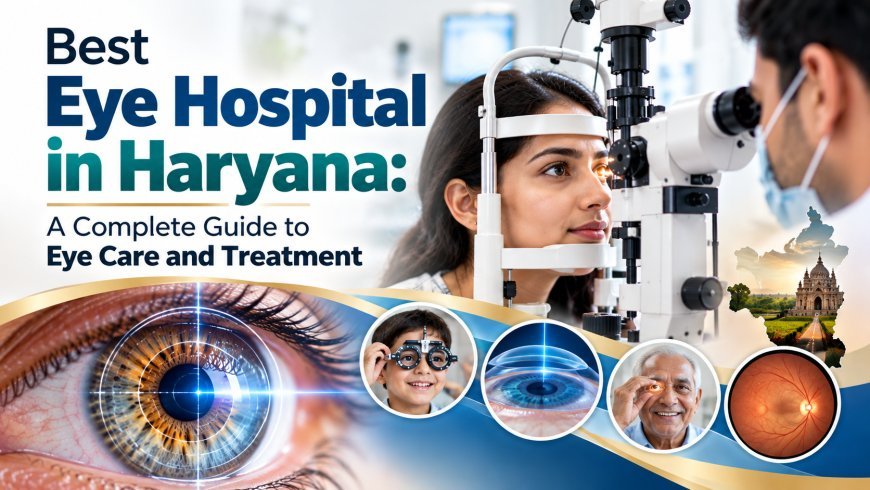
Finding the Best Eye Hospital in Haryana is an important decision when you or a family member needs reliable eye care. Good vision plays an essential role in everyday activities, education, work, mobility, and overall quality of life. From routine eye examinations to cataract surgery, glaucoma management, retinal care, corneal treatment, and vision correction, choosing the right eye-care facility can help ensure appropriate diagnosis and treatment planning.
Haryana has several cities with established healthcare facilities offering ophthalmic consultation and treatment. Patients may seek eye care in cities such as Gurgaon, Faridabad, Panipat, Karnal, Hisar, Rohtak, Ambala, Sonipat, and other parts of the state. The right choice depends on the patient's symptoms, medical history, age, diagnosis, treatment requirements, and access to appropriate diagnostic and surgical facilities.
Why Regular Eye Care Is Important
Many eye conditions can develop gradually without causing noticeable symptoms during their early stages. Regular eye examinations can help identify changes in vision and detect certain eye conditions at an earlier stage.
An eye examination may assess visual acuity, eye pressure, corneal health, retinal health, lens condition, and other aspects of ocular health. Depending on age and risk factors, an eye specialist may recommend additional diagnostic tests.
Regular eye check-ups can be particularly important for people with diabetes, high blood pressure, a family history of glaucoma, previous eye problems, or age-related changes in vision.
Eye Care Services to Consider
When searching for the Best Eye Hospital in Haryana, patients should consider whether the facility provides services relevant to their particular needs.
Cataract Treatment
Cataract is one of the common causes of reduced vision, particularly among older adults. It occurs when the natural lens of the eye becomes cloudy. Symptoms may include blurred vision, difficulty seeing in low light, glare, and increased sensitivity to bright lights.
Cataract treatment generally involves an eye examination followed by a discussion about whether surgery is appropriate. If surgery is recommended, the ophthalmologist may discuss different intraocular lens options according to the patient's visual requirements and lifestyle.
Glaucoma Care
Glaucoma refers to a group of eye conditions that can damage the optic nerve. Increased eye pressure can be an important risk factor, although glaucoma can also occur with normal eye pressure.
Regular examinations may include eye-pressure measurement, optic nerve evaluation, visual-field testing, and other investigations. Early detection and appropriate management can help reduce the risk of progressive vision loss.
Retina and Diabetic Eye Care
Retinal conditions require timely evaluation because some retinal problems can affect vision significantly. People with diabetes should pay particular attention to regular eye examinations because diabetes can affect the blood vessels of the retina.
Retinal evaluation may include a dilated eye examination and imaging tests when clinically indicated. Treatment depends on the specific condition and may include monitoring, medication, laser treatment, injections, or surgery.
Cornea and Ocular Surface Care
The cornea is the transparent front surface of the eye and plays an important role in focusing light. Corneal problems may result from infections, injuries, dry eye, keratoconus, inflammation, or other conditions.
Patients with persistent redness, irritation, light sensitivity, blurred vision, or recurrent eye discomfort may require specialist assessment. Treatment depends on the underlying cause.
Pediatric Eye Care
Children may experience refractive errors, squint, lazy eye, congenital eye conditions, or other vision problems. Early assessment can be useful because untreated visual problems during childhood may affect visual development.
Parents should consider an eye examination if a child frequently squints, sits very close to screens or books, complains of headaches, has difficulty reading, or shows unusual eye movement.
Refractive and Laser Vision Correction
People who want to reduce their dependence on spectacles or contact lenses may explore procedures such as LASIK, PRK, or SMILE, depending on their eye condition and suitability.
Not every person is a candidate for every procedure. A detailed examination is necessary to assess corneal thickness, corneal shape, refractive error, tear-film health, eye pressure, and other factors before a treatment decision is made.
How to Choose the Right Eye Hospital in Haryana
Searching online for the Best Eye Hospital in Haryana can produce many options. Instead of relying only on rankings or promotional statements, patients should evaluate several practical factors.
1. Qualified Eye-Care Professionals
Check the qualifications and areas of expertise of the ophthalmologists available at the facility. Different eye conditions may require different areas of specialization, including cataract, cornea, glaucoma, retina, pediatric ophthalmology, or refractive surgery.
2. Diagnostic Facilities
Accurate diagnosis is an important part of eye care. Depending on the condition, examinations may require technologies such as optical coherence tomography, corneal mapping, visual-field testing, retinal imaging, biometry, or other specialized investigations.
3. Treatment Options
A suitable eye-care facility should provide treatment options according to the patient's diagnosis rather than promoting one procedure for everyone. The ophthalmologist should explain available options, expected benefits, limitations, possible risks, and follow-up requirements.
4. Surgical Facilities
Patients considering eye surgery should understand where the procedure will be performed, what pre-operative assessments are required, what type of follow-up is provided, and what precautions are recommended after surgery.
5. Transparent Communication
Clear communication is an important part of healthcare. Patients should be able to discuss their symptoms, concerns, medical history, treatment choices, potential complications, and expected recovery with their eye-care team.
What to Expect During an Eye Examination
A comprehensive eye examination can vary depending on the patient's age and symptoms. The appointment may begin with questions about medical history, previous eye problems, medications, and changes in vision.
The ophthalmologist may check visual acuity and examine the front and back of the eye. Additional investigations may be recommended based on the findings.
For some examinations, pupil dilation may be necessary. Patients should follow the instructions provided by their eye-care professional regarding preparation and follow-up.
When Should You Visit an Eye Specialist?
You should consider an eye examination if you experience persistent blurred vision, difficulty reading, frequent headaches associated with visual tasks, eye pain, recurring redness, increased sensitivity to light, flashes, floaters, or sudden changes in vision.
Certain symptoms require urgent medical attention. Sudden loss of vision, severe eye pain, sudden flashes and numerous floaters, a curtain-like shadow in the field of vision, or an eye injury should be assessed promptly by an eye-care professional.
Eye Care for Different Age Groups
Eye-care requirements change throughout life.
Children may need screening for refractive errors and conditions affecting visual development. Young adults may require examinations for refractive errors, contact-lens-related problems, or occupational and digital eye strain. Adults with diabetes or other medical conditions may require periodic retinal evaluation.
Older adults are more likely to experience age-related conditions such as cataract, glaucoma, macular changes, and other retinal problems. Regular examinations can help identify these conditions and guide appropriate management.
Questions to Ask Before Choosing an Eye Hospital
Before deciding on an eye-care facility, patients can ask:
- Which ophthalmologist will evaluate my condition?
- What diagnostic tests are required?
- What treatment options are available?
- Are there alternatives to surgery?
- What are the possible risks and complications?
- How long may recovery take?
- What follow-up appointments will be required?
- What precautions should I follow after treatment?
- What should I do if symptoms worsen after treatment?
These questions can help patients make informed decisions rather than choosing a facility solely because of advertising claims.
Why Patient-Centred Eye Care Matters
A good eye-care experience involves more than treatment alone. Patients benefit when doctors and healthcare teams take time to understand their symptoms, explain diagnostic findings, discuss treatment options, and provide appropriate follow-up.
The most suitable eye hospital can vary from one patient to another. Someone requiring cataract surgery may have different requirements from a patient needing glaucoma monitoring, retinal treatment, pediatric eye care, or refractive surgery.
Therefore, people searching for the Best Eye Hospital in Haryana should focus on the quality and relevance of care available for their specific condition.
Conclusion
Choosing the Best Eye Hospital in Haryana should involve careful consideration of medical expertise, diagnostic facilities, treatment options, surgical infrastructure, patient communication, and follow-up care. Whether you need a routine eye examination, cataract evaluation, glaucoma assessment, retinal examination, corneal care, pediatric eye consultation, or vision-correction assessment, the right approach begins with an accurate diagnosis.
Rather than selecting an eye hospital based only on promotional claims, patients should consider their individual healthcare requirements and discuss suitable options with a qualified ophthalmologist. Regular eye examinations and timely medical attention can play an important role in protecting vision and maintaining long-term eye health.
If you are experiencing changes in your vision or have concerns about your eye health, schedule an examination with a qualified eye-care professional and receive guidance based on your individual condition.
What's Your Reaction?
 Like
0
Like
0
 Dislike
0
Dislike
0
 Love
0
Love
0
 Funny
0
Funny
0
 Angry
0
Angry
0
 Sad
0
Sad
0
 Wow
0
Wow
0