

























How to Choose the Right Packaging for Drones and Accessories
Learn how to choose drone packaging with the right cardboard boxes, protective inserts, and shipping materials to protect drones and accessories.

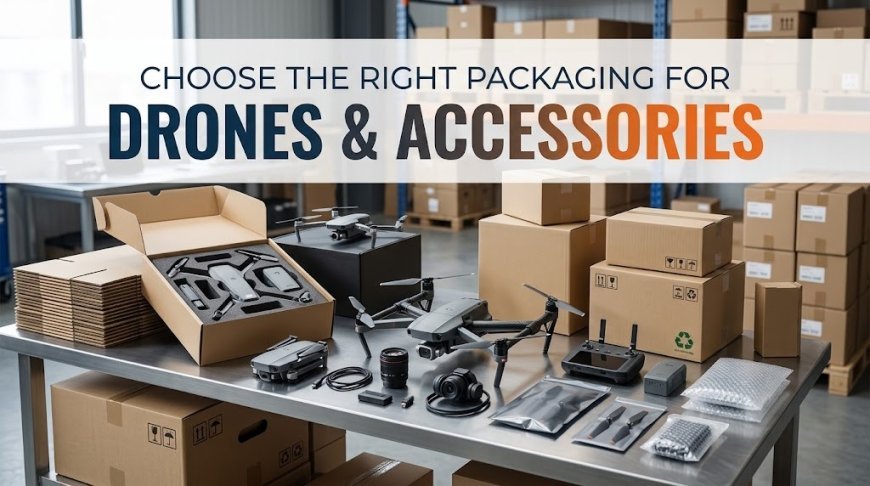
Choosing packaging for drones requires more thought than selecting a box that fits the product. Drones contain delicate components, including cameras, propellers, sensors, controllers, and electronic circuits that can be damaged by impact, vibration, or movement during transportation. The right packaging should protect these components while making storage, shipping, and product presentation easier.
The best solution depends on the drone's size, weight, intended use, and the accessories included in the package. A small recreational drone may need a compact box with a molded insert, while a professional aerial photography drone may require a stronger shipping carton and precisely fitted protective cushioning.
For manufacturers, retailers, and online sellers, understanding packaging materials, insert designs, box dimensions, and shipping requirements helps prevent damage and improve the customer's experience. Here is how to choose packaging that meets practical needs without adding unnecessary costs.
1. Start With the Drone Type and Its Components
Before selecting a box, identify what needs to fit inside it. Drone packaging should accommodate the complete product rather than just the main aircraft.
A typical package may contain:
-
Drone body and folding arms
-
Removable propellers and spare blades
-
Remote controller or transmitter
-
Camera equipment and gimbal accessories
-
Charging cables and compatible power adapters
-
Batteries and battery holders
-
User manuals, warranty information, and setup guides
Each component may require a different level of protection. For example, a camera-equipped drone needs support around its camera and gimbal, while a compact racing drone may require secure spaces for spare propellers and electronic accessories.
Create a list of all included components and measure each item before choosing the box. This makes it easier to plan the internal layout, prevent accessories from moving around, and avoid oversized packaging.
2. Choose the Right Packaging Material
Packaging material affects structural strength, shipping weight, appearance, and cost. The ideal option depends on whether the drone is being sold in a retail store, delivered directly to a customer, or shipped in bulk to a distributor.

Cardboard boxes for lightweight drones
Folding carton board works well for lightweight retail packaging when the drone is already protected by a fitted insert or inner case. It provides a clean surface for product details, diagrams, branding, and specifications. However, thin cardboard alone may not provide sufficient protection for heavy equipment or rough shipping conditions.

Corrugated cardboard boxes for shipping
Corrugated packaging is a practical choice for heavier drones, wholesale shipments, and orders that travel through multiple distribution stages. Its fluted structure helps provide cushioning and stacking strength. Select the appropriate board construction and box design according to the shipment's weight, dimensions, and handling conditions.

Rigid boxes and protective cases for premium drones
Rigid boxes can provide an upscale presentation for high-value consumer drones and gift sets, especially when combined with a suitable insert. For demanding field use or repeated transportation, a purpose-built hard case may be more appropriate than a decorative rigid box.
Some businesses use a combination of these materials. For example, a branded retail box can sit inside a stronger corrugated shipping carton. This separates product presentation from the demands of transportation.
3. Select Inserts That Keep Every Component Secure
The space inside a drone box is just as important as the material outside it. Without internal support, the drone and its accessories can shift during delivery, causing scratches, broken propellers, or damage to sensitive components.
Custom inserts help keep each item in a designated position. The best insert depends on the product's shape, weight, fragility, and how frequently it will be removed from the package.


Common insert options include:
-
EVA foam inserts: Useful for creating snug compartments around drone bodies, controllers, and delicate equipment. They are particularly suitable when cushioning and a clean presentation are priorities.
-
Cardboard inserts: Help separate accessories and support lightweight components. They can also be a practical option for businesses seeking paper-based packaging.
-
Molded pulp inserts: Offer shaped compartments for certain products and may be suitable for businesses exploring fiber-based protective packaging.
-
Foam cushioning and padding: Can fill suitable gaps and absorb some impacts when selected and positioned correctly.
For example, a drone kit containing a controller, charging accessories, spare propellers, and a camera could use a fitted insert with separate compartments for each item. This makes the package easier to unpack and helps prevent loose accessories from contacting the aircraft.
Avoid making compartments excessively tight, especially around folding arms, camera gimbals, switches, and other delicate parts. Test the insert with the actual product to ensure a secure fit without applying damaging pressure.
4. Measure the Box According to the Drone's Dimensions
A box that is too small can place pressure on delicate components, while an oversized package allows unnecessary movement and increases shipping volume.
Measure the drone in its intended packed configuration. For a foldable drone, determine whether it will be packed with its arms folded or in another manufacturer-approved position. Measure the controller, batteries, cables, and other accessories separately before planning the insert.
Use these measurements to determine the internal box dimensions:
|
Measurement |
What to consider |
|---|---|
|
Length |
The longest dimension of the packed drone or internal layout |
|
Width |
The space required for the aircraft and side compartments |
|
Height |
The drone's thickness, insert depth, and protective clearance |
|
Accessory space |
Separate compartments for controllers, cables, and spare parts |
|
Protective clearance |
Room for the chosen cushioning without compressing sensitive components |
Remember that the required internal dimensions differ from the external dimensions of the finished box. Board thickness, insert walls, and cushioning all occupy space.
It is also important to avoid selecting a larger box simply because it seems safer. A well-designed insert can secure the product inside a reasonably sized carton, reducing unnecessary material use and dimensional shipping costs where applicable.
5. Account for Drone Batteries and Shipping Requirements
Drone batteries require special consideration because many use lithium-ion or lithium-polymer technology. These batteries can present fire risks if damaged, short-circuited, improperly packed, or exposed to unsuitable conditions.
Packaging decisions should account for the battery type, watt-hour rating, whether batteries are installed in the drone or packed separately, and the destination's shipping requirements.
Consider the following precautions:
-
Follow the battery manufacturer's handling and packaging instructions.
-
Protect battery terminals against short circuits and prevent contact with conductive objects.
-
Keep batteries from shifting or being crushed during transport.
-
Use packaging suitable for the actual shipment configuration.
-
Check the applicable carrier rules and dangerous-goods regulations before dispatch.
A cardboard box or foam insert does not, by itself, make a battery shipment compliant. Depending on the battery and transport method, additional packaging, markings, documentation, or restrictions may apply.
Businesses shipping drones internationally should verify the current requirements for the origin, destination, and chosen carrier. Battery regulations can differ from those for shipments containing a drone without batteries.
6. Design Packaging for Storage and Distribution
Drone packaging must perform well beyond the initial packing stage. Manufacturers and distributors need boxes that can be stored, stacked, picked, and transported without creating unnecessary handling problems.
For warehouse operations, consider packaging that:
-
Stacks securely without putting excessive pressure on the drone.
-
Uses consistent dimensions for similar product models.
-
Includes clear product identification and inventory labels.
-
Protects corners and vulnerable areas during handling.
-
Fits available shelving and shipping cartons.
For online orders, a two-layer packaging approach can be particularly useful. A fitted retail package protects and presents the drone, while an outer corrugated carton provides an additional layer for distribution.
If the drone is being shipped with several accessories, verify that heavier items cannot shift into the aircraft during transit. Packaging tests should reflect realistic handling, including vibration, drops, and stacking where relevant.
For businesses shipping high-value equipment, protective performance should be tested using an appropriate procedure rather than judged by appearance alone.
7. Make Product Information and Branding Easy to Understand
Packaging also communicates what the customer is buying. For drone brands, clear product information can help distinguish different models, explain included accessories, and create a more professional unboxing experience.
Custom printed packaging can include:
-
Brand logo and product name
-
Drone model and key specifications
-
Product images or simple setup illustrations
-
A list of included accessories
-
QR codes linking to manuals or setup instructions
-
Handling symbols and relevant shipping information
The design should match the intended customer. A consumer drone may benefit from clean graphics and concise feature highlights, while an industrial drone may need a more technical presentation with clear model identification and accessory information.
Avoid overcrowding the box with promotional text. Important product details should remain easy to read, and required safety or handling information should not be hidden by decorative graphics.
A consistent design across multiple drone models can also help retailers and distributors distinguish products during storage and order fulfillment.
8. Balance Protection, Cost, and Sustainability
The cheapest box is not always the least expensive solution overall. If inadequate protection results in damaged products, replacement shipments, refunds, or customer complaints, the initial savings may be lost.
Compare packaging options using the total cost of delivering the product safely.
|
Factor |
What to evaluate |
|---|---|
|
Material cost |
The cost of the box, inserts, and protective components |
|
Product protection |
Whether the complete package withstands expected handling |
|
Shipping efficiency |
Package weight, dimensions, and carrier pricing |
|
Packing time |
How quickly employees can assemble and load the package |
|
Reusability |
Whether a protective case can be used repeatedly |
|
Material waste |
Opportunities to reduce unnecessary layers and excess space |
Sustainable packaging can also be considered when selecting materials. Appropriately designed cardboard inserts and recyclable paper-based components may reduce reliance on certain plastic packaging materials. However, the packaging must still provide adequate protection, and actual recyclability depends on its construction and local recycling facilities.
For high-value drones, removing too much cushioning to reduce material use can create greater costs through product damage. The objective is to find the lightest, most practical packaging design that meets the required protection level.
9. Test the Packaging Before Ordering in Bulk
A packaging design may look suitable on a computer screen but perform differently when assembled around the actual drone. Before committing to a large order, prepare a sample and evaluate it under realistic conditions.
Use this checklist:
Include feedback from packing staff and, where possible, review damage reports from actual deliveries. If the same component repeatedly shifts or suffers damage, redesign its compartment or protective support before scaling production.
Testing a sample first can help businesses avoid ordering hundreds or thousands of boxes that do not meet their operational needs.
Conclusion
Choosing suitable drone packaging starts with understanding the aircraft, its accessories, and the conditions it will face during storage and transportation. Lightweight cardboard boxes may work for certain retail applications, while corrugated cardboard packaging provides additional structural support for shipping. Protective inserts help keep sensitive components in place, and specialized cases may be appropriate for premium equipment or repeated field use.
Businesses should also consider battery shipping rules, internal dimensions, clear labeling, and the total cost of packaging throughout the distribution process. Testing a complete sample before bulk production helps confirm that the design works in practice.
For manufacturers, retailers, and distributors exploring custom drone packaging boxes, Fast Custom Boxes is an option to consider when comparing box structures, printed designs, and packaging configurations. The right solution is one that protects the equipment, simplifies handling, and presents the product professionally without adding unnecessary complexity.
What's Your Reaction?
 Like
0
Like
0
 Dislike
0
Dislike
0
 Love
0
Love
0
 Funny
0
Funny
0
 Angry
0
Angry
0
 Sad
0
Sad
0
 Wow
0
Wow
0