

















Computer Vision Is Giving Machines the Ability to See

Artificial Intelligence is not limited to processing numbers, analysing text, or answering questions. It also enables computers to interpret visual information. This area of technology is known as Computer Vision. Computer Vision is a branch of Artificial Intelligence that allows machines to analyse and understand images and videos. It helps computers recognise objects, identify patterns, detect movements, and interpret visual environments.
The technology attempts to perform certain visual recognition tasks that humans naturally accomplish through their eyes and brains. It has become increasingly important in industries where analysing visual information quickly and accurately can improve operations.
How Computer Vision Works
Computer Vision systems use images and videos as input. These visual materials are processed through algorithms that identify important features, shapes, colours, textures, and patterns. Deep Learning plays a major role in modern Computer Vision. In particular, Convolutional Neural Networks (CNNs) are widely used for analysing image data.
A CNN learns to recognise different visual features through multiple processing layers. Early layers may identify basic elements such as edges and shapes, while deeper layers recognise more complex objects and patterns. For example, a model trained to recognise vehicles can learn to distinguish between cars, buses, motorcycles, and trucks by analysing thousands of labelled images. Once trained, the model can examine new images and predict what they contain.
Major Applications of Computer Vision
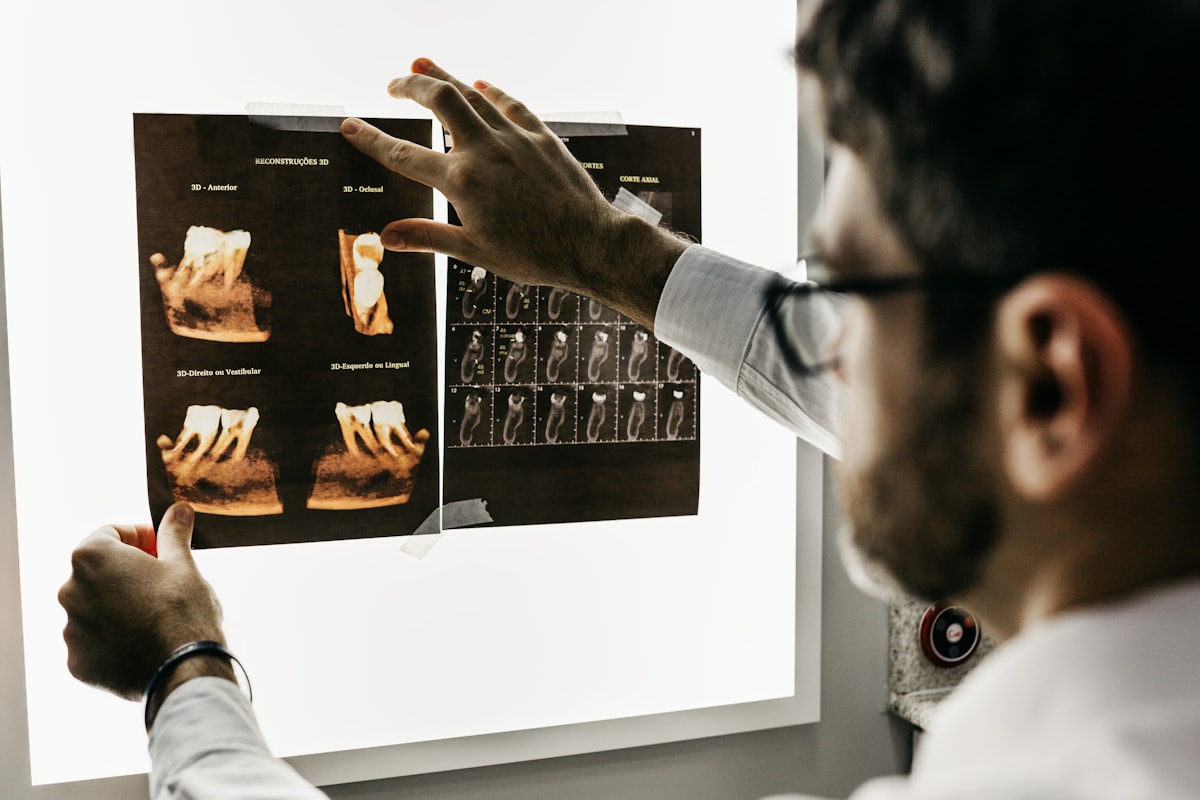
Computer Vision is used across several industries, making it one of the most practical applications of Artificial Intelligence. In healthcare, computer vision systems assist medical professionals by analysing X-rays, MRI scans, and other medical images. These systems can highlight unusual patterns that may require further examination by specialists. In the automotive industry, visual recognition technologies support advanced driver assistance systems. Cameras help identify road signs, nearby vehicles, pedestrians, and lane markings.
Retail businesses use Computer Vision for inventory monitoring, product recognition, and customer behaviour analysis. These applications can help improve store management and operational efficiency. Manufacturing companies also benefit from automated visual inspection. Computer Vision systems can identify surface defects, damaged components, and production inconsistencies, helping businesses maintain quality standards. Security and surveillance applications use visual analysis to detect movements, recognise objects, and monitor specific activities. Such systems require appropriate privacy safeguards and responsible implementation.
Important Technologies Behind Computer Vision
Several techniques contribute to the development of Computer Vision applications. Image classification involves identifying the main category represented in an image. Object detection goes further by identifying individual objects and locating them within the image. Image segmentation divides an image into meaningful regions or individual objects. This technique is particularly useful in medical imaging and autonomous navigation.
Facial recognition is another application that analyses facial features to compare or verify identities. Its use requires careful attention to consent, privacy, accuracy, and legal requirements. Together, these technologies allow machines to extract increasingly detailed information from visual data.
Computer Vision as an AI Specialisation
Computer Vision offers interesting learning opportunities for individuals interested in image processing, automation, robotics, and Deep Learning. Developing expertise in this field requires knowledge of Python programming, mathematics, neural networks, image processing, and Machine Learning frameworks. Exploring AI Courses in Gurgaon can help aspiring professionals understand the fundamentals of Computer Vision and develop the technical foundation needed to work on practical AI projects.
The Future of Computer Vision
Computer Vision is expected to play a growing role in smart manufacturing, healthcare, agriculture, transportation, and robotics. As algorithms become more advanced, machines will be able to interpret increasingly complex visual environments. However, challenges involving accuracy, lighting conditions, data quality, and privacy will continue to require attention.
Ultimately, Computer Vision is helping bridge the gap between visual information and intelligent decision-making. It demonstrates how Artificial Intelligence can transform ordinary images and videos into valuable information that supports real-world applications.
What's Your Reaction?
 Like
0
 Dislike
0
 Love
0
 Funny
0
 Angry
0
 Sad
0
 Wow
0