


























What Is the Difference seo vs geo and Why Do Businesses Need Both in 2026?
introduced a new challenge for businesses: maintaining visibility across both traditional search engines and AI-generated answers.
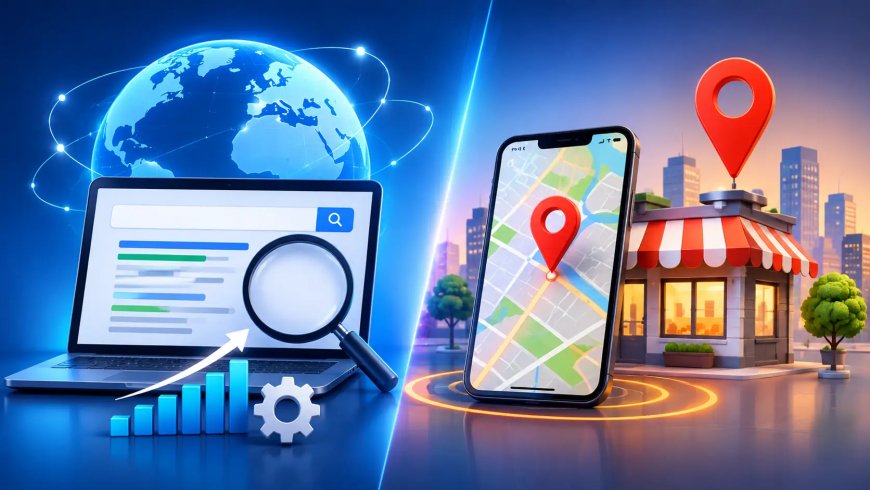
Search behaviour is changing rapidly. People no longer depend only on traditional Google search results to find products, compare services, or research businesses. They are also using AI-powered platforms such as ChatGPT, Gemini, Perplexity, and Google's AI Overviews to get direct answers to their questions.
This change has
This is where Search Engine Optimization (SEO) and Generative Engine Optimization (GEO) become important. While both aim to improve online visibility, they work differently. Understanding SEO vs GEO can help businesses build a stronger digital presence and reach potential customers across multiple search platforms.
What Is SEO (Search Engine Optimization)?
Search Engine Optimization (SEO) is the process of improving a website's visibility in organic search engine results. It involves optimizing website content, technical performance, backlinks, and user experience to help search engines understand and rank web pages.
For example, when someone searches for an enterprise SEO agency on Google, SEO helps relevant agencies appear in the search results.
A well-planned SEO strategy generally focuses on:
-
Keyword Research: Identifying the search terms potential customers use.
-
On-Page SEO: Optimizing page titles, meta descriptions, headings, internal links, and website content.
-
Technical SEO: Improving website speed, crawlability, indexing, mobile usability, and structured data.
-
Off-Page SEO: Building quality backlinks, brand mentions, and website authority.
-
Content Optimization: Publishing useful, relevant, and informative content that answers users' questions.
The primary objective of SEO is to attract relevant organic traffic and improve a website's position in search engine results.
What Is GEO (Generative Engine Optimization)?
Generative Engine Optimization (GEO) focuses on improving how a brand, website, or business appears in AI-generated answers.
Instead of concentrating only on traditional search rankings, GEO optimization helps AI platforms understand a business, identify relevant information, and potentially reference its content when answering user questions.
For example, someone might ask ChatGPT, "Which enterprise SEO agencies provide technical SEO and AI search optimization services in India?"
Rather than displaying a traditional list of ten blue links, an AI platform may generate a conversational response mentioning relevant agencies and information from different online sources.
GEO focuses on making a brand's information clear, reliable, relevant, and easy for generative AI systems to interpret.
Important GEO activities include:
-
Creating clear, answer-focused website content.
-
Publishing original research, statistics, and industry insights.
-
Maintaining consistent brand information across online platforms.
-
Improving entity recognition and structured data.
-
Building authority through relevant publications and brand mentions.
-
Monitoring brand mentions and citations across AI platforms.
The goal is to improve a brand's chances of being discovered, mentioned, or cited in AI-generated responses.
SEO vs GEO: Key Differences
SEO and GEO share several optimization principles, but their objectives and visibility measurements are different.
|
Comparison |
SEO |
GEO |
|
Full Form |
Search Engine Optimization |
Generative Engine Optimization |
|
Primary Focus |
Search engine rankings |
AI-generated answers |
|
Main Platforms |
Google and Bing |
ChatGPT, Gemini, Perplexity and AI search experiences |
|
Content Approach |
Keyword and search-intent focused |
Question, context and entity focused |
|
Visibility |
Organic search results |
AI mentions and citations |
|
Authority Signals |
Backlinks, relevance and website authority |
Brand credibility, reliable sources and consistent information |
|
Performance Measurement |
Rankings, organic traffic and CTR |
AI visibility, mentions and citation frequency |
|
Main Objective |
Generate organic search traffic |
Improve brand visibility in AI-generated responses |
Although the differences are important, businesses should not treat SEO and GEO as completely separate marketing activities. Both benefit from high-quality content, technical website health, and strong brand authority.
Why Businesses Need Both SEO and GEO in 2026
Relying on only one discovery channel can limit how potential customers find a business.
Traditional search engines remain important for users who want to visit websites, compare services, and explore detailed information. At the same time, AI platforms are becoming another way for people to research brands and make purchasing decisions.
Here are some reasons businesses should consider both approaches.
1. Reach Customers Across Different Search Experiences
Not every customer searches in the same way. Some users prefer entering keywords into Google, while others ask detailed questions through AI assistants.
An effective SEO strategy helps businesses appear in relevant organic search results. GEO optimization creates additional opportunities for their information to be considered in AI-generated responses.
Combining both approaches helps businesses build visibility across different stages of the customer journey.
2. Improve Visibility in Google AI Overviews
Google AI Overviews have introduced another layer to the search experience by presenting AI-generated summaries for eligible queries.
Traditional SEO still plays an important role in helping content become discoverable and useful. However, businesses also need to create well-structured, accurate, and informative content that directly addresses search intent.
AI Overviews SEO should therefore be considered alongside conventional SEO activities rather than as a replacement for them.
Businesses should focus on providing clear explanations, answering related questions, demonstrating expertise, and maintaining technically accessible websites.
3. Build Stronger Brand Authority
Brand authority is important in both traditional and AI-driven search environments.
Search engines consider several signals when evaluating content quality and relevance. Generative AI systems also rely on information from different sources to formulate responses.
Consistent business information, expert contributions, industry publications, customer reviews, and relevant brand mentions can help establish a stronger online presence.
An enterprise SEO agency can coordinate these activities through a combined strategy covering technical SEO, content development, digital PR, and GEO optimization.
4. Understand More Than Organic Traffic
Traditional SEO reporting generally focuses on organic traffic, keyword positions, impressions, clicks, and conversions.
However, these metrics alone may not explain how often a brand appears in AI-generated answers.
Businesses should also monitor:
-
Brand mentions across AI platforms.
-
AI-generated answer citations.
-
Share of voice across relevant prompts.
-
Competitor visibility across LLMs.
-
Accuracy of brand and product information.
-
Organic search performance and qualified traffic.
Tracking both sets of metrics provides a broader understanding of digital visibility.
How to Build a Combined SEO and GEO Strategy
Businesses do not necessarily need two separate optimization teams. A coordinated approach can help manage both activities more effectively.
Step 1: Conduct an SEO and GEO Audit
Start by reviewing the website's existing organic search performance. Identify important keywords, ranking pages, technical issues, and content gaps.
Next, test relevant customer questions across platforms such as ChatGPT, Gemini, and Perplexity. Check whether your business appears in the answers, whether competitors are mentioned, and which sources are cited.
This helps identify visibility gaps across both environments.
Step 2: Improve Technical Website Performance
A technically healthy website provides a strong foundation for search visibility.
Review website speed, mobile usability, crawlability, indexing, XML sitemaps, robots.txt, internal linking, and structured data.
Use relevant schema markup, including Organization, Article, Product, and other applicable types, to help search engines interpret website information.
Technical optimization should support accessibility and accurate content understanding rather than rely on schema as a guarantee of AI citations.
Step 3: Create Content That Answers Real Questions
Content should address the questions customers actually ask before choosing a product or service.
For example, an enterprise software company can publish detailed guides covering product comparisons, implementation costs, technical requirements, and common challenges.
Use descriptive headings, direct answers, relevant examples, and supporting evidence. Avoid unnecessary keyword repetition and generic AI-generated content.
This approach supports traditional search intent while making information easier to understand and reference.
Step 4: Strengthen Off-Page Authority
Publishing content on your website is only one part of building brand credibility.
Businesses should also work on earning relevant backlinks, contributing to industry publications, publishing expert opinions, and maintaining accurate third-party business profiles.
These activities can improve brand recognition and help establish a consistent online presence.
Step 5: Monitor SEO and AI Search Visibility
Create a monthly reporting process that combines traditional SEO metrics with AI visibility measurements.
Review keyword rankings, organic traffic, conversions, AI mentions, citation frequency, and competitor performance.
Use these insights to identify content opportunities and prioritize future optimization activities.
How an Enterprise SEO Agency Can Help With GEO Optimization
Managing SEO and GEO across a large website can be challenging, especially for businesses with multiple services, product categories, and website sections.
An experienced enterprise SEO agency can help coordinate technical improvements, keyword research, content optimization, backlink development, and AI search visibility activities.
The important part is having one strategy that supports both traditional search performance and emerging AI-driven discovery.
For businesses looking to strengthen their digital presence, Polyvalent's enterprise SEO services can be considered as part of a broader organic growth strategy.
You can also read Why Enterprise Brands Need a Unified SEO and GEO Strategy in 2026 to understand how businesses can bring both optimization approaches together under one roadmap.
Conclusion
The discussion around SEO vs GEO is not about choosing one approach over the other. Both serve different purposes and contribute to how customers discover businesses online.
SEO helps websites build organic search visibility, attract relevant visitors, and generate traffic. GEO focuses on improving the chances of a brand being understood, mentioned, and cited in AI-generated answers.
In 2026, businesses should consider both as connected parts of their digital marketing strategy. A combination of technical SEO, useful content, strong brand authority, and AI search visibility monitoring can help create a more sustainable online presence.
Frequently Asked Questions (FAQs)
1. What is the main difference between SEO and GEO?
SEO focuses on improving website rankings in traditional search engines, while GEO focuses on making brand information more accessible and useful for AI-powered platforms that generate answers.
2. Does GEO replace traditional SEO?
No. GEO does not replace SEO. Both approaches have different objectives but share important foundations, including quality content, technical accessibility, website authority, and clear information.
3. What is AI Overviews SEO?
AI Overviews SEO involves optimizing website content and technical foundations to improve its relevance and eligibility for Google's AI-generated search summaries. However, appearing in an AI Overview is not guaranteed through optimization alone.
4. How can businesses improve AI search visibility?
Businesses can improve their AI search readiness by publishing accurate information, creating expert-led content, maintaining consistent brand details, earning relevant mentions, and improving website structure.
5. Why should businesses work with an enterprise SEO agency?
An enterprise SEO agency can help manage large-scale keyword research, technical SEO, content optimization, backlink strategies, and reporting. It can also coordinate GEO activities to support visibility across traditional and AI-powered search experiences.
6. How long does GEO optimization take to show results?
There is no fixed timeline for GEO results. AI-generated responses change frequently, and visibility depends on factors such as content relevance, source credibility, brand recognition, and platform behaviour. Regular monitoring is important for understanding progress.
What's Your Reaction?
 Like
0
 Dislike
0
 Love
0
 Funny
0
 Angry
0
 Sad
0
 Wow
0