

























Flood Light for Commercial, Industrial, and Outdoor Lighting
Choose a Flood Light for parking lots, industrial sites, sports grounds, and building exteriors with efficient LED technology and reliable outdoor illumination

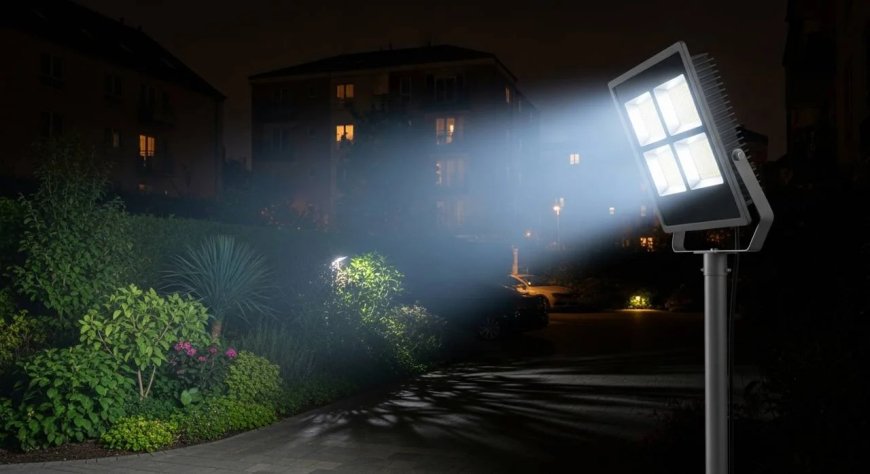
Flood Light fixtures are widely used to illuminate large outdoor areas that require broad and powerful lighting coverage. From commercial parking lots and warehouse yards to sports facilities and building exteriors, these fixtures help businesses maintain visibility across spaces that may otherwise become difficult to navigate after dark.
LED Flood Light technology has become a popular choice for outdoor lighting projects because it can provide substantial light output with efficient power consumption. Available in different wattages, beam angles, colour temperatures, and housing designs, floodlights can accommodate many lighting requirements.
Selecting the right fixture involves more than choosing a high-wattage model. The area being illuminated, mounting height, light distribution, weather conditions, and operating schedule all influence the effectiveness of an outdoor lighting system.
What Is a Flood Light?
A Flood Light is a lighting fixture designed to distribute illumination across a relatively wide area. Unlike a spotlight, which concentrates light into a narrower beam, a floodlight generally provides broader coverage for outdoor and large-space applications.
LED floodlights use light-emitting diodes to generate illumination. Many models include reflective or lens-based optical systems that help direct light toward the intended area. Their housings are designed according to the conditions in which the fixtures are expected to operate.
Floodlights are available in compact formats for entrances and small outdoor areas, as well as higher-output models for industrial sites, sports grounds, and large commercial properties.
Common Applications of Flood Lights
1. Commercial Buildings and Parking Lots
Shopping centres, office complexes, hotels, and retail properties often require lighting around parking spaces, vehicle routes, entrances, and outdoor gathering areas.
Floodlights can illuminate these spaces when mounted and aimed appropriately. Their effectiveness depends on the dimensions of the area, the height of the mounting structure, and the selected beam distribution.
For larger parking facilities, floodlights may complement pole-mounted area lights to improve coverage across the entire property.
2. Warehouses and Industrial Facilities
Industrial sites may have loading yards, equipment storage areas, delivery routes, and outdoor work zones that require illumination after sunset.
LED Flood Light fixtures can provide broad coverage for these locations, helping personnel navigate the site and carry out routine activities. Facilities exposed to dust, moisture, vibration, or extreme temperatures should select products rated for their operating environment.
3. Sports Grounds and Recreational Areas
Outdoor courts, training grounds, community sports facilities, and recreational spaces may use floodlights to illuminate playing surfaces.
The lighting requirements depend on the sport, field dimensions, viewing conditions, and level of activity. Competitive venues may require specialised lighting calculations to achieve suitable uniformity and limit glare for players and spectators.
4. Building Exteriors and Perimeter Areas
Floodlights can highlight building facades, illuminate outdoor entrances, and provide visibility around selected perimeter areas.
Their placement should be planned carefully to avoid shining directly into windows, neighbouring properties, or the eyes of pedestrians and drivers. Directional control is especially important when fixtures are mounted at elevated positions.
5. Construction and Maintenance Sites
Construction projects may require temporary or permanent lighting for outdoor work areas, material storage, and access routes.
Suitable floodlights can help illuminate these spaces, but the chosen fixtures must meet the site's electrical and environmental requirements. Portable equipment should be rated for the intended conditions and installed securely.
Important Features to Consider Before Buying
Understanding the technical specifications of a Flood Light helps buyers choose a fixture suited to their application.
Brightness and Lumen Output
Lumens measure the total amount of visible light produced by a fixture. The required output depends on the size of the area, mounting height, surface reflectivity, and the activities performed.
A higher lumen rating does not automatically mean a better lighting result. Beam angle, fixture placement, and the number of lights also influence how illumination reaches the target area.
For large projects, a lighting layout can help estimate the number of fixtures needed and identify areas where coverage may be uneven.
Wattage and Energy Efficiency
Wattage indicates how much electrical power a fixture consumes. Comparing wattage with lumen output helps evaluate lighting efficiency.
LED Flood Lights may reduce electricity consumption compared with less efficient traditional fixtures. Actual savings depend on the equipment being replaced, the new fixture's performance, operating hours, and electricity rates.
Businesses should compare product specifications rather than relying on wattage alone when assessing brightness or potential energy savings.
Beam Angle and Light Distribution
Beam angle describes how broadly light spreads from the fixture. Narrower beams concentrate illumination over a smaller area, while wider beams distribute light across a larger space.
The appropriate option depends on the mounting height and the shape of the target area. A wide beam may suit a nearby building facade, while an elevated industrial yard may need a different optical distribution.
Correct aiming can reduce dark areas, excessive glare, and unwanted light spill.
Colour Temperature
Colour temperature influences the visual appearance of the light. Common choices include 3000K warm white, 4000K neutral white, and 5000K cool white.
Warm white can suit architectural and decorative applications, while neutral or cool white may be preferred for many commercial and industrial locations. The selection should reflect visibility requirements, the surrounding environment, and any applicable lighting standards.
Weather Resistance
Outdoor floodlights must withstand the conditions present at their installation sites. Check the fixture's ingress protection rating for dust and moisture resistance, as well as its operating temperature range.
For coastal, humid, or industrial environments, corrosion-resistant materials and suitable protective finishes may be important. Always verify that the product is designed for the intended location.
Housing and Heat Management
The housing protects internal components and helps manage heat generated during operation. Effective thermal management can support reliable performance over time.
Review the manufacturer's information about construction materials, rated operating life, maintenance requirements, and warranty coverage before purchasing.
Benefits of LED Flood Lights
LED Flood Lights offer several potential advantages when properly selected and installed.
-
Efficient operation: LED technology can provide useful light output while managing electrical power consumption.
-
Broad coverage: Suitable beam patterns can illuminate large outdoor areas.
-
Flexible installation: Different mounting brackets and fixture sizes accommodate varied applications.
-
Reduced maintenance: Long-rated operating lives may reduce routine replacement requirements.
-
Lighting controls: Compatible sensors, timers, and dimming systems can help manage operating schedules.
These benefits depend on product quality, operating conditions, and the requirements of the installation.
How to Choose the Right Flood Light
Start by measuring the area and identifying the required illumination level. Consider mounting height, available installation points, surrounding buildings, pedestrian movement, and activities that take place after dark.
Next, compare lumen output, wattage, beam angle, colour temperature, environmental ratings, mounting options, and warranty terms. For sports facilities and large industrial sites, professional lighting calculations may be necessary to determine fixture placement and suitable illumination levels.
It is also important to consider glare and light pollution. Aim fixtures toward the intended area and avoid directing excessive light into neighbouring properties or nearby roads.
Installation and Maintenance Considerations
Floodlights should be mounted securely and installed according to the manufacturer's instructions and applicable electrical codes. Outdoor electrical connections must be suitable for the environmental conditions, and installation work should be performed by a qualified professional.
Correct aiming is essential because even a powerful fixture may provide poor coverage if positioned incorrectly. For elevated installations, plan for safe access during inspection and maintenance.
Regular checks can identify loose brackets, damaged cables, dirt accumulation, moisture intrusion, or changes in light output. Follow the manufacturer's cleaning and maintenance guidance to support continued performance.
Final Thoughts
Flood Light fixtures provide a versatile lighting solution for commercial properties, industrial yards, parking facilities, sports grounds, construction sites, and building exteriors. Selecting the appropriate model requires attention to brightness, beam distribution, energy efficiency, weather resistance, and mounting conditions.
By evaluating the lighting requirements before purchasing, businesses can choose fixtures that provide suitable coverage without unnecessary energy use or excessive glare. Careful installation and maintenance help support reliable outdoor illumination for everyday operations.
What's Your Reaction?
 Like
0
Like
0
 Dislike
0
Dislike
0
 Love
0
Love
0
 Funny
0
Funny
0
 Angry
0
Angry
0
 Sad
0
Sad
0
 Wow
0
Wow
0