























HVAC Load Calculations for Efficient Commercial Systems
Learn how HVAC load calculations guide equipment selection, improve building comfort, and support reliable commercial HVAC performance.
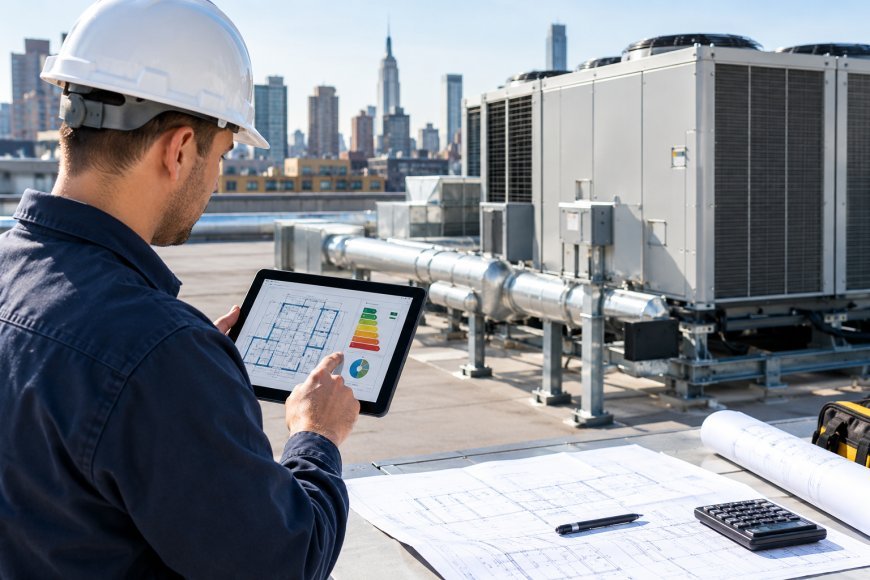
Selecting the right heating and cooling equipment is essential for commercial building performance. An HVAC system must handle the building’s actual heating and cooling demands without wasting energy or struggling during extreme weather. Accurate load calculations help contractors determine the capacity required to maintain comfortable indoor conditions throughout the year.
For businesses planning Commercial HVAC Installation New York, proper system sizing is especially important. Seasonal temperature changes, building occupancy, ventilation requirements, and operating schedules all influence equipment performance. A system selected without considering these factors may increase utility costs, create uneven temperatures, and experience unnecessary wear.
Understanding Commercial HVAC Loads
HVAC load calculations estimate how much heating or cooling a building needs under specific conditions. Contractors evaluate several factors, including building size, insulation, window placement, air leakage, occupancy, lighting, and heat-producing equipment.
Ventilation requirements also play a major role. Commercial buildings need adequate outdoor air to support indoor air quality, but incoming air must be conditioned to maintain comfortable temperatures and humidity levels.
Rather than relying only on square footage, experienced HVAC professionals assess the building as a complete environment. This approach helps identify different demands across offices, retail spaces, institutional facilities, and industrial properties.
Selecting the Right Equipment
Once heating and cooling loads are established, contractors can compare suitable equipment options. These may include rooftop units, boilers, chillers, air-handling equipment, and other mechanical systems, depending on the project.
Equipment capacity should match calculated demand as closely as practical. Oversized systems may cycle on and off frequently, reduce humidity control, and consume more energy than necessary. Undersized equipment may struggle to maintain indoor temperatures during peak conditions.
Contractors must also consider efficiency ratings, controls, available electrical capacity, ductwork, maintenance access, and compatibility with existing building systems. Coordinating these details during design helps prevent installation delays and costly modifications.
For new construction and renovation projects, early communication among engineers, contractors, and facility managers supports better equipment selection and long-term performance.
Planning for Unexpected HVAC Problems
Even a carefully designed system can experience unexpected failures. Worn components, restricted airflow, electrical problems, and neglected maintenance can affect performance when heating or cooling demand is high.
Businesses seeking Emergency HVAC Service Nassau County should prioritize a prompt assessment that identifies the cause of the problem and the safest practical repair. A temporary loss of climate control can affect employees, occupants, equipment, and daily operations.
However, emergency repairs should not replace long-term planning. Regular inspections, filter replacement, coil cleaning, control testing, and performance monitoring can help identify developing issues before they cause major disruptions.
Building Reliable HVAC Performance
Henick-Lane Service Corp understands the importance of coordinating equipment selection, installation, and ongoing service around each building’s operational needs. Proper load calculations provide a foundation for dependable system performance, while preventive maintenance helps protect that investment.
By combining sound engineering principles with careful installation and responsive service, commercial property owners can improve comfort, manage operating costs, and reduce avoidable equipment problems.
The goal is not simply to install a system with sufficient capacity. It is to create a reliable mechanical solution that supports the building’s needs today while remaining practical to operate and maintain in the years ahead.
What's Your Reaction?
 Like
0
 Dislike
0
 Love
0
 Funny
0
 Angry
0
 Sad
0
 Wow
0