


















How Reliable IT Hardware Supports Business Growth and Digital Efficiency
Discover how reliable IT hardware, computer components, servers, storage devices, and networking equipment support business productivity and long-term growth.

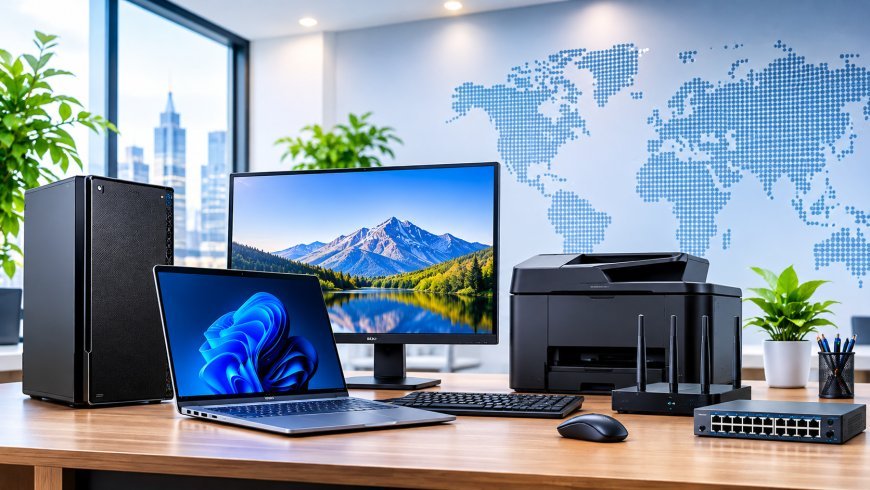
Technology has become an essential part of almost every modern business. From managing customer information to handling daily operations, organizations depend on reliable computer systems and IT infrastructure to maintain productivity. Whether a company operates a small office, a growing enterprise, or a large data center, the quality of its hardware can significantly influence performance, efficiency, and long-term success.
Although software and digital services receive considerable attention, hardware remains the foundation that makes these technologies work. Computers, servers, storage devices, networking equipment, and other essential components help businesses process information, communicate effectively, and maintain smooth operations. Choosing the right IT hardware is therefore an important decision for organizations that want to build a dependable technology environment.
Understanding how different hardware components contribute to business operations can help companies make informed purchasing decisions and avoid unnecessary expenses.
Understanding the Importance of IT Hardware in Modern Businesses
IT hardware refers to the physical equipment used to operate computer systems, networks, and digital infrastructure. These components work together to support everyday business activities, including data processing, communication, document management, and information storage.
A reliable hardware environment allows employees to complete tasks efficiently while helping organizations maintain consistent operations. Outdated or incompatible equipment, on the other hand, can create performance problems, increase maintenance requirements, and interrupt important workflows.
For example, a business with insufficient computer memory may experience slow application performance when employees run multiple programs simultaneously. Similarly, an organization using outdated networking equipment may struggle with connectivity issues that affect communication and collaboration.
Investing in suitable hardware helps businesses establish a stronger technical foundation and prepare for future operational demands.
Essential IT Hardware Components Every Business Should Understand
Different IT hardware solutions categories serve specific purposes within an organization's technology infrastructure. Understanding their functions makes it easier to select equipment that matches business requirements.
1. Computers and Workstations
Desktop computers, laptops, and professional workstations are among the most commonly used hardware devices in business environments. They provide employees with the computing power needed to manage applications, communicate with colleagues, create documents, and perform specialized tasks.
However, not every business requires the same type of computer.
Administrative employees may work comfortably with standard desktop systems, while graphic designers, engineers, and software developers may require workstations with more powerful processors, additional memory, and advanced graphics capabilities.
When selecting computer hardware, businesses should consider processor performance, RAM capacity, storage technology, connectivity, and compatibility with essential software.
2. Data Storage Devices
Data is one of the most valuable resources for modern organizations. Businesses generate and manage large amounts of information, including customer records, financial documents, project files, and operational data.
Storage devices provide the capacity to save and retrieve this information when needed.
Hard disk drives (HDDs) offer substantial storage capacity and are commonly used for large data collections. Solid-state drives (SSDs), meanwhile, use flash memory to deliver faster data access and improved system responsiveness.
The right storage solution depends on performance requirements, available capacity, budget, and backup needs.
Organizations should also consider implementing regular data backups to reduce the risk of information loss caused by hardware failures, accidental deletion, or unexpected incidents.
3. Networking Equipment
Reliable connectivity is necessary for businesses that depend on cloud applications, online communication, shared resources, and connected devices.
Networking hardware helps establish and maintain these connections. Common examples include routers, switches, network adapters, Ethernet cables, and wireless access points.
Routers direct network traffic between different networks, while switches connect multiple devices within a local network. Network cables and adapters provide the physical connections required for reliable communication.
Selecting compatible networking equipment can improve connectivity, support efficient data transfer, and help organizations maintain a stable working environment.
4. Servers and Enterprise Hardware
Servers play an important role in organizations that manage centralized applications, databases, shared files, and business services.
Unlike standard desktop computers, server systems are designed to support continuous workloads and provide resources to multiple users or devices.
Businesses may use dedicated servers for file sharing, application hosting, database management, virtualization, and other technical operations.
When choosing server hardware, organizations should evaluate processing capacity, memory requirements, storage configurations, network connectivity, and future expansion possibilities.
Proper server selection helps businesses build infrastructure that can accommodate increasing workloads without requiring frequent replacements.
5. Printers and Office Equipment
Despite the growth of digital documentation, many businesses continue to rely on physical documents for administrative, operational, and customer-facing activities.
Printers and scanners support these requirements by allowing organizations to produce, copy, and digitize important documents.
The appropriate equipment depends on printing volume, document types, operating costs, connectivity options, and maintenance requirements.
For offices with frequent printing needs, selecting equipment designed for consistent workloads can help reduce interruptions and improve overall productivity.
Factors to Consider When Purchasing IT Hardware
Buying technology equipment requires more than comparing prices or choosing familiar brands. Businesses should evaluate several factors to ensure that their purchases provide practical value.
Performance and Technical Specifications
Hardware specifications should match the intended workload. A computer designed for basic office activities may not provide sufficient processing power for demanding professional applications.
Similarly, storage devices should offer adequate capacity and suitable data transfer speeds.
Before purchasing equipment, organizations should identify their performance requirements and compare available specifications carefully.
Compatibility With Existing Systems
Compatibility is another important consideration when upgrading or expanding IT infrastructure.
A new memory module must be supported by the motherboard, while storage devices need compatible interfaces and connection standards. Networking equipment should also work with existing infrastructure.
Checking compatibility before purchasing can prevent installation problems and unnecessary replacement costs.
Reliability and Product Quality
Hardware failures can interrupt business operations and create additional expenses. For this reason, reliability should be an important part of every purchasing decision.
Businesses should examine manufacturer specifications, warranty coverage, product documentation, and the reputation of the equipment supplier.
Selecting dependable hardware can help reduce maintenance challenges and support more consistent performance.
Scalability and Future Requirements
Business technology needs rarely remain unchanged. As organizations grow, they may require additional computers, larger storage capacities, faster networking equipment, or more powerful servers.
Choosing scalable hardware makes future expansion easier.
For example, selecting a server platform with available memory expansion options can provide greater flexibility as business workloads increase.
Total Cost of Ownership
The initial purchase price does not represent the complete cost of IT hardware.
Organizations should also consider installation, maintenance, energy consumption, replacement parts, warranty support, and potential downtime.
Equipment with a slightly higher purchase price may provide better long-term value if it offers improved reliability and lower maintenance requirements.
Why Regular IT Hardware Maintenance Matters
Purchasing quality equipment is only one part of maintaining an effective technology environment. Regular maintenance is equally important for protecting hardware investments and ensuring dependable performance.
Dust accumulation, overheating, outdated firmware, loose connections, and excessive workloads can negatively affect equipment over time.
Businesses can reduce these risks through routine inspections and appropriate maintenance procedures.
Some useful practices include:
- Cleaning computer systems and ventilation areas regularly.
- Monitoring operating temperatures and cooling performance.
- Checking cables, connectors, and power supplies.
- Updating device firmware when appropriate.
- Monitoring storage health and available capacity.
- Maintaining reliable data backup procedures.
- Replacing damaged or aging components when necessary.
Preventive maintenance can help organizations identify potential issues before they develop into more serious problems.
The Role of IT Hardware Procurement in Business Efficiency
Managing technology purchases can become challenging as an organization expands. Different departments may require different equipment, and purchasing incompatible components can create unnecessary complications.
A structured IT hardware procurement process helps businesses identify their requirements, compare available solutions, and manage purchasing decisions more effectively.
Organizations should begin by evaluating their existing infrastructure and identifying areas that need improvement. They can then establish technical specifications, determine budgets, and compare suitable equipment.
Working with an established hardware supplier can also simplify the process of sourcing different technology categories.
IT Hardware Hub provides access to a broad range of technology equipment, including computer systems, processors, memory, storage devices, networking products, servers, printers, and related accessories. Having access to multiple hardware categories through one platform can help businesses explore equipment options according to their operational requirements.
A well-organized procurement strategy ultimately supports better resource management and more consistent technology planning.
Preparing IT Infrastructure for Future Business Needs
Technology continues to evolve, and businesses must regularly evaluate whether their existing hardware can support changing requirements.
Cloud computing, remote collaboration, automation, cybersecurity, and data-intensive applications are influencing how organizations design their IT environments.
Although these developments introduce new opportunities, they also create additional hardware requirements.
For instance, businesses handling larger amounts of information may need expanded storage capacity and improved backup infrastructure. Organizations supporting remote employees may benefit from stronger networking equipment and reliable communication devices.
Planning for future requirements does not mean purchasing the most expensive equipment available. Instead, businesses should focus on selecting hardware that offers suitable performance, compatibility, flexibility, and long-term value.
Regular infrastructure assessments can help organizations identify outdated equipment and prioritize upgrades based on actual operational needs.
Final Thoughts
Reliable IT hardware is a fundamental part of successful business operations. Computers, storage devices, servers, networking equipment, and office technology work together to support productivity, communication, and information management.
Making informed hardware purchasing decisions requires careful consideration of performance, compatibility, reliability, scalability, and total ownership costs. Regular maintenance and strategic procurement also help businesses protect their investments and maintain dependable systems.
What's Your Reaction?
 Like
0
 Dislike
0
 Love
0
 Funny
0
 Angry
0
 Sad
0
 Wow
0