





















How to Prevent Water Pooling and Drainage Problems on Residential Lots

Water pooling around a home may seem like a minor inconvenience, especially after heavy rainfall. However, standing water can gradually create serious problems for residential properties. From damaging foundations and weakening soil to encouraging mold growth and affecting landscaping, poor drainage can become an expensive issue if left unaddressed.
Many homeowners focus on landscaping, outdoor improvements, and home construction without considering how rainwater moves across their property. Proper drainage planning is essential because even a beautiful residential lot can experience flooding when water has no suitable path to flow away.
Understanding property drainage design and the importance of residential grading plans can help homeowners prevent water-related problems before they develop. With the right planning, drainage improvements can protect a home's structure, maintain usable outdoor spaces, and support long-term property value.
1. Understand What Causes Water Pooling on Residential Lots
Water pooling typically occurs when rainwater cannot drain naturally into the soil or move safely away from buildings. Several factors can contribute to this problem, including improper land slopes, compacted soil, blocked drainage systems, and poorly positioned landscaping features.
One common cause is insufficient ground slope around the house. When the soil is flat or slopes toward the foundation, rainwater naturally collects near the building instead of flowing away.
Soil conditions also play an important role. Clay-heavy soils, for example, absorb water more slowly than sandy or well-draining soils. As a result, rainfall may remain on the surface for extended periods.
Other contributing factors include:
-
Low areas where rainwater naturally collects.
-
Downspouts that release water too close to the foundation.
-
Driveways and patios that direct runoff toward the house.
-
Blocked gutters and underground drainage pipes.
-
Landscaping changes that interfere with natural water movement.
Identifying the source of standing water is the first step toward developing an effective drainage solution.
2. Use Proper Grading to Direct Water Away from Your Home
Land grading is one of the most important elements of residential drainage planning. It involves shaping the ground surface to establish suitable elevations and slopes that guide rainwater toward appropriate drainage areas.
A properly graded property should generally direct surface runoff away from the home's foundation. This reduces the likelihood of water entering basements, damaging foundation materials, or saturating the surrounding soil.
For many residential projects, professionals recommend maintaining a downward slope away from the foundation. A commonly used guideline is approximately a 5% slope over the first 10 feet, where site conditions and local regulations permit. However, actual grading requirements should account for property boundaries, neighboring buildings, soil conditions, and available drainage outlets.
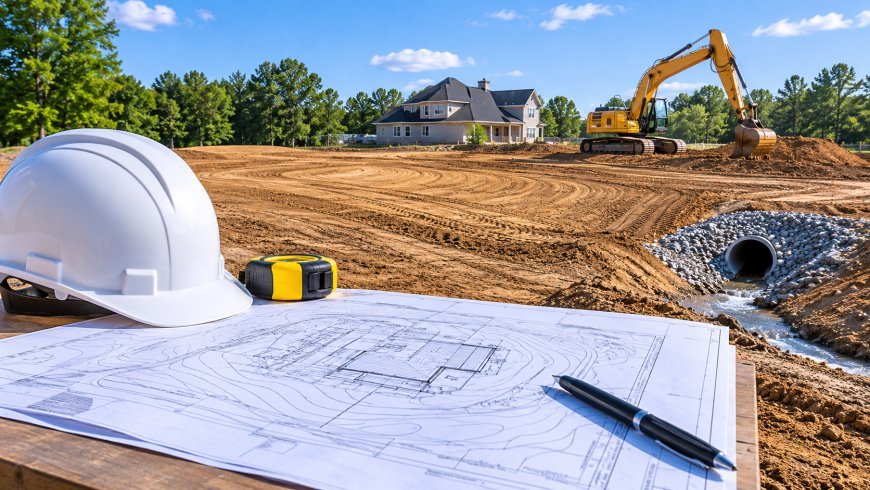
This is where residential grading plans become especially valuable. These plans show existing and proposed ground elevations, slope directions, drainage patterns, and other important site features.
Rather than relying on guesswork, homeowners and contractors can use grading documentation to understand how water should move across the property before construction or landscaping begins.
3. Invest in a Professional Property Drainage Design
Effective drainage requires more than installing a pipe or digging a shallow trench. Every residential lot has different elevations, soil characteristics, building locations, and runoff conditions.
A professional property drainage design considers these factors to develop a practical system for managing surface water and directing runoff safely.
Depending on the property's needs, drainage improvements may include:
-
French drains: Underground perforated pipes surrounded by gravel that collect and redirect groundwater.
-
Surface drains: Drainage inlets that capture water accumulating in low areas.
-
Swales: Shallow, landscaped channels that guide runoff toward suitable drainage locations.
-
Downspout extensions: Extensions that carry roof runoff farther away from the foundation.
-
Catch basins: Structures that collect surface water and connect it to an approved drainage system.
The right combination depends on the property's layout and local drainage requirements.
Professional planning also helps prevent one common mistake: transferring water problems from one part of the property to another. Drainage improvements should manage runoff responsibly without creating flooding or erosion issues for neighboring properties.
4. Maintain Gutters, Downspouts, and Existing Drainage Systems
Even a well-designed drainage system requires regular maintenance. Leaves, dirt, roofing debris, and other materials can gradually block gutters and drainage outlets, preventing water from flowing as intended.
When gutters become clogged, rainwater may overflow near exterior walls and collect around the foundation. Similarly, disconnected or poorly positioned downspouts can release large amounts of water into areas that are not designed to handle it.
Homeowners should inspect their drainage systems regularly, particularly before and during rainy seasons.
Important maintenance tasks include:
-
Cleaning gutters and checking for damaged sections.
-
Ensuring downspouts discharge water at suitable locations.
-
Removing leaves and debris from surface drainage inlets.
-
Inspecting visible drainage pipes for damage or blockages.
-
Checking low areas after heavy rainfall.
-
Replacing eroded soil where necessary to maintain proper slopes.
These simple steps can improve drainage performance and help prevent small maintenance issues from becoming costly repairs.
5. Consider Soil Conditions, Landscaping, and Rainwater Management
Landscaping can significantly influence how water moves across a residential property. Decorative features, retaining walls, raised garden beds, and paved surfaces may change natural drainage patterns.
For example, adding a concrete patio without considering its slope can cause rainwater to flow toward the house. Similarly, installing garden beds in natural drainage paths may obstruct runoff and create unexpected pooling.
Homeowners should consider drainage before making major outdoor improvements.
Permeable materials, such as gravel and suitable permeable paving, can help reduce surface runoff by allowing some rainfall to enter the ground. Rain gardens can also capture and temporarily manage runoff when designed with appropriate soil conditions, planting, and overflow provisions.
However, not every property is suitable for the same solution. Areas with poorly draining soil, high groundwater levels, or challenging slopes may require additional engineering considerations.
A coordinated grading and landscaping approach helps ensure that outdoor improvements support rather than interfere with the property's drainage system.
6. Plan Drainage Improvements Before Construction Begins
One of the most effective ways to prevent residential drainage problems is to address them during the planning stage rather than waiting until construction is complete.
Before building a home, adding an extension, or redesigning a yard, property owners should understand the site's existing elevations, drainage patterns, and potential runoff challenges.
Residential grading plans provide contractors and property owners with a clear reference for proposed ground elevations, drainage directions, and site development requirements.
Depending on the project and local authority requirements, drainage documentation may also need to address stormwater management, erosion control, and approved discharge locations.
Working with experienced site planning professionals can help identify potential issues early, reduce construction complications, and support a more reliable drainage strategy.
The goal is not simply to remove standing water after rainfall. It is to create a property layout that manages water effectively throughout the year.
Final Thoughts
Water pooling and drainage problems should never be ignored. What begins as a small wet area in the yard can eventually contribute to foundation damage, soil erosion, landscaping deterioration, and other expensive property issues.
By understanding site conditions, maintaining drainage systems, and investing in proper property drainage design, homeowners can reduce these risks and improve the long-term performance of their residential lots.
Most importantly, well-prepared residential grading plans help establish how water should move across a property before construction and landscaping decisions are finalized. Planning ahead makes it easier to prevent drainage problems, protect valuable structures, and create a safer, more functional outdoor environment.
What's Your Reaction?
 Like
0
 Dislike
0
 Love
0
 Funny
0
 Angry
0
 Sad
0
 Wow
0