
























How to Identify Hidden Performance Issues in Industrial Batteries
Discover how to identify hidden performance issues in industrial batteries through charging patterns, voltage checks, inspections, and practical maintenance tips

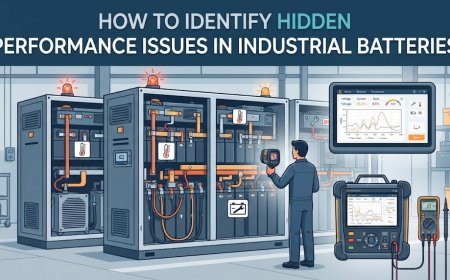
Industrial batteries play an important role in keeping warehouses, manufacturing facilities, distribution centers, and other industrial operations running smoothly. From powering forklifts and electric pallet jacks to supporting essential equipment, these batteries help businesses maintain productivity throughout the working day. However, not every battery problem is immediately noticeable. Sometimes, a battery appears to be working normally while its internal condition is gradually getting worse.
Identifying these problems early is where professional Industrial battery service becomes valuable. Hidden performance issues can develop over time due to improper charging, aging components, poor maintenance, temperature changes, or everyday operating conditions. If these problems go unnoticed, they may eventually lead to unexpected equipment downtime, higher operating expenses, and premature battery failure. Understanding the early warning signs helps businesses make better maintenance decisions and avoid unnecessary disruptions.
Why Industrial Battery Performance Problems Are Often Difficult to Detect
One of the biggest challenges with industrial batteries is that performance rarely declines overnight. In many situations, a battery continues powering equipment even when its capacity or efficiency has started decreasing.
For example, a forklift battery may still operate during the first few hours of a shift but struggle to maintain sufficient power later in the day. Similarly, a battery may complete its charging cycle without delivering the expected operating time.
These changes are easy to overlook because equipment operators often adjust their working habits without realizing that the battery is responsible.
Several factors make hidden battery problems difficult to identify:
- Gradual capacity loss: Battery performance decreases slowly, making changes difficult to notice without tracking.
- Inconsistent operating conditions: Different workloads can make battery performance appear unpredictable.
- Charging variations: Incorrect charging practices may affect battery efficiency without causing immediate failure.
- Internal component damage: Some battery problems develop inside the unit and cannot be identified through a basic visual inspection.
- Lack of maintenance records: Without historical information, businesses may struggle to recognize unusual performance changes.
The best approach is to monitor battery behavior regularly instead of waiting until equipment stops working.
1. Monitor Changes in Operating Time
One of the easiest ways to identify hidden battery performance issues is to observe how long equipment operates on a full charge.
An industrial battery should generally provide reasonably consistent operating time when the workload and operating conditions remain similar. If equipment starts requiring more frequent charging, the battery may be losing its ability to store and deliver energy efficiently.
For instance, imagine a forklift that previously operated throughout an eight-hour shift but now requires recharging after six hours under similar working conditions. This difference could indicate reduced battery capacity or another underlying problem.
However, operating time alone does not confirm battery failure. Heavy loads, increased equipment usage, operator habits, and environmental conditions can also affect energy consumption.
What businesses should do:
- Record operating hours after each full charge.
- Compare performance across similar working shifts.
- Monitor how frequently equipment needs recharging.
- Investigate sudden or consistent reductions in operating time.
- Check whether workload changes explain the difference.
Keeping simple operating records makes it easier to recognize performance changes before they become serious.
2. Look for Unusual Charging Patterns
Charging behavior can reveal problems that are not immediately visible during normal equipment operation.
A healthy industrial battery should follow the charging requirements recommended by its manufacturer. When charging times begin changing unexpectedly, it may indicate an issue with battery condition, charging equipment, or operating procedures.
For example, a battery that consistently takes much longer to reach a full charge may have developed capacity-related problems. On the other hand, unusually short charging periods could suggest that the battery is no longer accepting or storing energy as expected.
Other charging-related warning signs include:
- Charging sessions becoming less predictable.
- Battery chargers repeatedly displaying unusual warnings.
- Batteries becoming excessively warm during charging.
- Equipment showing a low-charge warning earlier than expected.
- Charging cycles ending without delivering normal operating performance.
Businesses should also verify that their chargers are compatible with the battery type and follow the correct charging settings.
Avoid changing charging settings without consulting the manufacturer or a qualified technician. Incorrect adjustments can create additional problems and potentially damage the battery.
3. Pay Attention to Voltage Fluctuations
Voltage measurements provide useful information about the condition of an industrial battery. Even when a battery appears fully charged, voltage readings may reveal inconsistencies that deserve further investigation.
A battery experiencing internal deterioration, damaged connections, or cell-related problems may show unusual voltage behavior under different operating conditions.
For example, a battery might display an acceptable voltage when resting but experience a significant voltage drop when equipment begins handling a heavy load.
This difference matters because industrial equipment requires stable electrical power to operate reliably.
How to Check for Voltage-Related Problems
A qualified technician can measure battery voltage under appropriate conditions and compare the readings with manufacturer specifications.
Useful checks include:
- Measuring overall battery voltage after the recommended resting period.
- Checking voltage during charging and discharging.
- Comparing individual cell or block readings where applicable.
- Identifying unusual voltage differences between connected battery sections.
- Inspecting electrical connections for resistance or damage.
Voltage testing should be performed using suitable equipment and proper safety procedures. Measurements should always be interpreted according to the battery's chemistry, configuration, and manufacturer guidelines.
A single reading rarely provides a complete picture. Comparing measurements over time is generally more useful for identifying developing problems.
4. Watch for Excessive Heat During Operation
Temperature is another important indicator of industrial battery health.
Some heat generation is normal during charging and discharging. However, unusually high temperatures may indicate excessive electrical resistance, charging problems, internal damage, or an operating condition that places unnecessary stress on the battery.
For example, loose connections can create resistance at electrical contact points. This resistance may generate localized heat and reduce the efficiency of power delivery.
Similarly, batteries operating in poorly ventilated environments may struggle to release heat effectively.
Warning Signs to Look For
Pay attention to:
- Battery surfaces becoming unusually hot.
- Excessive heating around terminals or connectors.
- Strong temperature differences between battery sections.
- Unusual smells or visible signs of damage.
- Temperature-related charger warnings.
If a battery becomes excessively hot, stop using or charging it according to the manufacturer's safety procedures and arrange a professional inspection. Do not continue operating a battery that shows signs of overheating, swelling, leakage, or other physical damage.
Regular temperature monitoring can help businesses identify developing issues before they create more serious operational risks.
5. Inspect Battery Connections and Terminals
Not every industrial battery performance issue originates inside the battery itself. Sometimes, the problem comes from external electrical connections.
Loose, corroded, or damaged terminals can interfere with the movement of electrical current. This may cause equipment to experience inconsistent power delivery even when the battery still has sufficient capacity.
For example, a forklift may operate normally during light tasks but struggle when lifting heavier loads. If the electrical connections are damaged or loose, the battery may not deliver power efficiently when demand increases.
During routine inspections, trained personnel should look for:
- Corrosion around battery terminals.
- Loose cable connections.
- Cracked or damaged insulation.
- Discolored connectors.
- Signs of overheating near electrical contact points.
- Damaged battery cables or connectors.
Connections should be cleaned, tightened, or repaired according to manufacturer instructions and appropriate safety procedures.
Never attempt to work on energized battery connections without proper training and protective equipment.
6. Identify Signs of Uneven Battery Cell Performance
Industrial battery systems may contain multiple connected cells or battery blocks. Ideally, these components should operate within the manufacturer's specified performance range.
However, individual cells can deteriorate at different rates. When one or more cells become weaker than the others, the entire battery system may experience reduced performance.
This problem can be particularly difficult to identify because the overall battery may still appear functional.
For example, a battery may reach its normal charging voltage, but one weak cell may struggle to maintain its voltage during discharge. As a result, equipment could lose power earlier than expected.
What Causes Uneven Cell Performance?
Several factors can contribute to this condition:
- Differences in cell age or condition.
- Inconsistent charging practices.
- Electrolyte imbalance in applicable lead-acid batteries.
- Repeated deep discharges.
- Internal deterioration.
- Excessive operating temperatures.
Technicians can use appropriate testing methods to compare individual cell performance and identify weaker sections.
For flooded lead-acid batteries, electrolyte levels and specific gravity measurements may also provide useful information when performed according to manufacturer recommendations.
Identifying weak cells early helps technicians determine whether maintenance, repair, rebuilding, or replacement is the most appropriate solution.
7. Review Maintenance and Charging Records
Sometimes, the most useful information about battery performance is already available in a business's maintenance records.
Without proper documentation, it becomes difficult to recognize gradual changes or determine whether a battery is experiencing repeated problems.
For example, a battery that has required several charging-related adjustments within a few months may be showing signs of a developing issue.
Businesses should maintain records containing:
- Battery installation dates.
- Charging history.
- Operating hours.
- Maintenance activities.
- Voltage measurements.
- Temperature observations.
- Previous repairs.
- Reported performance problems.
These records help maintenance teams identify patterns instead of treating every issue as an isolated incident.
They also provide technicians with useful background information when diagnosing a battery.
A consistent maintenance history can make troubleshooting faster, improve maintenance planning, and help businesses decide when a battery needs professional attention.
8. Notice Changes in Equipment Performance
Industrial battery problems do not always appear as obvious battery-related symptoms. Sometimes, the first signs become noticeable through changes in equipment behavior.
For example, a forklift may begin accelerating more slowly, struggle during demanding lifting tasks, or experience inconsistent power delivery.
Although mechanical problems can produce similar symptoms, the battery and electrical system should also be considered during troubleshooting.
Other equipment-related warning signs include:
- Reduced lifting or operating performance.
- Unexpected power interruptions.
- Equipment shutting down during demanding tasks.
- Inconsistent performance between shifts.
- More frequent low-battery warnings.
Operators are often the first people to notice these changes because they work with the equipment every day.
Encouraging operators to report unusual behavior can help maintenance teams investigate problems before they affect productivity.
9. Understand the Impact of Incorrect Charging Habits
Charging practices have a direct influence on industrial battery performance and service life.
Using an unsuitable charger, interrupting charging cycles, or repeatedly operating a battery outside its recommended discharge limits can contribute to premature deterioration.
Different battery chemistries also have different charging requirements. Lead-acid and lithium-ion batteries, for example, should not be treated as interchangeable when it comes to charging procedures.
Common charging mistakes include:
Using incompatible chargers: A charger with unsuitable voltage or charging settings may negatively affect battery performance.
Ignoring manufacturer recommendations: Every battery has specific charging and operating requirements that should be followed.
Allowing excessive discharge: Repeatedly discharging a battery beyond its recommended limits can accelerate deterioration.
Ignoring charging warnings: Repeated alerts may indicate problems with the battery, charger, or electrical system.
Poor charging area conditions: Excessive heat, inadequate ventilation, and unsuitable environmental conditions can affect battery operation.
Establishing clear charging procedures helps reduce avoidable battery stress and supports more consistent equipment performance.
10. Schedule Professional Battery Testing
Routine visual inspections and operating records are helpful, but they cannot identify every internal battery problem.
Some performance issues require specialized testing equipment and technical knowledge.
Professional battery inspections can help identify problems such as:
- Reduced battery capacity.
- Weak or failing cells.
- Internal resistance changes.
- Electrical connection problems.
- Charging inefficiencies.
- Abnormal voltage behavior.
- Signs of internal deterioration.
Depending on the battery type and inspection results, technicians may recommend maintenance, component repair, rebuilding, or complete replacement.
Professional testing is particularly useful when a battery continues showing performance problems despite following normal maintenance procedures.
Rather than replacing a battery based on assumptions, businesses can use inspection results to make more informed decisions.
Practical Ways to Prevent Hidden Industrial Battery Problems
Identifying battery problems is important, but preventing them from developing in the first place is even better.
Businesses can improve battery reliability by establishing a few consistent maintenance practices.
Here are some practical steps:
- Create a regular inspection schedule: Check battery condition, connections, cables, and other accessible components.
- Follow correct charging procedures: Use compatible charging equipment and manufacturer-approved settings.
- Monitor operating performance: Record charging times, operating hours, and unusual changes.
- Maintain suitable temperatures: Avoid exposing batteries to excessive heat or unsuitable storage conditions.
- Train equipment operators: Help employees recognize early warning signs and report unusual behavior.
- Keep maintenance records: Document inspections, repairs, and testing results.
- Arrange professional evaluations: Investigate recurring performance problems instead of repeatedly working around them.
These practices help businesses move from reactive maintenance toward a more organized approach to battery management.
Conclusion
Hidden performance issues in industrial batteries can gradually affect equipment reliability, operating efficiency, and overall business productivity. Changes in operating time, unusual charging patterns, voltage fluctuations, excessive heat, weak cells, and damaged connections are all important warning signs worth investigating. By monitoring battery behavior, maintaining accurate records, and following proper charging procedures, businesses can identify potential problems before they develop into major failures.
When performance changes become difficult to explain, professional inspection can help determine the actual cause and identify the most practical solution. Businesses looking for dependable battery rebuilding, servicing, and replacement support can consider Battery Rescue LLC, which brings over 30 years of experience helping businesses across North Texas maintain reliable industrial battery performance. Taking action early can help extend battery life, reduce unnecessary expenses, and keep essential equipment operating efficiently.
What's Your Reaction?
 Like
0
 Dislike
0
 Love
0
 Funny
0
 Angry
0
 Sad
0
 Wow
0