


























Is Jaw Surgery the Solution for Jaw Misalignment?
Explore how jaw surgery in Islamabad corrects jaw misalignment, improves bite function, and supports better facial balance and alignment.
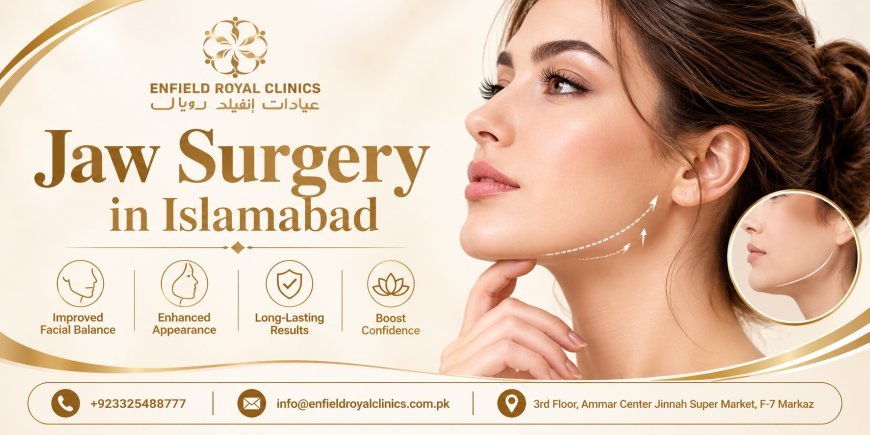
Jaw misalignment can affect more than the appearance of a person's face. When the upper and lower jaws do not fit together correctly, everyday activities such as chewing, speaking, and closing the mouth may become uncomfortable. Some individuals also notice facial asymmetry, an uneven bite, or changes in their jawline. While mild alignment problems can often be managed with orthodontic treatment, more significant skeletal differences may require surgical correction.
Jaw surgery, medically known as orthognathic surgery, is designed to correct the position of the jawbones and improve their relationship with each other. It may help patients who have difficulty achieving a functional bite because of an underlying structural problem.
For people researching Jaw Surgery in Islamabad, understanding when surgery is necessary, how it works, and what alternatives are available can help them make informed decisions. Although jaw surgery can be an effective solution for certain types of misalignment, it is not required for every patient. The right treatment depends on the cause and severity of the condition.
What Is Jaw Misalignment and Why Does It Happen?
Jaw misalignment occurs when the upper and lower jaws do not have a balanced relationship. Ideally, the teeth should meet comfortably when the mouth closes, allowing the person to bite and chew effectively. When the jawbones develop differently or sit in an incorrect position, the teeth may not align properly.
Several factors can contribute to this condition:
-
Genetic influences: Inherited differences in jaw size, shape, and growth can affect facial and dental alignment.
-
Uneven jaw development: The upper jaw may grow differently from the lower jaw, creating an overbite, underbite, or crossbite.
-
Childhood habits: Certain prolonged oral habits may contribute to changes in dental development.
-
Injury or trauma: An injury involving the jaw during development may affect its position or growth.
-
Dental changes: Missing teeth, tooth movement, and other dental problems can influence the bite.
-
Developmental conditions: Certain medical or skeletal conditions may affect normal jaw growth.
Not all alignment problems originate in the jawbones. Some are caused mainly by the position of the teeth. Identifying the underlying cause is essential before selecting treatment.
What Are the Common Signs of Jaw Misalignment?
Jaw misalignment can appear differently from one person to another. Some individuals have noticeable changes in facial appearance, while others mainly experience functional difficulties.
Common signs include:
-
Upper and lower teeth that do not meet properly.
-
A lower jaw that appears too far forward or backward.
-
Difficulty biting or chewing certain foods.
-
An uneven smile or visible facial asymmetry.
-
Frequent discomfort around the jaw during movement.
-
Excessive tooth wear caused by uneven pressure.
-
Difficulty closing the lips comfortably in some cases.
-
Speech difficulties associated with dental or skeletal alignment.
Some patients may also experience jaw clicking or headaches. However, these symptoms can have several causes and do not automatically indicate a need for jaw surgery.
A proper dental and skeletal examination helps determine whether the symptoms are related to the jaw position, teeth, muscles, or another condition.
How Can Jaw Surgery Correct Misalignment?
Jaw surgery may be recommended when the position of the jawbones is responsible for a significant bite or facial imbalance that cannot be adequately corrected with orthodontics alone.
The procedure involves carefully repositioning the upper jaw, lower jaw, or both to improve their relationship.
Upper jaw correction: When the upper jaw is too far forward, too far backward, or vertically uneven, surgery may reposition it to improve bite contact and facial balance.
Lower jaw correction: If the lower jaw is excessively prominent or recessed, the surgeon may move it backward or forward, depending on the patient's needs.
Double jaw surgery: When both jaws contribute to the misalignment, correcting them together may provide a more suitable result.
During the operation, the jawbones are repositioned according to a planned treatment design. Small plates and screws are commonly used to hold the bones in their new positions while healing takes place.
The purpose is to improve both function and structure. The surgeon must consider the bite, facial proportions, bone position, and surrounding tissues rather than focusing on appearance alone.
When Is Jaw Surgery Better Than Braces Alone?
Braces and other orthodontic treatments are effective for many bite problems. They move teeth into better positions and can correct several forms of dental misalignment. However, orthodontics cannot always correct a major difference in the size or position of the jawbones.
For example, a patient with a mild overbite caused mainly by tooth positioning may achieve a satisfactory result with braces. In contrast, someone with a severe underbite caused by an excessively forward lower jaw may need a combination of orthodontic treatment and surgery.
Jaw surgery may be considered when:
-
The upper and lower jawbones have a significant skeletal discrepancy.
-
A severe underbite or overbite affects normal biting.
-
Facial asymmetry is related to jawbone positioning.
-
An open bite cannot be adequately corrected through orthodontics alone.
-
Chewing difficulties are associated with a structural jaw problem.
-
The patient's facial growth is generally complete and surgical correction is appropriate.
For individuals exploring Jaw Surgery in Islamabad, a specialist assessment can help establish whether the problem is dental, skeletal, or a combination of both. This prevents patients from choosing a major procedure when a less invasive treatment may be sufficient.
What Happens Before and During the Treatment Process?
Jaw correction requires careful preparation because the teeth and jawbones must work together after treatment. The process usually begins with a detailed consultation and diagnostic assessment.
Clinical examination: The specialist evaluates the patient's bite, jaw movement, facial structure, dental health, and medical history.
Diagnostic records: Dental photographs, X-rays, impressions, and three-dimensional imaging when appropriate help assess the jawbones and surrounding structures.
Digital planning: In selected cases, computer-assisted planning can help visualize the intended jaw movements and coordinate different stages of treatment.
Orthodontic preparation: Many patients need braces before surgery to position their teeth correctly within each jawbone. This preparation helps the teeth fit together after the skeletal correction.
Surgical correction: The operation is generally performed under general anaesthesia. Depending on the diagnosis, the upper jaw, lower jaw, or both may be repositioned.
Post-surgical adjustments: Further orthodontic treatment may be required to refine the bite and improve the final alignment.
The complete treatment timeline varies according to the complexity of the misalignment and the patient's response to treatment.
What Benefits and Risks Should Patients Understand?
When jaw surgery is recommended for an appropriate condition, it may provide several functional and appearance-related benefits.
Potential improvements include better contact between the upper and lower teeth, more comfortable chewing, improved facial balance, and correction of certain skeletal bite problems. Some patients may also experience improvements in speech or jaw-related functional difficulties when these problems are caused by the misalignment.
However, the procedure is a major operation and requires a realistic understanding of its limitations. Possible risks include infection, bleeding, temporary or persistent changes in sensation, bite instability, and the need for additional treatment.
Recovery also requires patience. Swelling, bruising, temporary numbness, and dietary restrictions are common during the early healing period. Patients generally follow a liquid or soft-food diet initially and gradually return to normal eating according to professional guidance.
Regular follow-up appointments are important for monitoring bone healing and checking whether the bite remains stable. Patients should follow instructions about oral hygiene, medication, nutrition, and physical activity.
The final results develop gradually as swelling decreases and the tissues settle. A qualified oral and maxillofacial specialist can explain the expected outcome and individual risks before treatment begins.
For more information visit Enfield royal clinic in islamabad
Frequently Asked Questions
1. Can jaw surgery permanently correct jaw misalignment?
Jaw surgery is intended to create a lasting improvement in skeletal jaw position. Long-term stability depends on bone healing, bite alignment, individual anatomy, and appropriate follow-up care.
2. Is jaw surgery necessary for mild jaw misalignment?
No. Mild problems caused mainly by tooth positioning can often be treated with braces or other orthodontic methods. Surgery is generally considered for significant skeletal discrepancies.
3. Can jaw surgery improve facial appearance as well as bite alignment?
Yes. Repositioning the jawbones may improve facial proportions, chin projection, and symmetry while also correcting functional bite problems. The extent of change varies between patients.
4. How long does it take to recover from jaw surgery?
Initial recovery usually takes several weeks, while complete bone healing and final settling may take several months. The timeline depends on the procedure and the patient's healing response.
What's Your Reaction?
 Like
0
 Dislike
0
 Love
0
 Funny
0
 Angry
0
 Sad
0
 Wow
0