























Understanding the Role of Model Accuracy Through sp3d training
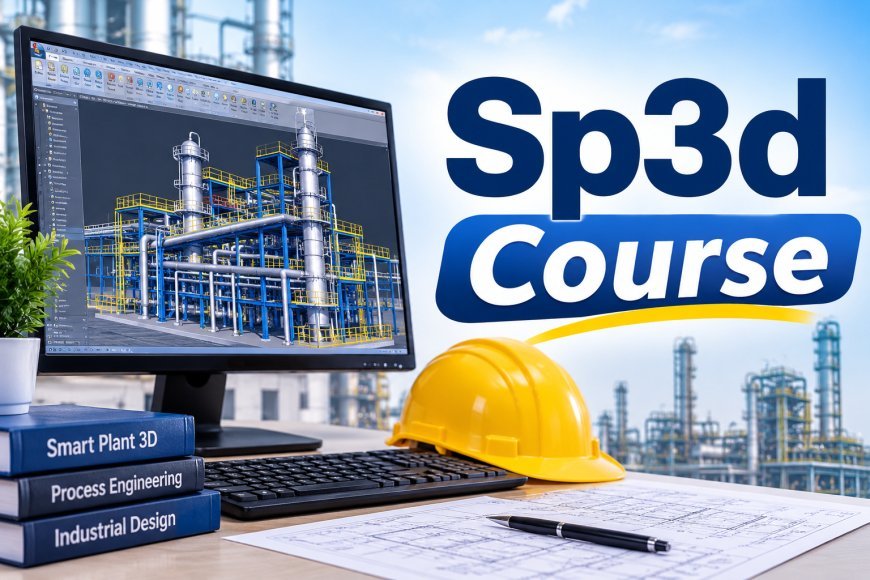
Sp3d Course helps learners understand how detailed plant models are developed and why each design decision matters.
Introduction
In industrial design, a model can look impressive on a computer screen and still have problems that become obvious only when someone examines the details. A pipe may pass too close to a piece of equipment, a support may not fit properly, or an access area may be difficult to use. These small things can create bigger difficulties during construction if they are not noticed early. Sp3d Course helps learners understand how detailed plant models are developed and why each design decision matters. It introduces a practical way of looking at engineering layouts, where accuracy is just as important as the overall appearance of the model.
Learning to Read the Design Before Modelling
Before starting any modelling work, it is important to understand the information provided for a project. Engineering drawings, equipment details and layout requirements all give clues about how the final plant should be arranged. Learners become familiar with studying these details rather than immediately jumping into the software. This habit can save time because a little planning often prevents unnecessary corrections later. It also helps beginners understand that a model is not created randomly; every component should have a clear reason for being placed in a particular position.
Giving Attention to Small Design Details
A large industrial plant contains many connected elements, and each one has its own purpose. Equipment needs suitable space, pipes require sensible routes, and structural members must support the overall arrangement. During practical exercises, learners can understand how these elements are represented and positioned within a digital environment. At first, keeping track of so many details may feel confusing, but regular practice makes the process easier. The important thing is to develop the habit of checking individual components instead of assuming that the entire design is correct just because it looks complete.
Understanding the Importance of Design Changes
Changes are a normal part of engineering work. A project requirement may be updated, equipment dimensions may change, or a pipe route may need adjustment after a review. Such changes can affect other parts of the model, so they should never be treated as isolated edits. Learners explore why checking surrounding components is important whenever an adjustment is made. This develops a more careful approach to modelling and helps them understand how one decision can influence several areas of an industrial layout.
Reviewing Space and Accessibility
A plant should not only fit within its planned boundaries; people must also be able to work around it safely and conveniently. Maintenance teams may need room to inspect equipment, operate valves or reach particular sections of a system. If these practical needs are ignored, a design can become difficult to use even when all the components appear correctly placed. Model reviews help learners recognise possible space restrictions and understand why access should be considered from the beginning. Thinking about the people who will eventually work at the site gives the modelling process a more realistic purpose.
Building Confidence Through Regular Practice
The first few modelling exercises may take longer than expected. It is common to spend extra time finding commands, understanding project settings or correcting a component that has been placed incorrectly. Instead of rushing through these tasks, learners benefit from repeating them until the workflow becomes familiar. Practical assignments can improve accuracy, model navigation and the ability to follow technical information. Over time, the focus shifts from simply learning where the tools are to understanding how they can be used to solve design problems.
Conclusion
Industrial plant modelling is a detailed process that requires more than basic software familiarity. It involves reading project information, placing components carefully, understanding design changes and checking whether the final arrangement is practical. Through sp3d training, learners can develop a clearer idea of how these activities fit together in an engineering project. Consistent practice and attention to small details can make a real difference, helping learners build confidence and prepare for the responsibilities involved in digital plant design.
What's Your Reaction?
 Like
0
 Dislike
0
 Love
0
 Funny
0
 Angry
0
 Sad
0
 Wow
0