






















Key Features to Look for in an Effective Speaker Portal
A speaker portal helps organizations manage speaker profiles, coordinate schedules, share event details, and streamline communication. It makes speaker management easier, improves coordination, and ensures smooth planning and execution of professional events.
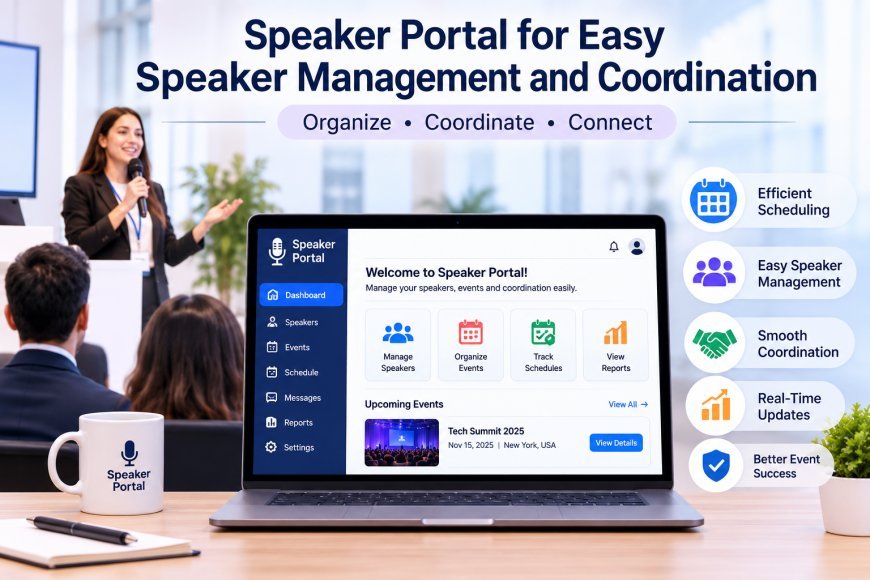
Managing speakers for conferences, professional events, seminars, and pharmaceutical programs involves several important responsibilities. Event organizers must coordinate speaker profiles, manage schedules, collect documents, communicate updates, and ensure that every activity is completed on time. Handling these responsibilities manually can create confusion, increase administrative work, and affect the overall event experience.
A speaker portal offers a centralized solution that helps organizations manage speaker-related activities more efficiently. It brings important information, communication tools, documents, and event schedules together in one platform. With the right features, organizations can simplify administrative tasks, improve collaboration, and maintain better control over event operations.
However, not every platform offers the same capabilities. Choosing an effective solution requires understanding which features are essential for smooth speaker management. Let's explore the key features that organizations should look for in a reliable speaker portal.
1. User-Friendly Interface and Easy Navigation
A user-friendly interface is one of the most important features of an effective speaker portal. Speakers and event administrators should be able to use the platform without requiring extensive technical knowledge.
Simple Dashboard
A well-organized dashboard provides a quick overview of upcoming events, assigned tasks, pending approvals, and important notifications. It helps users find essential information without navigating through multiple sections.
Easy Navigation
The platform should have clearly organized menus and sections for speaker profiles, event schedules, document uploads, and communication. Simple navigation saves time and makes everyday activities more convenient.
2. Centralized Speaker Profile Management
Managing speaker information becomes easier when all profiles are stored in one centralized location. An effective speaker portal should allow organizations to create, update, and maintain detailed speaker records.
Complete Speaker Profiles
The platform should support important information such as:
-
Speaker name and professional designation
-
Contact information and email address
-
Professional biography and qualifications
-
Areas of expertise and experience
-
Profile photographs
-
Previous speaking engagements
Easy Profile Updates
Speakers should be able to update their personal and professional information whenever required. This ensures that organizers always have access to accurate details.
Centralized profile management also reduces duplicate records and makes it easier to identify suitable speakers for upcoming events.
3. Automated Event Scheduling and Calendar Management
Managing multiple speakers and event sessions requires careful scheduling. A reliable speaker portal should provide tools that simplify scheduling and help prevent unnecessary conflicts.
Automated Scheduling
Automated scheduling features help event teams assign speakers to specific sessions, manage availability, and organize event timelines. This reduces manual work and improves coordination.
Calendar Integration
Calendar integration allows speakers to view their upcoming events, meetings, and important deadlines. It also helps organizers share schedule updates and send reminders when necessary.
These features ensure that speakers and event teams remain informed about their responsibilities.
4. Secure Document Management and Sharing
Professional events often require speakers to submit different documents, including agreements, presentation slides, biographies, identification details, and compliance forms.
An effective speaker portal should provide secure document management capabilities.
Centralized Document Storage
Speakers should be able to upload important documents directly to their accounts. Organizers can access, review, and manage submitted files without searching through multiple email conversations.
Document Review and Approval
The platform should allow administrators to review documents, request corrections, and track approval progress. This helps maintain an organized documentation process.
For pharmaceutical and healthcare events, document management is particularly important because organizations may need additional review and compliance procedures.
5. Real-Time Communication and Notifications
Communication plays an important role in successful speaker management. Delayed messages and unclear instructions can create problems during event preparation.
A good speaker portal should include communication features that keep everyone connected.
Centralized Messaging
A built-in messaging system allows speakers and event organizers to exchange important information through one platform. It also makes communication easier to track.
Automated Notifications
The system should provide notifications about upcoming sessions, schedule changes, document deadlines, and pending tasks.
Automated reminders help speakers stay updated and reduce the need for repeated follow-up messages.
6. Customizable Workflows and Task Management
Different organizations follow different procedures for managing speakers. Therefore, a speaker portal should support customizable workflows that match specific business requirements.
Flexible Workflow Management
Organizations should be able to customize processes such as speaker registration, profile verification, document submission, presentation review, and final approval.
Task Assignment and Tracking
Task management tools allow administrators to assign responsibilities, set deadlines, and monitor progress.
For example, an event manager can assign a presentation review to a team member and track its completion through the platform.
This improves accountability and helps teams complete important activities on time.
7. Strong Data Security and Access Control
Speaker management platforms often store personal information, professional details, agreements, and confidential documents. Protecting this information should be a priority.
Role-Based Access Permissions
The platform should provide different access levels for speakers, administrators, event managers, and other authorized users. This ensures that individuals can view and manage only the information relevant to their roles.
Data Protection
Important security capabilities may include encrypted data transmission, secure authentication, controlled document access, and regular security updates.
Organizations working in the pharmaceutical and healthcare industries should also consider relevant privacy and compliance requirements when selecting a platform.
8. Reporting and Analytics
Reporting and analytics help organizations understand their speaker management activities and identify areas for improvement.
An effective speaker portal should provide useful information about ongoing processes.
Activity Monitoring
Administrators should be able to monitor speaker registrations, profile completion, document submissions, pending approvals, and assigned tasks.
Performance Reports
Reports help event teams identify workflow delays, track administrative progress, and evaluate the effectiveness of their processes.
Having access to organized information supports better planning and decision-making for future events.
9. Integration with Other Business Tools
Organizations often use different software applications for communication, scheduling, customer management, and event planning. A speaker portal should ideally integrate with these existing tools.
Email and Calendar Integration
Email and calendar integrations help automate invitations, reminders, meeting updates, and important notifications.
CRM and Event Management Integration
Connecting the portal with CRM systems and event management software helps maintain consistent information across different platforms.
These integrations reduce repetitive data entry, improve information sharing, and create a more connected workflow.
10. Mobile Accessibility and Responsive Design
Speakers and event organizers may need to access important information while travelling or attending professional events. Mobile accessibility makes this possible.
Responsive Design
The platform should work smoothly on desktops, tablets, and smartphones. A responsive interface ensures that users can access essential features from different devices.
Convenient Mobile Features
Speakers should be able to check event schedules, review notifications, update profiles, and upload documents using their mobile devices.
This flexibility makes speaker management more convenient and improves the overall user experience.
11. Scalability and Reliable Customer Support
An effective speaker portal should support an organization's present requirements while allowing it to grow in the future.
Scalable Platform
As organizations manage more speakers, conferences, and professional programs, their operational requirements may increase. A scalable platform should support additional users, events, documents, and workflows without affecting performance.
Technical Assistance
Reliable customer support is also important. Organizations should have access to assistance when facing technical difficulties, account-related problems, or questions about platform features.
Good support helps resolve issues quickly and keeps speaker management activities running smoothly.
Conclusion
Selecting the right speaker portal can make a significant difference in how organizations manage speakers and coordinate professional events. Features such as centralized speaker profiles, automated scheduling, secure document management, real-time communication, customizable workflows, and reporting tools help simplify daily operations.
Organizations should also evaluate data security, mobile accessibility, integrations, scalability, and customer support before choosing a platform. The right solution can reduce administrative workloads, minimize manual errors, improve communication, and create a more organized experience for speakers and event teams.
Ultimately, an effective speaker portal is more than a platform for storing speaker information. It is a valuable solution that helps organizations streamline speaker management, improve event coordination, and deliver successful professional events.
What's Your Reaction?
 Like
0
 Dislike
0
 Love
0
 Funny
0
 Angry
0
 Sad
0
 Wow
0