



















Lab Created Diamond Studs vs Moissanite vs CZ: How to Tell the Difference
Lab grown diamond studs vs moissanite vs CZ: learn how to tell them apart by sparkle, hardness, price and simple tests before you buy.
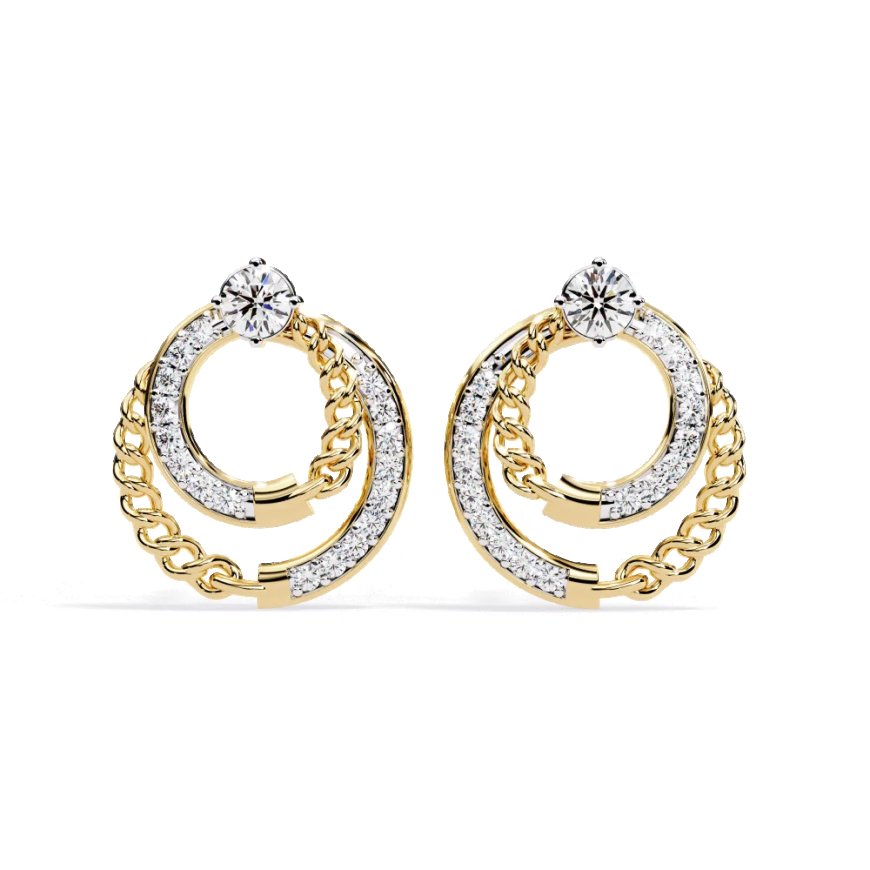
Three small sparkly stones sit in three little boxes. All three look bright under a shop light. All three are sold as "diamond alternatives" in some form. So how do you tell a lab created diamond from moissanite, and moissanite from cubic zirconia (CZ)?
If you are buying studs, this matters a lot, because earrings are worn every single day and you want to know exactly what you paid for. Let us go through it in a plain, practical way.
First, what are these three stones?
Lab created diamond. A real diamond, grown in a controlled setting using high pressure or vapour deposition methods. Chemically and structurally, it is the same as a mined diamond: pure carbon in a diamond crystal structure.
Moissanite. A different mineral, silicon carbide. It was first found in tiny amounts in a meteor crater, and today it is made in labs. It is a gemstone in its own right, not a diamond.
Cubic zirconia (CZ). A synthetic crystal, zirconium dioxide, made as an inexpensive look-alike. It is soft compared with the other two and is often used in fashion jewellery.
So the key point is this: lab grown diamonds are diamonds, while moissanite and CZ are not.
Hardness and durability
Hardness is measured on the Mohs scale, and it tells you how well a stone resists scratches.
- Lab created diamond: 10, the hardest natural or lab material.
- Moissanite: around 9.25, very durable and fine for daily wear.
- CZ: around 8 to 8.5, which sounds close but is noticeably softer in real life.
Studs take a lot of knocks, brushes against hair, scarves, pillows and phone screens. Over a couple of years, CZ often develops tiny scratches that make it look cloudy or dull. Diamond and moissanite hold their polish much better.
How they sparkle
This is where most people can spot a difference, if they look closely.
Diamond gives a crisp, white and grey sparkle, with a balance of bright flashes and deeper contrast. It looks lively but classic.
Moissanite has a higher refractive index and splits light more strongly, so it throws a lot of rainbow coloured flashes. Some people love this fiery look, and others find it a bit "disco ball". Under sunlight, you can often see strong coloured flickers.
CZ can look very bright when new, but its sparkle often appears more glassy and flat, with coloured flashes that feel less natural. Over time, the surface can lose its shine.
Tip: look at the stones in daylight near a window, and also under warm indoor lights. Diamond tends to keep a more balanced look in both.
Weight and feel
CZ is much denser than diamond, so a CZ stone of the same size feels heavier than a lab grown diamond. Moissanite is a little lighter than diamond for the same size. For studs, this difference is tiny, but jewellers who handle stones all day can often notice it.
Also remember that moissanite and CZ are usually sold by millimetre size and not by carat weight, since their density differs. A "1 carat" diamond equivalent in moissanite is measured in a different way.
Tests that actually work
Many people try the fog test, where you breathe on the stone. A diamond clears quickly while CZ stays fogged for a bit. It is a rough hint, but it is not reliable on its own.
Better options:
- Thermal diamond tester. Most basic testers read heat conductivity. Diamond passes. Moissanite can pass too, which is why some testers confuse the two. CZ fails.
- Electrical conductivity tester. Many modern testers add this check, and it separates moissanite from diamond.
- Under 10x magnification. Moissanite often shows doubled facet edges when you look through the table, because it bends light in two directions (double refraction). Diamond does not.
- Laser inscription and certificate. The most reliable proof for a lab grown diamond. A grading report plus a tiny inscription on the girdle shows exactly what the stone is.
For most buyers, the simplest check is the paperwork, and not a home test.
Price: what you are really paying for
CZ is the cheapest by far, and it is sold more as costume jewellery. Moissanite sits in the middle and offers a lot of size for the money. Lab created diamonds usually cost more than moissanite, but much less than natural diamonds of similar quality.
When you buy lab grown diamond stud earrings, you are paying for a real diamond with its hardness, its resale conversation and its certificate. When you buy moissanite or CZ studs, you are buying a look. That is not wrong, but you should know which one you are buying.
Which one should you pick for studs?
- Choose a lab created diamond if you want real diamond hardness, a classic sparkle and a certified stone you can wear every day for years.
- Choose moissanite if you love a fiery look and want a bigger size for a smaller budget.
- Choose CZ only for occasional or trend based pieces, and expect to replace them after a while.
For daily wear studs, lab created diamond stud earrings are the practical long term choice, mainly because they keep their shine and come with documentation.
Questions to ask a seller
- What exactly is the stone: diamond, moissanite or CZ?
- Does it come with a grading report?
- Is there a laser inscription on the girdle?
- What is the gold purity and is it hallmarked?
- What is the return policy?
A trustworthy seller answers all of these in plain words. At Better Diamonds, certified lab grown diamonds come with clear documentation, so you can see what your studs are made of before you buy.
FAQ's
1. Is a lab created diamond the same as moissanite?
No. A lab created diamond is real diamond (carbon), while moissanite is silicon carbide, a separate gemstone. They look similar at a glance but differ in hardness, sparkle and certification.
2. Which is more durable for daily stud earrings, moissanite or CZ?
Moissanite is clearly more durable than CZ. CZ is softer and tends to get scratched or cloudy with regular wear.
3. How can I be sure my studs are real lab grown diamonds?
Check for a grading report and a laser inscription on the stone, and verify the report number on the lab's website. A jeweller can also test it with a proper diamond and moissanite tester.
What's Your Reaction?
 Like
0
 Dislike
0
 Love
0
 Funny
0
 Angry
0
 Sad
0
 Wow
0