



















Managed SOC Service for Healthcare: How It Works in India
Understand how a managed SOC service works for Indian hospitals and healthtech firms, from SIEM-led monitoring and alert review to escalation, reporting and patient-data governance.
Managed SOC Service: A Practical Guide for Healthcare Providers
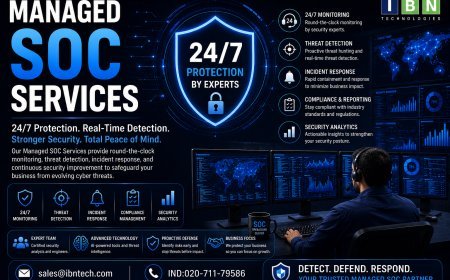
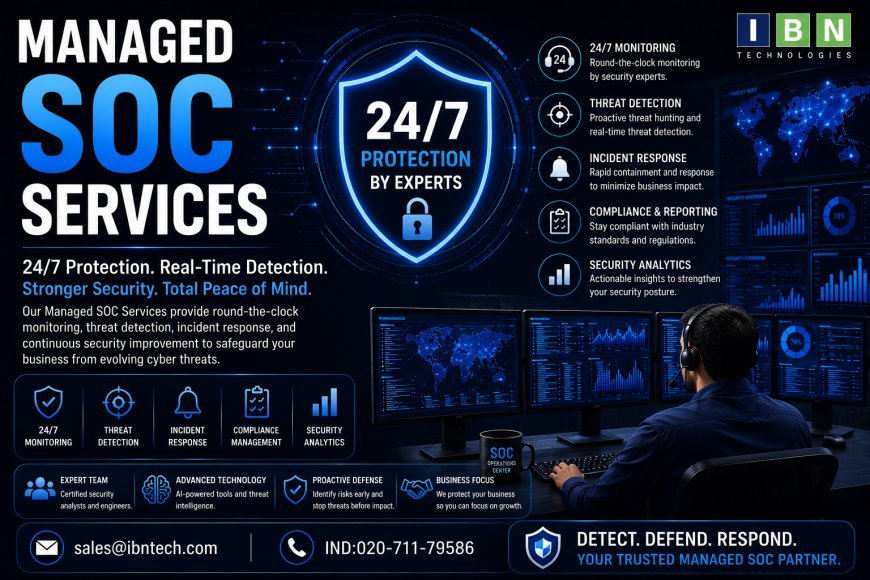
Hospitals, diagnostic chains and healthtech firms need security oversight without diverting clinical and IT teams from patient care. A managed soc service provides continuous monitoring, alert review and escalation support through an external operating model. For healthcare providers, the most useful arrangement is one that understands clinical workflows, patient-data sensitivity and the need for uninterrupted services.
A healthcare environment includes hospital information systems, laboratory platforms, imaging systems, pharmacy applications, telemedicine services, staff devices and cloud-based patient portals. Each system produces different signals and carries a different impact on care delivery. A provider that treats every healthcare organisation as a standard IT environment will miss the context that makes monitoring useful.
What a Managed SOC Service Actually Delivers
A managed arrangement usually combines a monitoring platform, trained analysts, defined escalation procedures and periodic reporting. The provider collects approved logs, reviews alerts and contacts the healthcare provider when activity may affect patient data, service availability or critical applications.
The work goes beyond forwarding alerts. Analysts correlate identity activity, endpoint signals, email security events, cloud activity and application logs. Their objective is to separate routine operational behaviour from activity that needs a timely response.
For a hospital or healthtech company, useful reporting is equally important. A record showing what was observed, who was informed and what action was taken supports internal reviews, customer due diligence and data-protection governance.
How Does a Managed SOC SIEM Support Healthcare Teams?
A managed soc siem combines central log collection with continuous analyst review. The SIEM gathers events from identity platforms, endpoints, email security, cloud workloads and approved healthcare applications, then correlates related activity for review.
First, the healthcare provider and provider agree which systems should be connected. Then the SIEM is configured to collect relevant logs and correlate events. After that, SOC analysts review alerts, investigate unusual patterns and escalate matters to the designated hospital owner.
This model reduces the chance that an unusual event is noticed only the next working day. It also creates a documented trail showing when an alert was reviewed, what evidence was checked and why a particular action was recommended.
Which Systems Should Be Connected First?
Healthcare providers should prioritise systems that hold or move patient information and systems whose disruption affects care delivery. Identity platforms, email security, endpoints, remote-access tools, cloud workloads and core healthcare applications usually offer the earliest meaningful visibility.
A hospital may also connect logs from its patient portal, appointment system or laboratory interface where those systems support reliable logging. The provider should assess whether the data is useful for review and whether connecting it requires approval from the application owner.
Starting with a limited set of high-value sources is better than connecting everything at once. Early coverage should answer a practical question: if an account with access to patient records is used in an unexpected way, would the SOC see it and know whom to contact?
What Happens During an Alert Review?
An alert review follows a defined sequence. The analyst first examines the alert details, related identity activity and any available context from connected systems. The purpose is to establish whether the activity matches an approved process, a known system behaviour or a pattern that needs escalation.
Consider an illustrative situation in a multi-site diagnostics chain. An administrative account downloads a large volume of reports late at night. The analyst checks whether the activity matches a scheduled backup, an approved migration or a vendor support session. If no explanation is available, the analyst contacts the designated hospital owner and records the review.
The hospital then decides whether to suspend access, contact the account owner or take another action. The SOC supplies evidence and coordination; clinical and business decisions remain with the healthcare provider.
How Does the Service Support Patient Data Protection?
A managed SOC service supports data protection by improving visibility over access to patient records, unusual data movement and administrative changes. It also creates documentation that can help a healthcare provider understand what happened during a security event.
The service does not replace the provider’s governance responsibilities. A hospital or healthtech company remains responsible for lawful data processing, access decisions, vendor oversight and meeting its obligations under India’s data-protection framework. The SOC supports those responsibilities through detection, review and evidence.
A practical rule is to define data boundaries early. Security monitoring should rely on the logs and metadata needed for review, with clear terms for access, retention and confidentiality. Patient care decisions and clinical records should remain under the provider’s control.
What Should a Healthcare Provider Expect in the First 90 Days?
The first month should focus on discovery and connection. The provider and SOC team map critical systems, identify data flows and agree which log sources will be connected first.
The second month focuses on tuning. Early alerts often include routine activity, so the SOC and hospital IT team should review patterns together, document approved maintenance windows and refine detections. Careless suppression of alerts at this stage can create blind spots later.
By the third month, the arrangement should include a joint readiness exercise. Simulate an unusual administrative action or an unexpected remote-access session, then test detection, escalation, approval and documentation. The exercise should reveal gaps in contact lists and decision authority before a real event occurs.
How Should Hospitals Measure Service Quality?
Service quality should be measured through outcomes, not alert volume. Useful indicators include the proportion of alerts reviewed within agreed timeframes, the quality of investigation records, the accuracy of escalations and the reduction of repeat false alarms.
|
Measure |
What good looks like |
Warning sign |
|
Coverage |
Priority systems and identity activity are monitored |
Only endpoint alerts are reviewed |
|
SIEM design |
Logs are correlated across identity, endpoint and application activity |
Each tool operates in isolation |
|
Escalation |
Named contacts and approval boundaries are documented |
The SOC cannot identify who may approve an action |
|
Reporting |
Investigations, outcomes and open risks are explained |
Reports show only raw alert counts |
|
Improvement |
Detection rules improve after joint reviews |
The same routine activity is escalated repeatedly |
A hospital should review these measures with the provider on a fixed schedule. The review is also the right place to assess whether new clinics, applications or cloud services need to be added to the monitoring scope.
What Goes Wrong When Scope Is Defined Poorly?
A common problem is monitoring technology without understanding clinical dependencies. A provider may see an alert on a server but not know whether that server supports laboratory reporting, appointment scheduling or billing. The delay in judging business impact can be costly.
Another issue is unclear ownership. If the SOC identifies unusual activity but cannot reach an authorised hospital contact, the event may remain unaddressed. Every severity level should have a named primary and backup contact.
Poor logging is a further limitation. If administrative actions, remote-access sessions or application events are not recorded reliably, even a capable SOC team will have limited visibility. Fixing logging gaps early improves both review quality and the evidence available later.
What Should Healthcare Leaders Ask a Provider?
Ask how the provider distinguishes routine operational activity from an event with potential patient-data or care impact. The answer should include examples of escalation criteria, review steps and documentation practices.
Ask which log sources are included in the base service and which require additional onboarding. The provider should be able to explain how it handles gaps, new applications and changes to the hospital environment.
Finally, ask how reports will support governance. A useful provider should offer records that help IT leaders, risk committees and data-protection teams understand what was reviewed, what was resolved and what remains open.
Frequently asked questions
Can a managed SOC service work with a hospital that has a small IT team?
Yes. The hospital can retain a small internal team for asset decisions, access approvals and clinical-impact judgements while the provider supplies continuous monitoring, review and escalation support.
Does a managed SOC service help with India’s data-protection expectations?
It can support breach detection, investigation and documentation, which are useful for governance and incident readiness. It does not transfer the healthcare provider’s responsibility for lawful data processing or data-protection compliance.
Should patient records be shared with a SOC provider?
Monitoring should normally rely on logs, alerts and metadata required for review. The hospital should define data-access boundaries, retention expectations and confidentiality terms before connecting any system.
For hospitals, diagnostic chains and healthtech companies planning monitoring coverage, IBN Technologies can help assess SOC readiness and design a practical service scope.
Contact Us
IBN Technologies
Phone: +91 20 6768 0404
Email: sales@ibntech.com
What's Your Reaction?
 Like
0
 Dislike
0
 Love
0
 Funny
0
 Angry
0
 Sad
0
 Wow
0