


























Medical Imaging Technology - Types, Applications, and Career Scope
As healthcare technology continues to advance, Medical Imaging Technology is playing an increasingly important role in diagnosis, treatment planning, and patient monitoring.
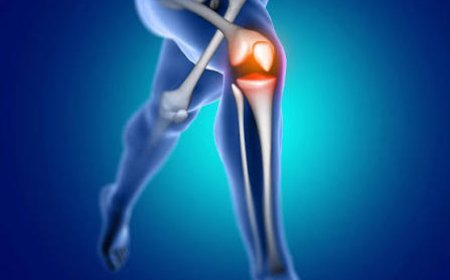
Medical imaging has become an essential part of modern healthcare, helping medical professionals examine internal body structures without requiring invasive procedures in many cases. From identifying bone fractures to monitoring complex diseases, imaging techniques provide valuable information that supports clinical decisions. As healthcare technology continues to advance, Medical Imaging Technology is playing an increasingly important role in diagnosis, treatment planning, and patient monitoring.
What Is Medical Imaging Technology?
Medical imaging technology is the process of using sensitive technologies and scientific applications to create the body images of bones, tissues, organs and other structures that are inside the human body. It is used by doctors to examine symptoms, check for problems and injuries, and to track the improvement of treatment.
This is an area that involves a combination of medical science, physics, computer technology and patient care. The professionals who work in this field are the radiologists, radiographers, medical imaging technologists, and medical physicists, among others.
Major Types of Medical Imaging Technology
Different imaging techniques are selected depending on the patient’s condition, the part of the body being studied, and what clinical information is needed.
1. X-Ray Imaging
X-ray imaging is the most common of all diagnostic modalities and works by passing a defined dose of ionising radiation through parts of the body to produce a visual image. It is used to diagnose fractures, look at the chest and assess some dental and joint problems.
2. Computed Tomography (CT)
A CT scan combines X-ray measurements to generate cross-sectional images of the body. These images assist the doctor in detecting injuries, tumours, blood vessels, and abnormalities in the various organs.
3. Magnetic Resonance Imaging (MRI)
MRI uses powerful magnetic fields and radio waves to produce detailed images without ionising radiation. It is excellent for the imaging of the brain, spine, joints, muscles, and other soft tissues.
4. Ultrasound Imaging
Ultrasound uses high-frequency sound waves to create real-time images. Ultrasound is often used for the presence of pregnancy, for visualisation of abdominal organs and blood flow and some soft tissues. It does not involve the use of ionising radiation.
5. Nuclear Medicine Imaging
The innovative and eye-catching tests require just tiny amounts of radioactive materials, known as radiopharmaceuticals, to analyse the processes within your organs. Techniques such as positron emission tomography (PET) and single photon emission tomography (SPECT) look at how the organs are functioning, and can sometimes reveal changes that aren’t visible with an anatomy scan.
Uses of Medical Imaging Technology
Medical imaging can assist many areas of medicine by providing information that might be difficult or impossible to obtain through a physical exam.
- Disease diagnosis: Aids in the detection of damage, injuries, inflammation and some types of tumours.
- Treatment planning: Gives doctors more information on which to base their choice of suitable treatment.
- Patient monitoring: Used for tracking a condition or response to a treatment.
- Emergency medicine: Supports your medical staff with research into trauma, bleeding and other urgent medical problems.
- Cancer Care: Enables detection and staging of a tumour and planning for and monitoring its treatment.
- Image-guided procedures: Enables some biopsies and minimally invasive procedures to be performed by experts with imaging guidance.
The selection of an imaging modality varies with the clinical problem, patient factors, and potential advantages and disadvantages of the procedure.
Medical Imaging: Advantages and Disadvantages
Medical imaging has the advantage of being able to visualise the interior structures of the body, often without the need for surgery. This can facilitate earlier detection of some conditions, improve diagnostic evaluation and aid the clinician to make better treatment choices.
Imaging techniques also have their constraints. X-ray and CT imaging involve ionising radiation, so should be justified on a clinical basis and optimised. Not all patients or devices are suitable for MRI imaging, and ultrasound images can vary depending on the part of the body and the circumstances of the examination. In some cases, contrast agents are needed, and these may have risks.
Therefore, medical personnel need to use the right methods and stick to the safety procedures.
Career Scope in Medical Imaging Technology
Medical imaging is available to those interested in healthcare, medical machines, and diagnostic sciences. You could be employed in hospitals, diagnostic centres, imaging departments, research institutes, or medical technology companies.
Possible functions are:
- Radiographer or radiological technologist
- CT scan technologist
- MRI technologist
- Mammography technologist
- Interventional radiology technologist
- Medical imaging applications specialist
- Imaging quality assurance professional
- Research or academic worker, with relevant skills
The scope of practice is based on your education, training and registration requirements, and will be set out in any regulations that apply.
For students who want to pursue this career, there are diploma, undergraduate and postgraduate courses for medical radiology and imaging technology. Before you apply, ensure the training institution is accredited, the curriculum is suitable, clinical attachments are planned, and entry requirements are met.
The Future of Medical Imaging Technology
Digital imaging, image processing, artificial intelligence and image-guided procedures are reshaping the way we acquire and assess medical images. For example, artificial intelligence can help with image analysis, workflow prioritisation and recognising patterns that require additional review. However, they do have limitations and are not a replacement for healthcare professionals and clinical decision-making.
Enhancements will be in the direction of greater image quality, support for more efficient workflows, less unnecessary exposure, and increased accessibility to the service.
Conclusion
Medical Imaging Technology is an integral part of healthcare to bridge the gap between science and patient care. Medical imaging techniques, including X-ray, CT, MRI, ultrasound and nuclear medicine, offer different information to clinicians for diagnosis and patient management. With the right training, safety protocols, and responsible application of new technologies, medical imaging will further improve the diagnostic performance of healthcare.
What's Your Reaction?
 Like
0
 Dislike
0
 Love
0
 Funny
0
 Angry
0
 Sad
0
 Wow
0

gaddielindustries
We have a decent manufacturing unit in Rajender Nagar Industrial Are, Mohan Nagar, Ghaziabad, Delhi NCR With required space, good machines that are necessary for a light engineering unit as outs employ an excellent team of technically trained people and we have a good volume production capability.