

















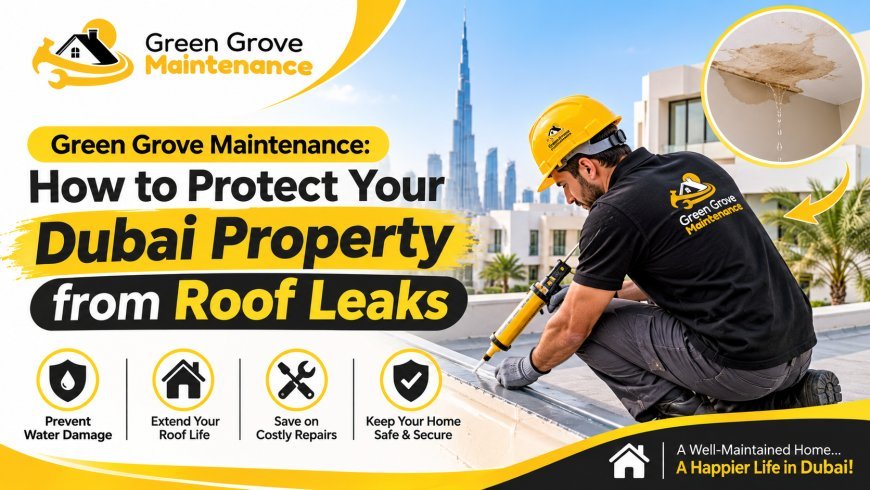
Green Grove Maintenance: How to Protect Your Dubai Property from Roof Leaks
Learn how to protect your Dubai property from roof leaks with regular inspections, waterproofing, and professional roof maintenance services by Green Grove Maintenance.
Introduction
A well-protected roof is essential for keeping any property safe, comfortable, and structurally sound. In Dubai, roofs are exposed to intense sunlight, high temperatures, dust, humidity, and occasional heavy rainfall. These environmental conditions can gradually affect roofing materials, joints, sealants, and waterproofing layers.
When a roof is not properly protected, water may enter through small cracks, damaged joints, or weak areas around roof installations. Even minor leaks can lead to damp patches, peeling paint, damaged ceilings, mould growth, and deterioration of building materials.
Professional
can help property owners protect their buildings against water penetration and reduce the risk of costly repairs. Green Grove Maintenance understands the importance of preventive property care and the role a properly maintained roof plays in protecting a building.
Why Roof Waterproofing Is Important in Dubai
Roof waterproofing creates a protective barrier that helps prevent water from entering a building. It is particularly important in Dubai, where roofs experience significant temperature changes and prolonged exposure to direct sunlight.
High temperatures can cause certain roofing materials and sealants to expand, contract, or deteriorate over time. Dust accumulation and environmental exposure can also affect drainage areas and protective coatings.
Although rainfall in Dubai may be limited compared with some other regions, occasional heavy showers can expose weaknesses in a roof's waterproofing system. If water cannot drain properly or finds an opening in the roof surface, it may enter the building.
A suitable waterproofing system helps protect ceilings, walls, electrical installations, insulation, and other building components. It also supports better long-term property maintenance by reducing the likelihood of repeated water damage.
Common Causes of Roof Leaks
Roof leaks can develop for several reasons. Identifying the source is important because applying a coating without addressing the underlying problem may only provide temporary relief.
Cracks in the Roof Surface
Concrete roofs may develop small cracks due to temperature changes, building movement, ageing, or general wear. These openings can allow water to enter, particularly when rainwater collects on the surface.
Even a narrow crack can become a more serious concern if it remains untreated. A professional inspection can help determine the extent of the damage and whether surface preparation or additional repairs are required before waterproofing.
Damaged Waterproofing Layers
Waterproofing membranes and protective coatings can deteriorate through prolonged exposure to sunlight, heat, moisture, and physical damage.
Older systems may lose their flexibility or develop gaps that allow water to pass through. Damaged areas should be assessed before applying a new waterproofing solution.
Blocked Roof Drains
Roof drainage outlets help remove rainwater from the building's surface. When these outlets become blocked by dust, leaves, sand, or debris, water may accumulate on the roof.
Standing water can increase pressure on weak areas and expose existing cracks or damaged joints. Keeping roof drains clear is therefore an important part of preventive maintenance.
Weak Joints and Roof Connections
Roof edges, expansion joints, parapet walls, and connections around pipes or other installations can become vulnerable over time.
If sealants deteriorate or joints are not properly protected, water may enter through these points. These areas require particular attention during roof inspections because they are common locations for waterproofing failures.
Poor Previous Repairs
Inappropriate repair materials or incomplete surface preparation can cause waterproofing work to fail earlier than expected.
Applying a new layer over loose coatings, dirt, moisture, or damaged materials may prevent proper adhesion. A suitable repair process should address the existing surface condition before new waterproofing materials are installed.
Warning Signs Your Roof Needs Waterproofing
Roof problems are not always immediately visible from outside the building. Property owners should pay attention to signs inside and around the property that may indicate water penetration.
One common warning sign is a damp patch on the ceiling. Brown or yellow marks, bubbling paint, and peeling plaster may suggest that water is entering from above.
Other signs include:
-
Water dripping from ceilings or collecting near roof edges after rainfall.
-
Persistent damp smells, mould growth, or unexplained moisture in upper-floor rooms.
-
Cracks, damaged coatings, or standing water visible on the roof.
-
Repeated ceiling or wall damage in the same area after repairs.
These symptoms should be investigated rather than covered with paint or surface filler. The visible damage may be located some distance from the actual point where water enters the roof.
What Does Professional Roof Waterproofing Include?
The correct waterproofing process depends on the roof structure, existing materials, surface condition, and level of water exposure. A professional assessment helps determine which solution is suitable for the property.
Roof Inspection and Assessment
The first step is to examine the roof and identify areas that may allow water penetration. Technicians may check the surface, visible cracks, joints, drainage outlets, roof edges, and existing waterproofing layers.
They may also review signs of water damage inside the building to help understand where leakage could be occurring.
A proper assessment is important because different roof problems require different repair methods.
Surface Preparation
Before waterproofing materials are applied, the roof surface generally needs suitable preparation.
Dust, loose debris, damaged coatings, and unsuitable materials may need to be removed. Depending on the roof condition, cracks and damaged sections may also require repair.
Proper preparation helps the waterproofing material adhere to the surface and perform as intended.
Crack and Joint Repairs
Visible cracks, weak joints, and damaged connections should be addressed before applying the main waterproofing system.
The repair method depends on the size, location, and nature of the damage. Suitable sealants or repair materials may be used to restore vulnerable areas and prepare them for further protection.
Simply covering an active crack without understanding its cause may result in recurring leakage.
Applying the Waterproofing System
Different waterproofing materials are available for different roof types and conditions. These may include liquid-applied coatings, membrane systems, and other protective solutions.
The appropriate material should be selected according to the roof design, exposure conditions, manufacturer recommendations, and required performance.
Application should follow the product instructions, including surface preparation, coverage, curing time, and any required protective layers.
Final Inspection
After the waterproofing work is completed, the treated areas should be inspected to check the quality of the application and identify any visible gaps or incomplete sections.
Drainage arrangements should also be considered to ensure that water can move away from the roof effectively.
The final assessment helps confirm that the completed work is suitable for the property's requirements.
Types of Waterproofing Solutions for Roofs
Not every waterproofing system is suitable for every building. The choice depends on the roof material, condition, accessibility, and intended use.
Liquid-applied waterproofing systems are applied as coatings that form a continuous protective layer after curing. They can be useful for certain roof surfaces and areas with complex shapes or multiple connections.
Membrane waterproofing uses protective sheets or layers installed over a prepared surface. The suitability of a membrane depends on the roof design, installation method, and exposure conditions.
Cementitious waterproofing products may be used in selected applications where the surface and system requirements are appropriate.
A professional assessment is recommended before selecting a product. The cheapest material is not necessarily the most suitable option, particularly when the roof has existing damage or drainage problems.
Roof Waterproofing for Different Property Types
Different buildings have different roofing structures and maintenance requirements. The waterproofing approach should reflect the property's design and how the roof is used.
Villas and Residential Homes
Villas may have flat concrete roofs, rooftop utility areas, water tanks, and equipment installations. These features create several points that require regular inspection.
Homeowners should pay attention to roof cracks, drainage outlets, parapet walls, and areas around pipes or air-conditioning equipment.
Timely repairs can help prevent water from reaching ceilings, bedrooms, storage areas, and other living spaces.
Apartments and Residential Buildings
Apartment buildings may have larger shared roof areas with multiple installations and drainage points. A roof leak can affect more than one apartment, particularly when water travels through ceilings or structural gaps.
Building management should arrange periodic inspections and address reported dampness or leakage promptly. Keeping maintenance records can also help identify recurring problems.
Commercial Buildings and Offices
Commercial properties may have rooftop equipment, service areas, and larger exposed surfaces. A leak can affect office interiors, electrical systems, stored materials, and daily operations.
Scheduled roof inspections help property managers identify developing issues and plan suitable repairs before they cause significant disruption.
Hotels and Large Facilities
Hotels and large facilities often have extensive roof areas and multiple building services installed above occupied spaces.
Their waterproofing arrangements should consider the roof's design, equipment access, drainage capacity, and operational requirements. Planned maintenance can help reduce unexpected interruptions and protect important building areas.
How Often Should a Roof Be Inspected?
The ideal inspection frequency depends on the roof's age, construction, waterproofing system, exposure, and maintenance history.
Newer roofs may require less frequent attention than older surfaces with visible cracks or previous leakage. Buildings with rooftop equipment, heavy foot traffic, or recurring drainage problems may need closer monitoring.
Property owners should consider arranging inspections before periods when rainfall is more likely and after any major weather event that may have affected the roof.
Inspections are also advisable when a building develops unexplained ceiling stains, dampness, or repeated water leakage.
Regular assessment does not mean that waterproofing must be replaced every year. Instead, it helps determine whether the existing system remains in suitable condition or requires targeted repairs.
Practical Ways to Prevent Roof Water Damage
Preventive maintenance can help reduce the risk of water entering a property. Simple checks and timely attention to visible problems can make a meaningful difference.
-
Keep Roof Drains Clear: Remove accessible leaves, dust, and debris from roof drainage areas so rainwater can flow towards the outlets. Any unsafe or difficult-to-access area should be handled by suitable professionals.
-
Check Vulnerable Areas Regularly: Look for visible cracks, damaged sealants, loose coatings, and water accumulation around roof edges, joints, and installations. Arrange an inspection when problems appear.
Property owners should also avoid placing heavy or unsuitable objects on waterproofed surfaces and should not make unapproved alterations that could damage the protective layer.
Choosing a Roof Waterproofing Company in Dubai
Selecting an appropriate service provider is important because waterproofing performance depends on more than the material used. Surface preparation, repair quality, application methods, and attention to vulnerable areas all contribute to the final result.
Before choosing a company, consider its experience with the type of roof installed at your property. A provider should understand the differences between residential, commercial, and larger building waterproofing requirements.
Ask for an inspection before accepting a quotation. The provider should explain the identified problems, recommend a suitable system, and clarify what the proposed work includes.
It is also useful to ask about material specifications, application procedures, curing requirements, and any applicable workmanship or product warranty.
Green Grove Maintenance aims to support property owners with practical maintenance solutions and a focus on keeping buildings functional and properly maintained.
Understanding Roof Waterproofing Costs in Dubai
The cost of waterproofing depends on several factors, including the roof area, surface condition, selected material, accessibility, and amount of preparation required.
A roof with a relatively sound surface may need less repair work than one with extensive cracks, damaged coatings, or recurring leakage.
The type of waterproofing system also affects the overall cost. Different products have different material requirements, application methods, and installation considerations.
Before approving a project, request a detailed quotation that explains the work included. It should identify surface preparation, repairs, materials, application, and any additional charges.
Comparing quotations based on the same scope of work can help property owners make a more informed decision.
Why Timely Waterproofing Can Save Money
Water entering a building can affect more than the roof itself. It may damage ceilings, plaster, paint, insulation, flooring, electrical installations, and interior furnishings.
If moisture remains trapped inside building materials, the affected areas may require additional drying, cleaning, or restoration work.
Addressing roof problems early can reduce the likelihood of extensive damage and help property owners avoid repeated repairs. It also makes maintenance easier to plan because issues can be assessed before they affect larger areas of the building.
Investing in suitable roof waterproofing in Dubai is therefore an important part of protecting the property's structure and interior condition.
How Green Grove Maintenance Supports Property Care
A properly maintained roof helps protect every area beneath it. Regular inspections, suitable waterproofing materials, and timely repairs all contribute to better building protection.
Green Grove Maintenance aims to help residential and commercial property owners maintain comfortable, functional, and well-cared-for spaces. Understanding the roof's condition and identifying vulnerable areas are important steps towards selecting the right maintenance solution.
Every property has different requirements, so waterproofing recommendations should be based on the roof structure, existing materials, and actual condition rather than a one-size-fits-all approach.
Property owners can visit the official website to explore available maintenance solutions and discuss their property requirements.
Conclusion
Roof protection is an important part of maintaining a safe and comfortable property in Dubai. High temperatures, sunlight, ageing materials, blocked drains, and damaged joints can all contribute to roof deterioration and water leakage.
Regular inspections and suitable waterproofing help reduce the risk of water entering the building and damaging important structural and interior components. Property owners should investigate early warning signs and arrange professional assessment when cracks, damp patches, or recurring leaks appear.
Choosing suitable roof waterproofing in Dubai can help protect your investment and reduce the likelihood of unexpected repair costs. With appropriate materials, proper installation, and ongoing maintenance, a roof can provide more dependable protection for years to come.
Green Grove Maintenance recognises the importance of preventive property care and aims to help customers keep their buildings protected, comfortable, and well maintained.
What's Your Reaction?
 Like
0
 Dislike
0
 Love
0
 Funny
0
 Angry
0
 Sad
0
 Wow
0