





















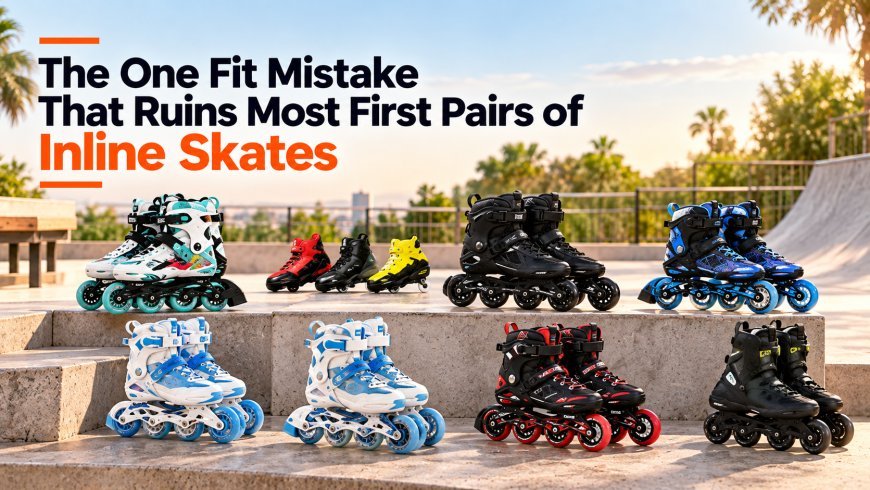
The One Fit Mistake That Ruins Most First Pairs of Inline Skates
Before buying inline skates based on looks or price alone, it's worth understanding the one thing that quietly ruins more first experiences than anything else.
A Sunday morning by the sea. One skate is already laced up, the other still by the bench. A child can't wait to catch up with older cousins who are already gliding ahead. Everyone starts inline skating their own way, but almost everyone who struggles in those first sessions is fighting the same problem, and it usually isn't balance.
Before buying inline skates based on looks or price alone, it's worth understanding the one thing that quietly ruins more first experiences than anything else.
Fit Matters More Than Nearly Anything Else on the Skate
A boot that's too loose lets the foot shift inside with every stride, which makes balance genuinely harder and can lead to blisters on longer sessions. A boot that's too tight causes its own problems, cramping and discomfort that show up fast once you're actually moving rather than just standing still.
This is really the difference between the best inline skates for someone and a pair that just happens to be popular. Fit isn't a minor detail here, it's the single factor most likely to decide whether the first few sessions feel confident or frustrating.
Skill Level Changes What You Actually Need
Not every skate is built for the same kind of skating. Beginner skates are designed to be forgiving, wider frames and softer boots that make it easier to find balance for the first time without every small wobble turning into a fall.
More experienced skaters often prefer freestyle or speed skates, which trade some of that stability for tighter control and quicker turns. Someone just starting out is usually better served by a beginner-friendly boot with softer flex, while a more confident skater might prefer the manoeuvrability of a freestyle design. It's worth thinking about where you actually are in that progression before looking at anything else.
Wheels and Frames Actually Change How a Skate Feels
Wheel size plays a real role in how inline skates behave underfoot. Larger wheels generally roll faster and cover ground with less effort, which suits open paths and longer distances. Smaller wheels tend to be easier to control, which younger or newer skaters usually appreciate more than raw speed.
Frame length works alongside the wheels. A longer frame usually feels steadier at speed, while a shorter frame turns more easily, which is part of why freestyle and beginner skates are often shaped differently underneath, not just styled differently on top.
Buying for Kids Means Buying for Growth, Not Just Today
Adjustable inline skates solve a problem that's specific to kids, growth spurts happening faster than most parents want to shop for new gear. Rather than buying a fixed size that fits for one season and gets outgrown the next, an adjustable pair extends across a size range, so the skate keeps up with the foot for longer.
Kids' skates generally prioritize stability over speed, which makes sense given that confidence and comfort matter far more than performance in those first years on skates. A pair that feels secure and easy to balance in will get used a lot more than one that looks fast but feels intimidating.
Fit Isn't Always Identical Between Men's and Women's Skates
Inline skates women specifically shop for often differ slightly in shape and sizing rather than just color, since foot shape and volume can vary between men's and women's lasts. It's worth checking whether a listing is built on a women's-specific last rather than assuming a smaller men's size will fit the same way.
This matters more for longer sessions than short ones, since a boot shaped differently than your actual foot tends to become noticeable only after it's had time to rub or press somewhere it shouldn't.
Getting Sizing Right When Buying Inline Skates Online
Shopping inline skates online without trying them on first comes down to trusting the sizing details over the product photo. Most people who buy inline skates online and end up disappointed skipped this step, guessing based on regular shoe size rather than checking the specific brand's sizing chart, since fit can vary meaningfully between manufacturers.
Knowing how to choose inline skates really comes down to answering a few honest questions in order: how experienced is the skater, is it a fixed size or does it need to grow with a child's foot, and does the fit description match your actual foot shape. Get the fit right first, and the rest of the decision, wheel size, frame length, boot stiffness, tends to follow naturally from there.
What's Your Reaction?
 Like
0
Like
0
 Dislike
0
Dislike
0
 Love
0
Love
0
 Funny
0
Funny
0
 Angry
0
Angry
0
 Sad
0
Sad
0
 Wow
0
Wow
0