




























Top 10 Skills Taught in a Mobile Repairing Course in Delhi
A mobile repairing course in Delhi can help students develop practical technical skills and understand how modern smartphones work.
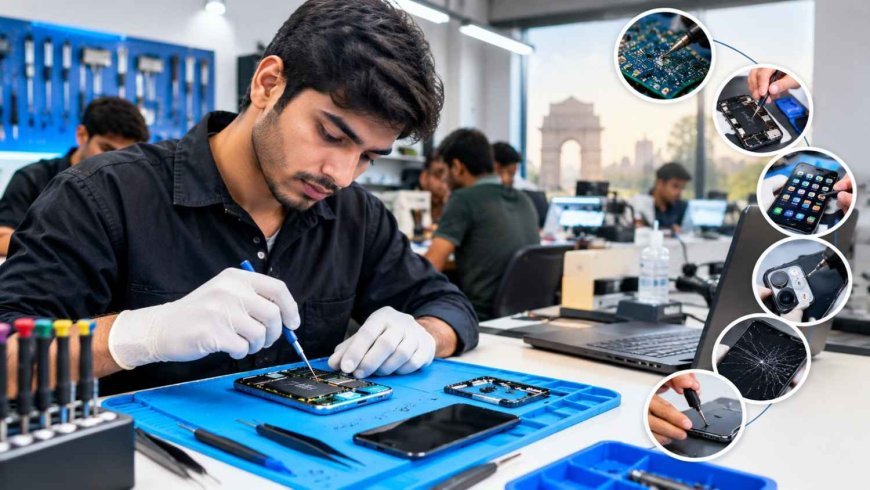
Smartphones have become an essential part of everyday life. From communication and online payments to education and entertainment, people depend on their phones for many daily activities. As smartphone usage grows, the need for skilled technicians who can identify and repair different mobile problems also increases. A mobile repairing course in Delhi can help students develop practical technical skills and understand how modern smartphones work.
A professional training program usually covers hardware, software, fault diagnosis, tools, motherboard work, and practical repair techniques. For students who want to work as technicians or start their own repair business, institutes such as AK Info provide training focused on practical mobile repairing skills. Here are ten important skills students can learn during the course.
1. Mobile Assembly and Disassembly
One of the first skills students learn is how to safely open and assemble different smartphones. Modern phones contain delicate parts, connectors, flex cables, batteries, cameras, and displays. Proper handling is important to prevent damage during repair. Students learn the correct process of removing components and fitting them back into the device after completing repair work.
2. Understanding Mobile Electronic Components
A good mobile repairing course introduces students to the basic electronic components used inside smartphones. These may include resistors, capacitors, diodes, coils, transistors, ICs, connectors, and other motherboard components. Students learn how these parts work and how a damaged component can affect the overall performance of a mobile phone. This knowledge builds a strong foundation for advanced repair work.
3. Using Mobile Repairing Tools
Professional technicians need to know how to handle repair tools correctly. Training generally includes the use of multimeters, DC power supplies, soldering stations, hot air guns, microscopes, PCB holders, opening tools, and other equipment. Learning proper tool handling makes repair work safer, faster, and more accurate, especially when students begin working on small motherboard components.
4. Mobile Hardware Repairing
Hardware repair is a major part of a mobile repair course in Delhi. Students learn to identify and fix common physical problems related to screens, batteries, charging ports, speakers, microphones, cameras, buttons, sensors, and other parts. Practical training helps learners understand which component is creating the problem instead of simply replacing parts without proper diagnosis.
5. Software Troubleshooting
Not every mobile problem is caused by damaged hardware. Smartphones can also face software errors, failed updates, boot problems, system crashes, or other operating issues. Mobile repairing training teaches students how to diagnose common software faults and use suitable repair procedures. Depending on the course level, students may also learn flashing, formatting, software installation, backup and restoration techniques.
6. Soldering and Desoldering
Soldering is an important practical skill for technicians who want to perform component-level repairs. Students learn how to solder and desolder small components carefully without damaging the circuit board. They also practise working with charging connectors, small components, and IC-related sections. Proper soldering requires patience, steady hands, knowledge of temperature control, and regular practical practice.
7. Fault Finding and Troubleshooting
A technician should be able to find the actual reason behind a mobile phone problem. Fault finding teaches students to follow a systematic process rather than making random repairs. They learn to check different sections, test components, understand voltage readings, and identify faulty areas. This skill can help technicians deal with charging, display, audio, network, power, and other common smartphone problems.
8. Chip-Level and Motherboard Repair
Advanced training moves beyond basic component replacement and introduces motherboard and chip-level work. Students can learn circuit tracing, schematic reading, jumper wiring, IC replacement, and component-level diagnosis. These skills are useful for complicated faults where replacing a screen, battery, or charging port does not solve the issue. AK Info’s published curriculum includes motherboard tracing, IC work, jumper wiring, and advanced troubleshooting.
9. Mobile Flashing and Unlocking
Software flashing is another useful skill taught during advanced mobile repair training. It can be required when a phone develops operating-system or firmware-related problems. Students learn how flashing tools work and how software-related faults can be diagnosed. Training may also introduce procedures related to user locks, software updates, FRP issues, drivers, backup, and restoration, depending on the selected course module.
10. Customer Handling and Repair Business Skills
Technical knowledge alone may not be enough for someone who wants to run a successful repair shop. A professional technician should also know how to communicate with customers, explain faults clearly, manage repair costs, and organize daily work. Some training programs include guidance on workshop setup, service pricing, invoice management, tool selection, and customer handling.
What to Know About Mobile Repairing Course Fees in Delhi
Students often compare mobile repairing course in Delhi fees before selecting an institute. Fees can differ depending on the course duration, basic or advanced level, practical lab facilities, tools, certification, and topics included in the program. Therefore, students should compare the complete syllabus and practical training facilities instead of choosing a course only because its fee is lower.
When selecting a mobile repairing institute in Delhi, it is also useful to check whether students receive enough hands-on practice with real devices and professional tools. Practical experience is especially important because mobile repairing cannot be learned effectively through theory alone.
Conclusion
A professional mobile repairing course in Delhi can teach students much more than simple screen or battery replacement. From basic electronics and hardware repairs to software troubleshooting, soldering, fault diagnosis, and motherboard work, each skill contributes to becoming a capable mobile technician.
Students should choose a mobile repairing course that combines clear theoretical concepts with regular practical sessions. With proper training and consistent practice, learners can develop useful technical skills for repair-shop jobs, service-related work, freelancing, or eventually setting up their own mobile repairing business.
What's Your Reaction?
 Like
0
 Dislike
0
 Love
0
 Funny
0
 Angry
0
 Sad
0
 Wow
0