





















What Makes Glass-Filled PTFE Suitable for High-Load Applications?
Industrial equipment frequently operates under challenging conditions where components must withstand continuous pressure, friction, vibration, and mechanical stress. In heavy machinery, chemical processing units, and automated production systems, these conditions can gradually damage materials and affect equipment efficiency. Using an unsuitable material may result in excessive wear, dimensional changes, frequent component replacement, and unexpected downtime. Therefore, industries need engineering materials that can deliver consistent performance while handling demanding operating conditions.
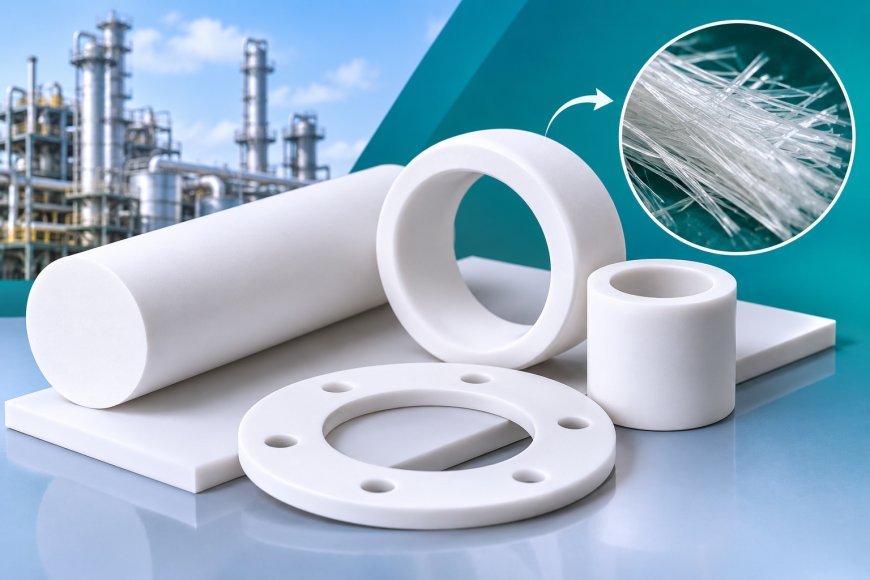
When conventional PTFE struggles to provide sufficient mechanical support under heavy pressure, reinforced materials become an important consideration. Glass-Filled PTFE combines the useful properties of PTFE with glass reinforcement to improve stiffness, compressive strength, and resistance to deformation. This combination makes it a practical choice for industrial components that require better mechanical stability without losing the benefits of low friction and chemical resistance.
1. Handles Continuous Mechanical Pressure
Components used in heavy-duty machinery are regularly exposed to high pressure. When a material cannot withstand this stress, it may gradually change shape, resulting in poor fitting and reduced equipment efficiency.
Glass reinforcement increases the stiffness of PTFE, helping it perform better under compressive loads compared with unfilled PTFE.
How does it help?
-
Improves resistance to mechanical pressure.
-
Helps minimize deformation during operation.
-
Supports better dimensional stability.
-
Makes components suitable for demanding working conditions.
This property is useful for industrial bushes, bearings, and other machine components that experience repeated loading.
2. Minimizes Wear During Repeated Movement
Continuous movement between contacting surfaces can gradually damage industrial components. Excessive wear may affect machine accuracy, increase friction, and create additional maintenance requirements.
Glass reinforcement can improve the wear performance of PTFE in suitable applications. This helps components withstand repeated contact and mechanical movement more effectively.
Important benefits include:
-
Better resistance to mechanical wear.
-
Improved durability in suitable sliding applications.
-
Reduced material loss during operation.
-
Potentially longer component replacement intervals.
However, glass reinforcement can increase abrasion against softer mating surfaces. Proper counterface selection is therefore necessary.
3. Helps Control Long-Term Material Deformation
One common issue with conventional PTFE is creep, also known as cold flow. It occurs when a material gradually deforms under continuous pressure, even without an increase in the applied load.
This can create problems in industrial seals, bushings, and precision components where maintaining the original shape is important.
The addition of glass fibres improves material stiffness and helps reduce deformation under sustained mechanical stress.
What problems can this address?
-
Excessive changes in component dimensions.
-
Reduced stability under continuous loading.
-
Poor fitting between mechanical parts.
-
Performance issues caused by gradual deformation.
As a result, reinforced PTFE can be considered for applications where maintaining component geometry is essential.
4. Supports Smooth Mechanical Movement
Friction between moving surfaces can generate heat and accelerate component deterioration. In equipment operating for extended periods, increased friction may also affect energy efficiency and overall performance.
PTFE is naturally known for its low coefficient of friction. Glass reinforcement improves its mechanical properties while retaining useful low-friction characteristics.
This combination makes it suitable for selected sliding and movement-based applications.
For example, industrial bearings, guide components, and sliding elements can benefit from reduced friction and improved mechanical support. Proper surface finishing and operating conditions remain important for achieving satisfactory results.
5. Performs Well in Many Chemical Environments
Industrial machinery often comes into contact with chemicals, solvents, cleaning solutions, and corrosive substances. Selecting an incompatible material can lead to deterioration and unexpected component failure.
PTFE provides excellent resistance to many industrial chemicals, making it useful in applications where chemical exposure is a major concern.
Glass-reinforced grades retain resistance to many chemicals, although the glass reinforcement may be affected by certain substances, including hydrofluoric acid and strong alkalis under particular conditions.
Where can it be useful?
-
Chemical manufacturing equipment.
-
Pharmaceutical processing systems.
-
Industrial fluid-handling components.
-
Petrochemical machinery.
-
Selected food-processing equipment.
Checking chemical compatibility at the actual operating temperature and concentration is essential before finalising the material.
6. Maintains Better Component Dimensions
Precision is important in industrial assemblies where components must fit correctly and maintain specific clearances. Even minor dimensional changes can affect alignment, sealing efficiency, and machine operation.
Compared with standard PTFE, glass-reinforced grades offer improved rigidity, which helps reduce dimensional changes under mechanical stress.
This makes them worth considering for manufacturing:
-
Valve seats.
-
Mechanical seal components.
-
Industrial wear rings.
-
Compressor parts.
-
Precision bushes and guide components.
Selecting the correct material grade and machining tolerance helps achieve the required component dimensions.
7. Offers Versatility Across Industrial Applications
Different industries require materials that can manage multiple operating challenges simultaneously. A component may need to withstand mechanical loads, chemical exposure, continuous movement, and temperature variations.
The combination of improved stiffness, wear performance, and chemical resistance makes glass-reinforced PTFE suitable for several engineering applications.
Some common uses include:
Industrial Bearings: Used in applications requiring low friction and improved resistance to mechanical wear.
Sealing Components: Considered for selected sealing applications where dimensional stability and chemical compatibility are important.
Pumps and Valves: Used in suitable components exposed to pressure, fluid contact, and repeated operation.
Heavy Machinery: Supports the manufacturing of components that experience continuous mechanical stress.
Custom Machined Parts: Can be processed into application-specific shapes according to equipment requirements.
The final material selection should always consider load, speed, temperature, chemical exposure, and mating surface conditions.
Factors to Consider Before Selecting the Right Grade
Choosing a reinforced PTFE material without understanding the actual operating environment may lead to performance issues. Industries should evaluate the following points before making a decision:
-
Mechanical Load: Identify the continuous pressure and maximum load experienced by the component.
-
Temperature Conditions: Confirm that the selected grade can operate within the required temperature range.
-
Movement and Friction: Consider sliding speed, contact pressure, and mating surface material.
-
Chemical Compatibility: Check the effects of chemicals and operating conditions on both PTFE and glass reinforcement.
-
Component Requirements: Review the required dimensions, machining tolerances, and expected service life.
Discussing these requirements with an experienced manufacturer can help identify a suitable material grade for the intended application.
Conclusion
Material failure under heavy mechanical loads can affect industrial productivity, increase maintenance expenses, and interrupt regular operations. Selecting an appropriate engineering material is therefore important for achieving dependable equipment performance.
Glass-reinforced PTFE provides improved stiffness, better resistance to deformation, and useful wear properties while retaining many of the advantages of conventional PTFE. These characteristics make it a suitable option for various industrial applications involving pressure, friction, and chemical exposure.
By evaluating operating conditions and choosing the correct material grade, manufacturers can develop components that offer better dimensional stability, reliable performance, and improved service life.
What's Your Reaction?
 Like
0
 Dislike
0
 Love
0
 Funny
0
 Angry
0
 Sad
0
 Wow
0