




















When Glass Becomes Part of the Interior Design
1.
Glass partitions have become a familiar part of modern office interiors in Dubai. They help offices feel brighter, make smaller spaces appear more open and allow natural light to move between different areas. But while clear glass has many advantages, it can also create a practical problem: not every workspace needs to remain completely visible.
Meeting rooms, private offices, reception areas and shared workspaces may all have different privacy requirements. Instead of covering every glass surface or replacing existing partitions, businesses can use carefully planned frosting to create a better balance between openness and privacy.
Why Privacy Matters in Glass Offices
An open office can encourage communication, but there are situations where people need a little more visual separation.
A meeting may involve confidential business discussions. A manager may need to speak privately with an employee. A consultation room may require a more discreet setting. Even a reception area can benefit from some separation when visitors are waiting or speaking with staff.
Clear glass does not automatically provide that sense of privacy.
Frosting can reduce direct visibility while keeping the advantages of a glass partition. The amount of coverage can be adjusted depending on how private the area needs to be.
Privacy Does Not Always Mean Full Coverage
One of the common assumptions about frosted glass is that the entire panel needs to be covered.
That is not necessarily the case.
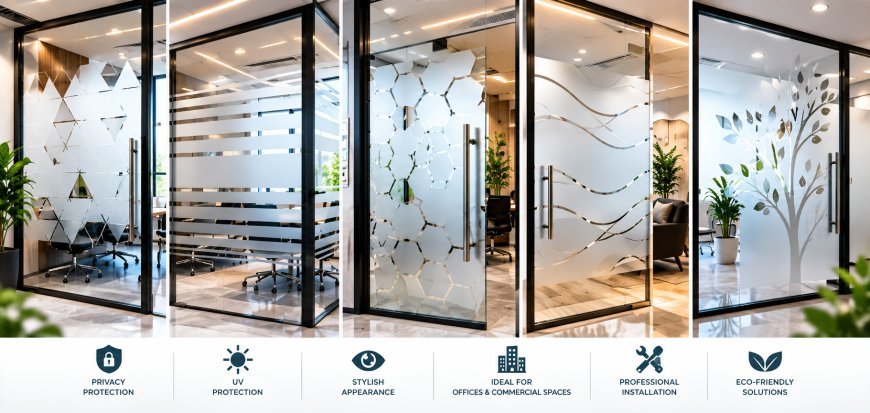
Partial frosting can provide privacy at eye level while leaving other parts of the glass clear. This can be useful when an office wants to limit direct views without making the room feel separated from the rest of the workplace.
For example, a meeting room might use a frosted section across the centre of the glass while keeping the upper portion transparent. This can make conversations more private while allowing daylight to continue flowing through the space.
Choosing the Right Level of Frosting
Different areas of an office may need different levels of privacy.
A private office may require more coverage than a corridor partition. A meeting room may need privacy around seated eye level, while a reception panel might only need a small amount of frosting for visual definition.
The right choice depends on:
-
The purpose of the room
-
How much visibility is required
-
Where people are positioned inside
-
The amount of natural light available
-
The surrounding office layout
-
Whether branding or decoration is also required
Looking at these factors first makes it easier to decide how the glass should be treated.
Using Frosting Without Losing Natural Light
Natural light is one of the main reasons businesses choose glass partitions.
Covering too much of the glass can reduce the sense of openness that made the partition useful in the first place. A more selective approach can provide privacy while keeping clear sections available for daylight.
This can be especially useful in Dubai offices where bright, open interiors are often part of the overall workplace design.
The goal is not simply to make glass less transparent. It is to control visibility in a way that still works with the rest of the interior.
Meeting Rooms Can Benefit From Better Visual Separation
Meeting rooms are one of the most practical places to use frosted glass.
Fully transparent meeting rooms can make people inside feel exposed, particularly during private discussions. At the same time, completely closed walls can make the office feel less connected.
Frosted sections offer a middle ground.
A simple band, geometric pattern or carefully positioned panel can block direct views without removing the visual connection between the meeting room and surrounding workspace.
The design should also consider where people are likely to sit. Frosting placed too high or too low may not provide the intended level of privacy.
Reception Areas Need a Different Approach
Reception glass often has a different purpose from meeting-room glass.
It may need to support the company’s visual identity while also helping organise the entrance area. A subtle frosted treatment can give plain glass more definition without making the reception feel crowded.
If branding is included, it is usually better to give the main visual element enough clear space around it. Too many graphics or repeated details can make a reception area harder to read.
A simple treatment can often look more professional than an overly complicated design.
Glass Doors Need Visibility as Well as Privacy
Glass doors can create another practical issue.
When a door blends into a transparent partition, visitors may not immediately recognise where the entrance is. In busy offices, this can lead to accidental collisions or confusion about where to enter.
A frosted strip, pattern or simple visual marking can make the door easier to identify.
This is one area where appearance and everyday usability work together. The treatment can add character to the door while also making its position more obvious.
Frosting Can Support Office Branding
Glass treatments do not have to be limited to privacy.
Businesses can use selected areas of frosting to introduce a logo, company name or simple visual element. This can be particularly suitable for reception areas, entrance doors and meeting-room partitions.
The key is restraint.
Branding should support the office rather than dominate it. A well-positioned logo with sufficient surrounding space can feel much more natural than covering large areas of glass with repeated company information.
How Design Affects the Overall Interior
The pattern and placement of frosting can change how an office feels.
Straight lines and simple geometric shapes can suit a structured corporate environment. Softer curves may work better with interiors that already use rounded furniture or flowing design elements.
The scale matters too.
A pattern that looks good on a small sample may appear completely different when applied across a large partition. Designs should therefore be considered according to the actual size and position of the glass.
This is where a thoughtful Frosted Sticker Design can make a difference. The treatment should respond to the space rather than being selected as an isolated decorative element.
Different Glass Areas Can Have Different Treatments
There is no need to use exactly the same frosting across an entire office.
A business may choose:
-
More privacy for executive offices
-
Moderate frosting for meeting rooms
-
Subtle branding at reception
-
Decorative details along selected partitions
-
Simple visibility markings on glass doors
Using different treatments can make the office more functional while still maintaining a consistent visual style.
Similar spacing, shapes or design details can be repeated in selected areas to create a connection between different parts of the workplace.
Think About the Existing Interior
The glass should not be considered separately from the rest of the office.
Before choosing a treatment, look at the furniture, lighting, flooring, wall finishes and existing branding. These elements can help determine whether the glass should remain understated or become a stronger visual feature.
For example, a minimalist office may suit a simple frosted band, while a creative workplace may have more room for decorative patterns.
The objective is to make the glass feel like part of the interior rather than something added afterwards.
Existing Glass May Already Be Suitable
Businesses sometimes assume that improving office privacy requires replacing their current partitions.
That is not always necessary.
If the existing glass is still suitable for the space, a frosting treatment can be considered as a way to change its appearance and visibility. This can be useful when a business is updating its office layout, creating a new meeting room or improving privacy in selected areas.
Instead of changing every panel, businesses can focus on the glass surfaces where a practical improvement is actually needed.
Avoid Making the Office Feel Too Busy
Privacy treatments should not create a new visual problem.
Large patterns, excessive branding and too many different designs can make an office feel crowded. Glass already sits alongside furniture, screens, lighting and signage, so adding too much detail can make the interior difficult to look at.
Simple designs with sensible spacing are often easier to live with over time.
The treatment should support the way people use the office rather than constantly demanding attention.
Consider the Glass From Both Sides
A design may look different depending on where it is viewed from.
This matters in offices where glass partitions separate corridors from meeting rooms or reception areas from workspaces. The treatment should make sense from both sides and work with the surrounding environment.
Lighting can also change the appearance of frosted surfaces throughout the day.
A design that looks subtle in daylight may appear more prominent when interior lights are switched on in the evening. Considering these changes before installation can help avoid unexpected results.
A Practical Way to Plan Office Glass
Before choosing a design, businesses can walk through the office and consider each glass surface individually.
Ask:
-
What is this glass being used for?
-
Does the area need privacy?
-
Where should visibility be reduced?
-
How much natural light should remain?
-
Does the glass door need a visual marker?
-
Is branding necessary in this location?
-
Will the design suit the surrounding interior?
-
Does the same treatment need to continue into nearby areas?
These questions can make the planning process much clearer.
Frequently Asked Questions
Can frosted treatment improve privacy without blocking all light?
Yes. Partial frosting can reduce direct visibility while leaving clear sections of the glass open, allowing natural light to continue passing through the space.
Is full frosting necessary for a private office?
Not always. The required coverage depends on the room, activities taking place inside and the level of privacy needed. Some offices may only need frosting across specific viewing areas.
Can meeting-room glass still look modern after frosting?
Yes. Simple bands, geometric patterns and carefully positioned designs can provide privacy while keeping the meeting room visually connected to the wider office.
Can glass doors be frosted for safety and visibility?
Frosted markings can make transparent doors easier to recognise by creating a visible distinction between the door and surrounding glass. The exact treatment should suit the door and its location.
Should every glass partition in an office use the same design?
No. Different rooms can have different privacy requirements. Consistent spacing, shapes or visual elements can help the overall office feel connected without making every glass panel identical.
Conclusion
Glass can make a Dubai office feel bright, open and connected, but complete transparency is not always practical. Meeting rooms, private offices, reception areas and glass doors may each require a different approach to privacy and visibility.
Frosting offers a flexible way to adjust these areas without necessarily changing the existing glass. By considering coverage, placement, natural light, branding and the surrounding interior, businesses can create a treatment that serves a real purpose while still looking natural.
The most effective approach is usually not about adding more design. It is about understanding what each glass surface needs to do and choosing a treatment that fits that purpose.
What's Your Reaction?
 Like
0
Like
0
 Dislike
0
Dislike
0
 Love
0
Love
0
 Funny
0
Funny
0
 Angry
0
Angry
0
 Sad
0
Sad
0
 Wow
0
Wow
0