



















Best Professional Embroidery Designs for Custom Clothing & Branding
Learn how to choose professional embroidery designs for custom clothing, company logos, uniforms, caps, and business branding with quality stitching.
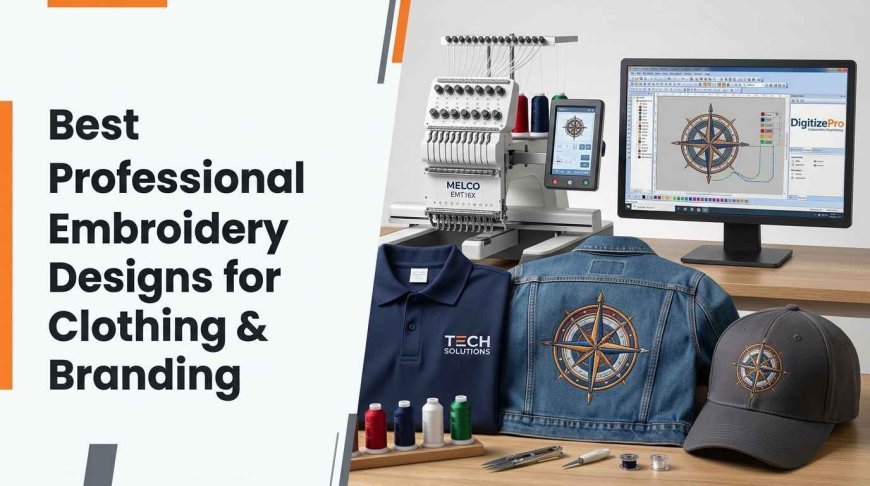
Custom embroidery is an effective way to add personality, identity, and long-lasting decoration to clothing and business merchandise. From company uniforms and promotional apparel to personalized jackets and caps, professionally prepared embroidery designs help businesses create a consistent appearance across their products.
However, choosing the right embroidery design involves more than selecting an attractive logo or pattern. Fabric type, design size, stitch density, thread colors, and digitizing quality all influence the final result. A design that looks good on a computer screen may not produce the same appearance when stitched onto a polo shirt, jacket, cap, or work uniform.
Understanding these factors helps businesses select professional embroidery designs that suit their branding requirements and deliver reliable stitching results.
Why Professional Embroidery Designs Matter for Custom Clothing
Custom clothing allows individuals and businesses to communicate their identity through personalized garments. Embroidery adds texture and dimension to clothing, creating a finished appearance that can be suitable for everyday wear, corporate uniforms, and promotional products.
Unlike printed graphics, embroidery uses thread to create the design directly on the fabric. This makes it important to prepare the artwork properly before production.
Professional embroidery designs are digitized with appropriate stitch types, underlay, density, and sequencing. These settings help maintain the original artwork's proportions while reducing common stitching problems.
For clothing businesses, well-prepared designs also make it easier to reproduce the same logo or pattern across multiple garments.
Best Types of Embroidery Designs for Business Branding
Different businesses have different branding requirements. Some need simple company logos for uniforms, while others require decorative artwork for promotional clothing and merchandise.
The right design depends on the garment, intended audience, brand identity, and embroidery placement.
1. Company Logo Embroidery
Logo embroidery is commonly used for corporate uniforms, staff shirts, jackets, and promotional apparel. It helps businesses maintain a consistent visual identity across their clothing.
A good embroidered logo should have clear shapes, readable lettering, and balanced stitch coverage. Complicated artwork may need simplification before digitizing, especially when the logo will be stitched at a small size.
Satin stitches are often suitable for lettering and narrow shapes, while fill stitches can cover larger areas. Running stitches may be used for fine outlines and smaller details.
The final digitized version should be tested on the intended garment to confirm that the logo remains recognizable.
2. Custom Embroidery Designs for Polo Shirts
Polo shirts are popular for employee uniforms, retail teams, restaurants, and service businesses. Their fabric construction makes them suitable for many types of embroidery, although the material's weight and stretch must be considered.
Small chest logos are a common choice because they provide a professional appearance without covering too much of the garment.
For polo shirts, designs should have controlled stitch density and appropriate underlay. Stretch fabrics may require cut-away stabilizers to prevent distortion during and after embroidery.
Lettering should also be large enough to remain readable after stitching.
3. Embroidered Designs for Business Jackets
Business jackets offer additional space for company logos, department names, and larger decorative designs. They are commonly used for outdoor teams, construction businesses, sports organizations, and promotional clothing.
Jacket materials vary considerably, from lightweight polyester to thick fleece and heavy outerwear fabrics. Each material requires suitable needle selection, stabilizer support, and digitizing adjustments.
Larger designs can work well on jackets, but excessive stitch density may make the embroidered area stiff. A test sample helps determine whether the design is appropriate for the material.
4. Custom Cap Embroidery
Caps are widely used for company merchandise, sports teams, promotional campaigns, and employee uniforms.
However, cap embroidery requires specialized preparation because the curved surface and structured construction affect how stitches are formed.
Professional cap digitizing considers the stitching sequence, center-out embroidery approach, stitch direction, and fabric movement. These adjustments help reduce distortion and maintain logo alignment.
Simplified logos with clear lettering and suitable stitch coverage often produce better results on caps than artwork containing extremely fine details.
5. Personalized Embroidery for Work Uniforms
Work uniforms help employees maintain a consistent appearance while making company identification easier.
Embroidery can be added to shirts, aprons, jackets, waistcoats, and other workwear. Common design elements include company logos, employee names, department labels, and service-related symbols.
For garments used frequently, thread quality and stitch durability are important considerations. Polyester embroidery thread is often selected for workwear because of its durability and color retention.
The design should also be appropriate for the garment's daily use and washing requirements.
How to Choose the Right Embroidery Design for Your Brand
Selecting an embroidery design requires a clear understanding of the business's visual identity and the type of clothing being produced.
A simple logo may work well for a corporate uniform, while a sports brand may prefer a more detailed design with bold lettering and decorative elements.
Match the Design with Your Brand Identity
The embroidery should represent the business's existing branding. Use consistent logo proportions, recognizable symbols, and suitable brand colors.
Avoid adding unnecessary details that make the design difficult to reproduce. A clean and recognizable design is generally more practical for clothing applications.
Consider Fabric Type and Garment Material
The same embroidery design may require different digitizing settings when applied to different fabrics.
Cotton shirts usually provide a relatively stable surface, while stretch polo shirts need additional support. Denim and jackets may accommodate larger designs, whereas lightweight garments require careful stitch coverage.
Selecting the design according to the material helps improve the finished appearance.
Choose Suitable Design Placement
Placement affects both appearance and practicality. Common locations include the left chest, right chest, sleeves, back panels, and cap fronts.
For business uniforms, small chest logos are often appropriate. Larger back designs may be useful for promotional clothing or team apparel.
Always check the available embroidery area before finalizing the design dimensions.
Select Appropriate Thread Colors
Thread colors should maintain good contrast with the garment and match the company's branding requirements.
For example, a dark logo may be difficult to see on a black jacket. Choosing a contrasting thread color can improve visibility without changing the original brand identity.
Testing thread colors on the actual fabric helps avoid unexpected differences between digital previews and finished embroidery.
The Importance of Professional Digitizing for Business Embroidery
Digitizing converts artwork into machine-readable embroidery instructions. It determines how the machine will reproduce the design through stitch types, stitch directions, underlay, density, and sewing sequence.
This process is especially important for business logos because even small stitching errors can affect the appearance of company branding.
Professional digitizing takes the garment material and design dimensions into account. For example, a logo prepared for a cotton shirt may need adjustments before it can be used on a structured cap or thick jacket.
Proper digitizing can help maintain lettering clarity, improve stitch coverage, and reduce unnecessary thread changes.
Businesses ordering embroidered clothing in larger quantities should also test their designs before beginning full production. This helps identify problems before they affect multiple garments.
Popular Stitch Types Used in Custom Clothing and Branding
Choosing the right stitch type is important for achieving the intended appearance and texture.
Satin Stitch: Commonly used for lettering, narrow borders, and small design elements. It creates a smooth, raised finish.
Fill Stitch: Suitable for larger shapes and solid design areas. It provides broad coverage and works well for many company logos.
Running Stitch: Used for fine outlines, lightweight details, and delicate design elements. It generally requires less thread than larger fill areas.
Bean Stitch: Creates a reinforced line by repeating stitches along the same path. It can be useful for decorative outlines and selected lettering styles.
A professional digitizer selects stitch types according to the artwork, fabric, and final embroidery size rather than applying the same settings to every design.
Common Mistakes to Avoid in Business Embroidery
One frequent mistake is using complicated artwork at a very small embroidery size. Fine lines, tiny lettering, and closely spaced elements may become unclear after stitching.
Another problem is selecting excessive stitch density. Too many stitches can create stiff embroidery, increase production time, and cause fabric distortion.
Ignoring fabric requirements can also affect the final outcome. Stretch garments, thick jackets, and textured materials require different preparation and stabilization methods.
Businesses should also avoid relying entirely on digital previews. A screen image cannot accurately represent every detail of actual thread coverage, fabric movement, or stitch texture.
Testing the design on a similar garment is a practical way to identify issues before placing a larger production order.
Benefits of Professional Embroidery for Business Branding
Professionally prepared embroidery offers several practical advantages for businesses that use custom clothing as part of their branding.
It creates a textured design directly on the garment and can provide durable decoration when suitable materials and stitching methods are used.
Consistent logo placement across uniforms also helps businesses maintain a recognizable appearance. Employees can wear coordinated clothing, while customers can identify company representatives more easily.
Embroidery is also suitable for different merchandise categories, including caps, jackets, polo shirts, bags, and promotional accessories.
For businesses producing clothing regularly, properly digitized designs can be reused across compatible garments, although adjustments may be necessary for different materials and sizes.
How to Maintain Quality in Large Embroidery Orders
Maintaining consistent quality becomes more important when producing embroidered clothing in bulk.
Before production begins, confirm the final artwork, design dimensions, thread colors, garment material, and embroidery placement. Prepare a sample garment and inspect the stitching from both sides.
Check that lettering is readable, outlines are aligned, and the design has suitable coverage. Also review thread tension and stabilizer performance.
Once the sample is approved, use the same tested design file and production settings for garments with matching materials. Keep records of any adjustments made for different fabric types.
Regular machine maintenance and quality checks can further reduce production problems and help maintain consistent embroidery results.
Conclusion
Professional embroidery designs play an important role in custom clothing and business branding. From company logos and polo shirts to jackets, caps, and employee uniforms, the right design can help create consistent and recognizable business apparel.
Choosing suitable artwork, matching stitch settings to the fabric, selecting appropriate thread colors, and using professional digitizing methods all contribute to better embroidery results.
For businesses looking for professionally prepared embroidery files and digitizing support, zdigitizing.net is worth considering. Combining carefully digitized designs with proper fabric preparation and machine settings can help produce clean, durable, and consistent custom embroidery.
What's Your Reaction?
 Like
0
 Dislike
0
 Love
0
 Funny
0
 Angry
0
 Sad
0
 Wow
0