






















Best Sunscreen for Oily and Combination Skin
Learn how to choose sunscreen for oily and combination skin, understand SPF and PA ratings, and find a lightweight formula for daily sun protection.
How to Choose the Right Sunscreen for Oily and Combination Skin
Finding the right sunscreen can be challenging when your skin becomes shiny within hours of washing your face. For people with oily or combination skin, some sunscreens feel too heavy, leave a greasy finish, or make layering skincare products uncomfortable. As a result, sunscreen can become the step people are most likely to skip.
However, daily sun protection is essential for every skin type. The key is finding a formula that protects your skin while feeling comfortable enough to use consistently. By understanding sunscreen labels, choosing suitable textures, and following the right application steps, you can make sun protection a simple part of your daily routine.
1. Understand Your Skin Type Before Choosing Sunscreen
Oily skin produces excess sebum across much of the face, often creating shine around the forehead, nose, and chin. Combination skin usually has an oily T-zone, while the cheeks may feel normal or dry.
These differences matter when choosing sunscreen. A rich formula may feel uncomfortable on an oily T-zone, while an overly drying product may leave the cheeks feeling tight. Instead of choosing a sunscreen based only on its marketing claims, consider how your skin behaves throughout the day.
People with oily or combination skin often prefer lightweight lotions, fluid formulas, or gel-based sunscreens. These textures can feel less heavy than thick creams and may layer more comfortably over a moisturizer.
Remember that oily skin still needs hydration. Choosing a sunscreen that feels light without leaving your skin uncomfortable can help you maintain a consistent skincare routine.
2. Look for Broad-Spectrum Protection
Texture is important, but sun protection should always come first. Look for a sunscreen that provides broad-spectrum protection against UVA and UVB rays. UVA exposure contributes to premature skin aging, while UVB rays are a major cause of sunburn.
For everyday use, choose a sunscreen with an SPF of at least 30. SPF50+ offers a higher labeled level of protection against UVB radiation when the product is applied correctly. A PA++++ rating, commonly used on Korean sunscreens, indicates a high level of UVA protection.
These ratings do not mean you can apply less sunscreen or stay in direct sunlight indefinitely. The amount applied and how often you reapply both affect the protection you receive.
A lightweight sunscreen with strong protection is a practical option for people who spend time outdoors, commute to work, or follow a morning skincare routine.
3. Choose a Lightweight, Non-Greasy Formula
One of the biggest concerns for oily skin is the feeling of a thick layer sitting on the face. Some formulas can leave a shiny finish, making the skin appear oilier than it actually is.
A lightweight formula may feel more comfortable, especially in warm or humid weather. If you prefer a fresh finish, look for products designed to absorb quickly and sit comfortably under makeup or other skincare products.
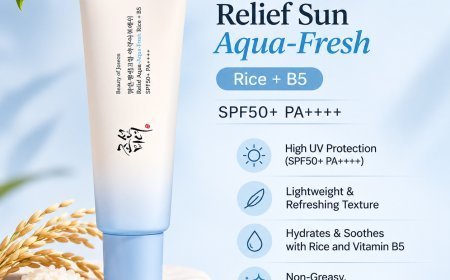
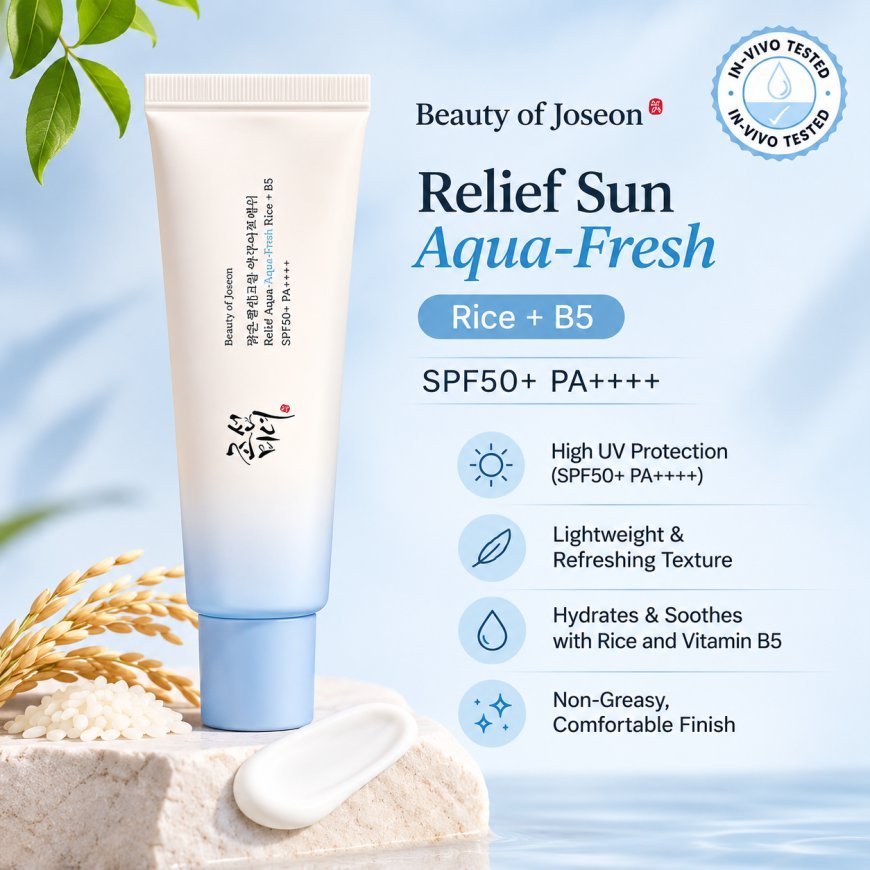
An option worth exploring is Beauty of Joseon Relief Sun Aqua-Fresh. This Korean sunscreen features rice seed water and panthenol, also known as vitamin B5. Its lightweight formula is designed to provide broad-spectrum sun protection with a refreshing feel.
Rice seed water helps provide hydration, while panthenol supports the skin's moisture barrier. These ingredients can be useful when looking for sun protection that does not feel unnecessarily heavy. The product is particularly positioned for people who prefer a lighter texture than a richer sunscreen.
Individual experiences can vary, so consider your skin's needs and how the formula feels after application.
4. Pay Attention to Hydration and Skin Comfort
Oily skin does not automatically mean your skin barrier is well hydrated. In fact, using harsh cleansers or excessive exfoliating products can leave the skin feeling tight and irritated, even when the T-zone remains shiny.
A suitable sunscreen should fit comfortably into your routine without causing persistent dryness or irritation. Ingredients such as panthenol can help support hydration and the skin barrier, while humectants attract water to the skin.
If your cheeks are dry but your forehead and nose become oily, you can also adjust your moisturizer. Use a lightweight moisturizer across the face and apply a little more to dry areas if needed.
Introduce new products gradually, particularly if you have sensitive skin. If you experience persistent burning, itching, or redness, discontinue the product and seek professional advice when necessary.
5. Apply Sunscreen Correctly Every Morning
Even an excellent sunscreen cannot provide its intended protection if you apply too little. Make sunscreen the final step of your morning skincare routine, after cleansing, any serums, and moisturizer.
Apply it evenly to your face, ears, neck, and other exposed areas. Follow the manufacturer's directions for the appropriate amount. Allow it to settle before applying makeup, if you wear it.
Reapply at least every two hours when outdoors, and reapply after swimming, heavy sweating, or towel drying according to the product's instructions. If you spend much of the day outside, a water-resistant sunscreen is a better choice for activities involving water or sweat.
You can also support your routine with shade, protective clothing, sunglasses, and a wide-brimmed hat. Sunscreen works best as part of a broader sun-protection approach.
6. Avoid Common Sunscreen Mistakes
Several habits can make sun protection less effective or less comfortable. Skipping sunscreen on cloudy days is one example, because UV exposure can still occur when the sun is not directly visible.
Another mistake is choosing a product solely because it promises a matte finish. Your skin may respond differently from someone else's, so pay attention to comfort, irritation, and how the product layers with your other skincare products.
You should also avoid relying on makeup with SPF as your only sun protection unless you apply enough to meet the labeled protection level. Many people apply far less makeup than would be needed to achieve its stated SPF.
If you are exploring Korean skincare, you can browse the Colorshow K-Beauty collection to discover additional skincare products and compare options for your routine.
Conclusion
Choosing sunscreen for oily and combination skin comes down to balancing reliable UV protection with a comfortable texture. Look for broad-spectrum protection, SPF30 or higher, and a formula that suits your skin's hydration needs without feeling too heavy.
A lightweight option such as Beauty of Joseon Relief Sun Aqua-Fresh: Rice + B5 SPF50+ PA++++ may suit people who prefer a refreshing finish. Apply sunscreen generously every morning and reapply as needed to maintain protection.
Most importantly, choose a product you enjoy using consistently. A comfortable sunscreen makes it easier to protect your skin every day and maintain a practical, long-term skincare routine.
What's Your Reaction?
 Like
0
 Dislike
0
 Love
0
 Funny
0
 Angry
0
 Sad
0
 Wow
0