




















Chassis Components: Key Parts, Functions, and Engineering Applications
Chassis Components: Key Parts, Functions, and Engineering Applications

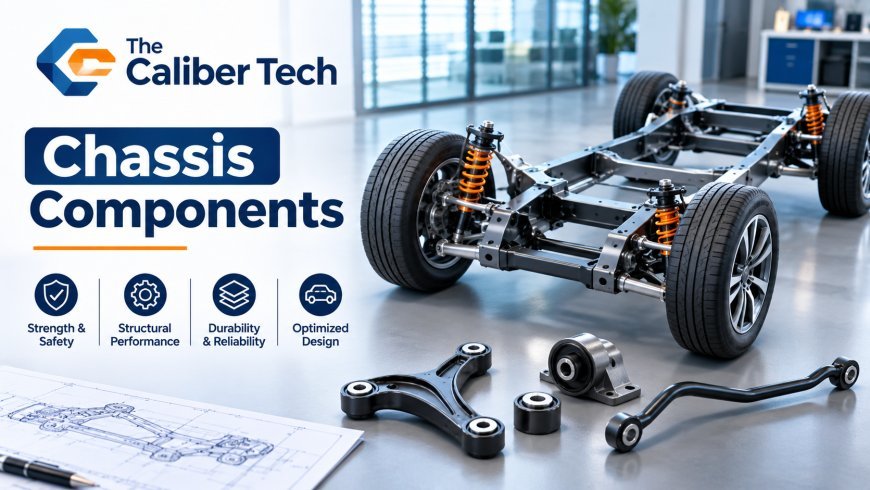
Chassis components are the structural and mechanical elements that allow a vehicle to support weight, maintain balance, and operate safely on different road surfaces. They form the foundation of a vehicle by connecting important systems such as the suspension, steering, braking, drivetrain, and wheels. Each component has a specific purpose, but all must work together to deliver dependable performance and controlled movement.
In automotive engineering, developing durable chassis components involves more than selecting strong materials. Engineers must understand how different parts respond to mechanical loads, vibration, temperature changes, and repeated movement. They also need to consider vehicle weight, manufacturing costs, and safety requirements. Modern design methods, including computer-aided engineering and finite element analysis, help manufacturers develop structures that meet these requirements while improving efficiency and reliability.
Understanding the Structure of a Vehicle Chassis
The chassis is the supporting foundation that holds the major systems of a vehicle in their correct positions. It distributes loads from passengers, cargo, the engine, and other assemblies while resisting forces generated during acceleration, braking, and cornering.
Vehicle chassis designs generally fall into two categories.
Body-on-Frame Design
A body-on-frame vehicle uses a separate structural frame beneath the body. The frame supports the powertrain, suspension, and other mechanical assemblies.
This design is commonly used in pickup trucks, commercial vehicles, and certain off-road SUVs. Its construction provides a strong foundation for vehicles that regularly carry heavy loads or operate on demanding terrain.
Unibody Design
A unibody structure combines the body and supporting framework into one integrated assembly. Structural sections work together to provide the required stiffness and strength.
Most modern passenger cars use this design because it reduces unnecessary structural weight and allows manufacturers to improve interior packaging and crash-energy management.
Major Chassis Components and Their Functions
Different mechanical and structural parts contribute to the overall performance of a vehicle. Understanding their individual roles helps explain how a chassis operates as a complete system.
1. Chassis Frame and Crossmembers
The chassis frame provides the main structural foundation in vehicles with separate frames. It supports major assemblies and distributes mechanical loads throughout the structure.
Crossmembers connect different sections of the frame. They increase structural stiffness and provide mounting points for components such as the transmission, suspension, and engine supports.
Engineers must carefully evaluate the dimensions, thickness, and material properties of these members. Poor structural design can result in excessive bending, twisting, or stress concentration.
2. Suspension System
The suspension system connects the wheels to the vehicle structure. Its primary purpose is to absorb road impacts, control wheel movement, and maintain tire contact with the road.
Important suspension parts include:
-
Coil springs: Support vehicle weight and absorb energy from road irregularities.
-
Shock absorbers: Control spring movement and reduce excessive bouncing.
-
Control arms: Guide wheel movement while maintaining suspension geometry.
-
Ball joints: Allow controlled angular movement between suspension connections.
-
Stabilizer bars: Reduce body roll during cornering.
Suspension design affects ride comfort, tire wear, steering response, and vehicle stability. For example, worn shock absorbers can increase braking distances on rough surfaces by making it harder for tires to maintain consistent road contact.
3. Steering System
The steering system allows drivers to control vehicle direction. It transfers movement from the steering wheel to the front wheels through several connected mechanical parts.
Its main components include the steering column, steering rack, tie rods, steering knuckles, and power assistance mechanism.
Rack-and-pinion steering is widely used in passenger cars because of its compact design and accurate response.
Electric power steering systems use an electric motor to assist steering movement. They can reduce energy consumption compared with conventional hydraulic assistance and support integration with modern driver-assistance technologies.
4. Braking System
The braking system controls vehicle speed and allows safe stopping. Its major components include brake discs, pads, calipers, master cylinders, brake lines, and boosters.
When the driver presses the brake pedal, hydraulic pressure activates the calipers. The brake pads press against the rotating discs, generating friction that reduces wheel speed.
Modern vehicles may also include Anti-lock Braking Systems (ABS). This technology helps prevent wheel lockup during hard braking, supporting better steering control on slippery surfaces.
5. Axles and Differential
Axles support vehicle loads and may transfer rotational power to the wheels, depending on the drivetrain arrangement.
A differential allows driven wheels to rotate at different speeds while cornering. Without this mechanism, the tires would experience additional friction and could wear unevenly during turns.
Differential assemblies contain gears, bearings, and supporting housings that must withstand continuous torque and mechanical stress. Proper lubrication is essential for their long-term operation.
6. Wheel Hubs and Bearings
Wheel hubs connect the wheels to the vehicle's suspension or axle assembly. They provide a secure mounting point and support the wheel-bearing system.
Wheel bearings allow smooth rotation while carrying radial and axial loads. Their design must account for vehicle weight, cornering forces, and operating temperature.
A worn bearing may produce humming, grinding, or rumbling sounds. Identifying these symptoms early can prevent damage to surrounding parts.
7. Bushings and Mounting Brackets
Bushings and brackets help connect chassis assemblies while controlling vibration and movement.
Rubber bushings are commonly installed in suspension arms and stabilizer bar connections. They allow limited flexibility while reducing unwanted noise and vibration.
Mounting brackets secure components such as engines, transmissions, and suspension assemblies. Their strength and positioning are important because they experience repeated mechanical forces during vehicle operation.
Materials Used in Chassis Manufacturing
Material selection directly affects component strength, weight, durability, and production cost.
Steel and High-Strength Steel
Steel is widely used in vehicle frames and structural members because of its strength, availability, and affordability. High-strength steel grades allow manufacturers to reduce material thickness in suitable applications while maintaining required performance.
Aluminium Alloys
Aluminium alloys are commonly used in wheels, suspension arms, and subframes. Their relatively low density helps reduce vehicle weight, which can improve energy efficiency.
Cast Iron
Cast iron is frequently used in brake discs and selected mechanical assemblies. Its thermal properties and resistance to wear make it suitable for applications involving repeated friction.
Composite Materials
Carbon-fibre-reinforced polymers provide high stiffness with low weight. They are used in specialized and high-performance vehicles where reducing mass is particularly valuable.
Practical Benefits of Well-Designed Chassis Components
Properly engineered chassis components provide several advantages for manufacturers and vehicle owners.
Improved handling: Accurate suspension geometry and reliable steering connections support predictable vehicle control.
Greater structural strength: Strong frames and supporting members distribute loads and resist excessive deformation.
Better safety: Reliable structural, braking, and steering systems contribute to vehicle stability and occupant protection.
Lower energy consumption: Lightweight materials can reduce vehicle mass and improve fuel economy or electric driving range.
Reduced vibration: Quality bushings, mounts, and suspension components help improve passenger comfort.
Longer service life: Appropriate materials, corrosion protection, and accurate manufacturing reduce premature wear and damage.
Common Challenges in Chassis Engineering
Structural Stress and Fatigue
Vehicle components experience repeated loading during normal operation. Over time, fatigue can develop around welds, mounting holes, and sharp changes in geometry.
Engineers use finite element analysis and physical fatigue testing to identify potential weaknesses and improve structural designs.
Corrosion and Environmental Exposure
Water, road salt, dust, and chemicals can damage metal components. Protective coatings, suitable materials, and regular inspections help reduce corrosion.
Weight and Strength Balance
Reducing vehicle weight without affecting structural integrity is a major engineering challenge. Manufacturers must evaluate load requirements and material properties before changing component dimensions.
Manufacturing Accuracy
Incorrect dimensions, poor weld quality, or improper installation can affect suspension alignment and overall performance. Precision manufacturing and quality inspections help maintain consistency.
Frequently Asked Questions (FAQs)
1. What are the main chassis components of a vehicle?
The main components include the frame, crossmembers, suspension, steering system, brakes, axles, differential, wheel hubs, bearings, and mounting brackets.
2. Why are chassis components important in automotive engineering?
They support the vehicle structure and connect essential mechanical systems. Their design influences handling, stability, safety, durability, and passenger comfort.
3. What materials are commonly used to manufacture chassis components?
Steel, high-strength steel, aluminium alloys, cast iron, and composite materials are commonly used. The choice depends on strength requirements, weight targets, manufacturing processes, and cost.
4. What are the common signs of damaged chassis components?
Warning signs include unusual knocking noises, steering problems, excessive vibration, uneven tire wear, vehicle pulling to one side, and visible structural corrosion.
5. How can engineers improve chassis component performance?
Engineers use structural optimization, advanced materials, finite element analysis, fatigue testing, vibration analysis, and precision manufacturing to improve component performance and reliability.
Conclusion
Chassis components play a central role in vehicle engineering by providing structural support and connecting the systems responsible for steering, suspension, braking, and movement. Their quality and design influence how safely and efficiently a vehicle operates under different conditions.
Advances in material science, computer simulation, and manufacturing technology continue to improve automotive chassis development. By focusing on strength, durability, weight optimization, and accurate engineering, manufacturers can create reliable vehicle structures that meet modern transportation requirements.
What's Your Reaction?
 Like
0
 Dislike
0
 Love
0
 Funny
0
 Angry
0
 Sad
0
 Wow
0