



















Hair Shedding or Progressive Thinning? How to Know When Your Scalp Needs Professional Attention
Learn how to recognise different patterns of hair loss, identify possible causes, understand PRP scalp treatments and decide when to seek professional assessment.

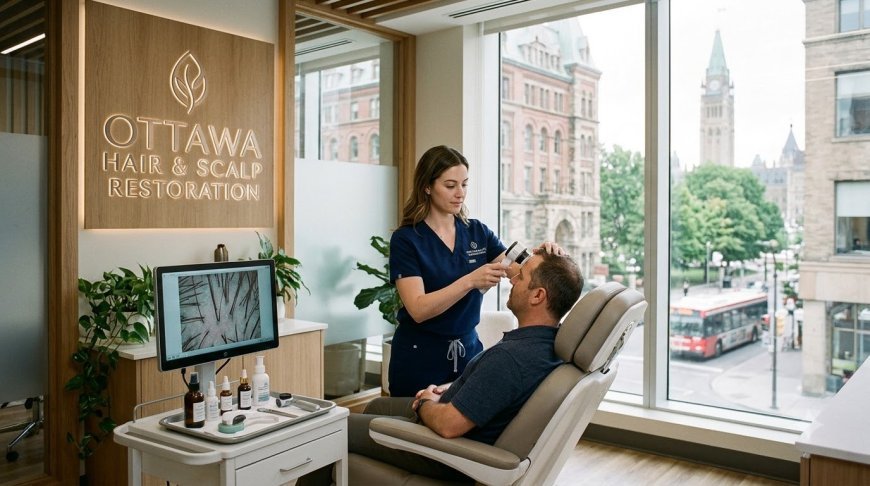
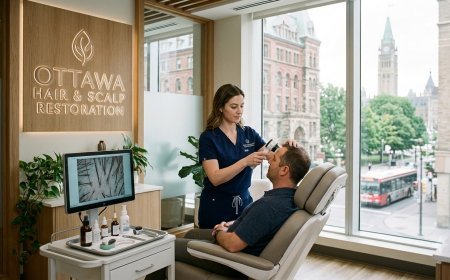
Finding more hair on your pillow, shower floor or hairbrush can be worrying, but increased shedding does not always mean permanent hair loss. The important distinction is whether your hair is going through a temporary shedding phase, experiencing breakage or gradually becoming thinner because of an underlying condition. Understanding that difference is the first step before exploring professional hair & scalp restoration ottawa treatment options for thinning hair.
Hair growth naturally follows a cycle involving growth, transition and resting phases. Some daily shedding is normal.
However, a widening part, receding hairline, visible scalp or persistent reduction in hair density may indicate a different issue.
Choosing a restoration procedure without identifying the cause can waste time and delay more appropriate treatment.
First, Understand the Difference Between Shedding and Hair Thinning
Hair shedding and hair thinning are related, but they are not identical.
Temporary shedding
Temporary shedding can occur when a larger number of hair follicles enter the resting phase around the same time.
This may happen following certain physical or emotional stressors.
Possible triggers include:
-
Significant illness or fever.
-
Surgery.
-
Childbirth.
-
Major weight loss.
-
Nutritional deficiencies.
-
Certain medications.
-
Significant physiological stress.
In some cases, shedding becomes noticeable several weeks or months after the triggering event.
This is one reason why identifying recent health and lifestyle changes is important.
Progressive thinning
Progressive thinning may develop gradually.
You might notice that your part appears wider, the crown becomes less dense or the hairline changes over time.
Hereditary hair loss is one common cause. It can affect men and women and may involve gradual changes in follicle size.
Other conditions can also cause progressive loss.
The pattern, speed and associated symptoms help determine what should be investigated.
Hair breakage
Not every short hair strand represents shedding from the root.
Repeated heat styling, chemical treatments, tight hairstyles and mechanical damage can cause hair shafts to break.
If the hair is breaking rather than shedding from the follicle, the treatment approach may need to focus on reducing damage.
Five Signs That Your Hair Concern Needs a Closer Look
Pay attention to changes that persist rather than focusing only on the amount of hair in your brush.
1. A widening part: If your scalp becomes increasingly visible along the parting, it may indicate reduced density.
2. A changing hairline: Gradual recession around the temples or forehead may suggest a pattern of progressive hair loss.
3. A thinner crown: Reduced coverage at the top of the scalp can be associated with hereditary thinning.
4. Sudden patchy hair loss: Clearly defined bald patches deserve professional assessment.
5. Scalp discomfort or inflammation: Redness, scaling, pain, itching or sores may indicate an underlying scalp condition.
Sudden or severe hair loss, scarring, significant inflammation or rapidly developing bald patches should be assessed by an appropriate healthcare professional.
Why Identifying the Cause Matters Before Choosing Restoration
Different types of hair loss require different approaches.
For example, temporary shedding after an illness may improve as the underlying trigger resolves.
Hereditary thinning may require a longer-term management plan.
Inflammatory or scarring hair-loss conditions may need prompt medical treatment to protect remaining follicles.
A procedure designed to support hair growth cannot be assumed to correct every underlying cause.
This is why professional assessment should come before purchasing multiple hair-growth products or booking an injectable treatment.
Could PRP Be an Option for Scalp Restoration?
Platelet-rich plasma is one procedure used in some hair-restoration settings.
It involves collecting a small blood sample, processing it to concentrate platelets and administering the resulting preparation into selected areas of the scalp.
The treatment is intended to use platelet-derived signalling factors to support tissue-repair processes.
Research has explored PRP for certain types of hair loss, particularly pattern-related thinning.
However, results vary, and the evidence does not establish PRP as an effective solution for every form of hair loss.
It is particularly important not to confuse potential improvement in selected cases with guaranteed regrowth.
Who might need further assessment before considering PRP?
Someone experiencing gradual thinning may be a candidate for a broader hair-loss evaluation.
However, sudden shedding, patchy loss, scalp inflammation, suspected nutritional deficiencies or unexplained changes may require medical investigation first.
PRP should not replace diagnosis or treatment of an underlying medical condition.
Comparing Different Hair-Loss Situations
|
Hair concern |
Possible explanation |
Useful next step |
|
Increased shedding after illness |
Temporary shedding response |
Medical assessment if persistent or severe |
|
Gradually widening part |
Possible hereditary thinning |
Scalp and hair-loss evaluation |
|
Receding temples |
Possible pattern hair loss |
Discuss diagnosis and treatment options |
|
Short broken strands |
Hair-shaft damage |
Review styling and chemical practices |
|
Round bald patches |
Possible alopecia areata or another condition |
Prompt healthcare assessment |
|
Hair loss with scalp pain or scaling |
Possible inflammatory condition |
Dermatological assessment |
|
Diffuse thinning with fatigue or other symptoms |
Possible underlying health or nutritional issue |
Medical review and appropriate testing |
These descriptions are not diagnoses. Several conditions can produce similar patterns.
What Happens During a Professional Hair Assessment?
A useful assessment should involve more than looking at photographs.
The practitioner or healthcare professional may ask:
-
When did the hair changes begin?
-
Was the onset sudden or gradual?
-
Are you noticing shedding, thinning or breakage?
-
Has there been a recent illness, surgery or major weight change?
-
Do family members have similar hair-loss patterns?
-
Are you experiencing itching, pain, scaling or redness?
-
What medications, supplements and hair products do you use?
An examination may include checking the scalp, hair density and distribution of thinning.
Depending on the suspected cause, additional medical investigation may be appropriate.
Blood tests or other investigations may be considered when there is concern about nutritional deficiency, hormonal imbalance, thyroid disease or another medical condition.
A Practical Process Before Booking a Restoration Treatment
Step 1: Record the pattern of change.
Take photographs of your hairline, parting and crown under consistent lighting.
This makes it easier to compare changes over time.
Step 2: Review recent events.
Think about illnesses, weight changes, childbirth, surgery, medications and major stressors during the months before the shedding began.
Step 3: Examine your scalp.
Look for scaling, redness, tenderness, sores or areas of patchy loss.
Do not attempt to diagnose a scalp condition yourself.
Step 4: Seek appropriate professional assessment.
A healthcare professional can help identify whether the issue is temporary shedding, hereditary loss, a scalp condition or another problem.
Step 5: Discuss treatment options.
Only after understanding the likely cause should you compare options such as medical treatments, lifestyle adjustments or procedures including PRP.
Step 6: Establish a realistic review period.
Hair growth is gradual. Any treatment plan should include a way to monitor progress and determine whether it is helping.
Common Mistakes That Can Delay Appropriate Hair Treatment
Mistake 1: Buying several hair-growth shampoos at once
Changing products repeatedly may make it difficult to identify what is helping or irritating the scalp.
Most shampoos cannot correct hereditary hair loss on their own.
Better approach: Focus on the cause and use suitable hair-care products as part of a broader plan.
Mistake 2: Assuming every shedding episode is permanent
Temporary shedding can follow certain illnesses or physiological changes.
Better approach: Review the timing and pattern instead of immediately assuming that permanent hair loss has occurred.
Mistake 3: Choosing PRP without a diagnosis
A procedure may be unsuitable if the hair loss is caused by an untreated inflammatory condition or another medical problem.
Better approach: Identify the cause first.
Mistake 4: Expecting immediate regrowth
Hair follicles operate on biological growth cycles.
Even when a treatment is suitable, visible changes may take months to assess.
Better approach: Set realistic expectations and follow a consistent monitoring plan.
Mistake 5: Ignoring scalp symptoms
Hair loss accompanied by pain, redness, scaling or scarring may require medical treatment.
Better approach: Seek appropriate evaluation instead of relying solely on cosmetic procedures.
Two Practical Examples
Example 1: Increased shedding after a major illness
A hypothetical client notices significantly more hair falling out several months after recovering from a serious illness.
They assume their hair follicles have permanently stopped producing hair.
However, the timing may be consistent with a temporary shedding process.
A professional assessment can help determine whether the shedding is likely to improve as the underlying trigger resolves.
Example 2: Gradual thinning around the crown
Another client notices that their scalp is increasingly visible around the crown.
The change has developed gradually over several years, and close relatives have experienced similar hair patterns.
This may warrant assessment for hereditary hair loss.
A treatment plan could involve established medical options, scalp care and discussion of procedures where appropriate.
The two situations may look similar to the individual, but they require different approaches.
Illustrative Case Study: Why Diagnosis Should Come Before PRP
Situation: A hypothetical client notices gradual hair thinning and wants to book an injectable restoration procedure immediately.
Problem: The client has not established whether the issue is hereditary thinning, temporary shedding or an underlying scalp condition.
Assessment: A professional reviews the timeline, family history, scalp condition, medications and distribution of thinning.
Solution: The client receives guidance on appropriate medical evaluation and learns which treatment approaches may be relevant. PRP is discussed only as a potential option if the diagnosis and individual circumstances support it.
Expected outcome: The client can make a more informed decision and avoid relying on a procedure that may not address the actual cause.
Transferable lesson: Hair restoration works best as part of a cause-specific plan, not as a one-size-fits-all response to shedding.
What to Ask About PRP Scalp Treatments
If a practitioner recommends PRP, ask about the details of the procedure.
Understand how blood is collected and processed, which areas of the scalp will be treated and how the injections are administered.
Ask how many sessions may be recommended and what evidence supports the proposed protocol.
Discuss bruising, tenderness, infection risks and any medical factors that may affect suitability.
You should also ask how progress will be measured.
Consistent photographs, scalp examinations and realistic review intervals are more useful than relying on day-to-day impressions.
Exploring Aesthé Medical Aesthetics
If you are researching hair & scalp restoration ottawa services, look for clear information about assessment, treatment methods and realistic expectations.
Aesthé Medical Aesthetics provides information about scalp and hair-restoration services, including PRP-based options.
You can explore Aesthé Medical Aesthetics to learn more about its services and prepare questions for a consultation.
Before proceeding, clarify whether the proposed procedure is appropriate for your particular pattern of hair loss and whether medical investigation is needed first.
Conclusion
Increased shedding does not always mean permanent hair loss, and progressive thinning does not always have the same cause.
The key is to recognise the pattern, investigate relevant triggers and avoid choosing a restoration procedure before understanding the underlying problem.
PRP may be considered in selected hair-loss situations, but it should not replace appropriate diagnosis or established medical treatment.
A professional assessment can help determine which options are reasonable, what results may be possible and how progress should be monitored.
Frequently Asked Questions
1. How much daily hair shedding is normal?
Many people shed approximately 50–100 hairs per day as part of the normal hair-growth cycle. A noticeable change in density or persistent excessive shedding deserves further assessment.
2. Can stress cause hair loss?
Significant physical or emotional stress can contribute to temporary shedding in some individuals. The timing and severity vary, and other causes should also be considered.
3. Is PRP suitable for hereditary hair loss?
PRP has been studied for pattern-related hair thinning and may be considered in selected cases. Suitability and expected outcomes vary, and it should be discussed alongside established treatment options.
4. How long does hair restoration take?
Hair growth is gradual. Visible changes from many hair-loss treatments may take several months, so progress should be monitored over an appropriate period.
5. Can hair grow back after temporary shedding?
In some cases, hair regrows as the triggering cause resolves. However, recovery depends on the underlying condition and whether follicles remain capable of producing hair.
6. Should I seek help for sudden hair loss?
Yes. Sudden, patchy, painful or inflammatory hair loss should be assessed promptly by an appropriate healthcare professional.
What's Your Reaction?
 Like
0
 Dislike
0
 Love
0
 Funny
0
 Angry
0
 Sad
0
 Wow
0