



















Why Do Some Wrinkles Remain After Skincare? Understanding When Neuromodulators May Help
Discover why expression lines remain despite a good skincare routine, how neuromodulators work, and what to consider before booking a professional consultation in Ottawa.

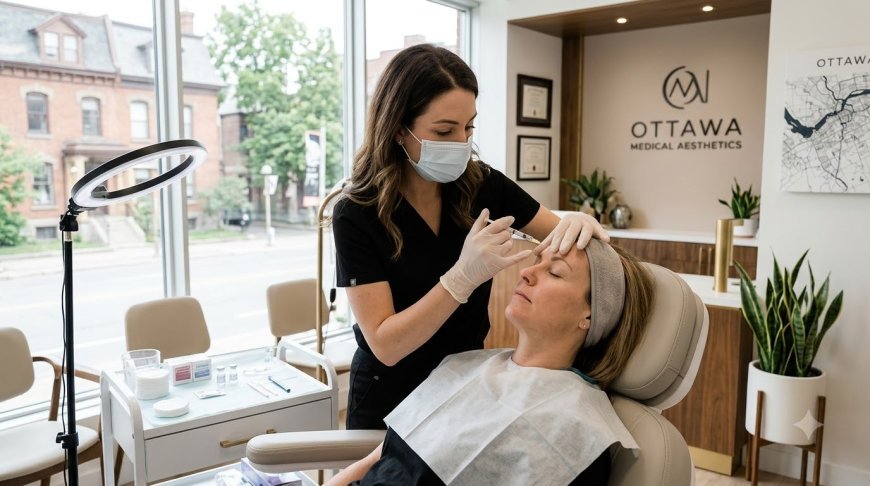
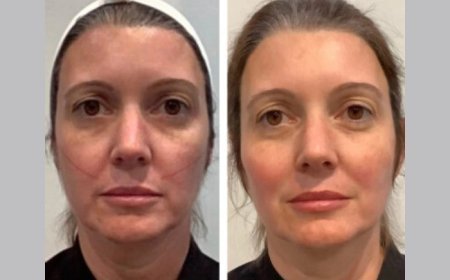
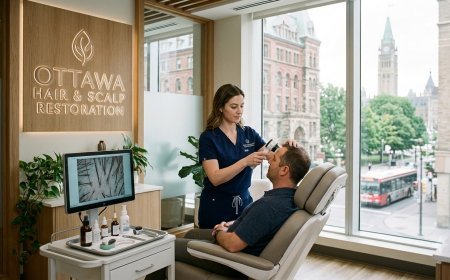
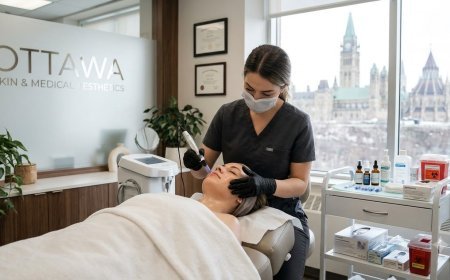
A consistent skincare routine can improve hydration, texture and overall skin appearance, but it cannot prevent every expression line from developing. If forehead lines, frown lines or crow's feet remain noticeable even when your skin feels healthy, a professional assessment may help determine whether muscle activity is contributing to their appearance. Exploring professional neuromodulator ottawa treatment options for expression-related wrinkles can help you understand whether this approach matches your concerns.
The important distinction is that not every wrinkle has the same cause. Some lines are associated with repeated facial movements, while others become visible because of changes in skin elasticity, volume and structure. Choosing a treatment without understanding that difference can lead to unrealistic expectations or an approach that does not address the actual concern.
Why Your Skincare Routine May Not Be Solving Every Wrinkle
Skincare products work primarily at the skin level. Moisturisers support hydration, sunscreen helps protect against ultraviolet damage, and certain active ingredients can improve the appearance of fine lines and uneven texture.
However, facial expressions involve underlying muscles. Every time you raise your eyebrows, concentrate, squint or smile, particular muscles contract and move the skin above them.
Over time, repeated movements may contribute to lines becoming visible even when your face is at rest.
This explains why someone can have a carefully planned skincare routine and still notice forehead creases or lines between the eyebrows.
It does not mean their skincare products are ineffective. It means the concern may involve a different underlying mechanism.
Dynamic lines versus static lines
Understanding these two categories is an important first step.
Dynamic lines appear or become more noticeable when facial muscles contract. Examples include forehead lines when raising the eyebrows and crow's feet when smiling.
Static lines remain visible when the face is relaxed. They can be associated with accumulated sun exposure, changes in collagen and elastin, skin ageing, and repeated movement over time.
Some wrinkles have both characteristics.
This distinction matters because treatments that influence muscle activity are generally intended to address selected expression-related lines. They do not replace treatments designed to improve skin texture, pigmentation or lost facial volume.
When a Neuromodulator Consultation May Make Sense
Neuromodulators are injectable treatments that temporarily reduce communication between selected nerves and muscles. This decreases muscle contraction in the treated area.
In aesthetic practice, they may be used to soften certain expression lines while preserving an appropriate degree of natural facial movement.
A consultation is particularly useful when you are noticing:
-
Horizontal forehead lines that become prominent when raising your eyebrows.
-
Frown lines between the eyebrows that develop during concentration.
-
Crow's feet that become visible when smiling.
-
Expression-related creases that are becoming more noticeable over time.
-
A desire to understand preventive or corrective treatment options without committing immediately.
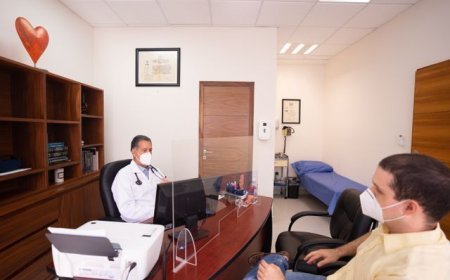
A professional assessment should consider your facial anatomy, muscle strength, skin condition, medical history and personal expectations.
The objective should not automatically be to eliminate every line. Natural facial expressions are an important part of communication, and excessive muscle relaxation may create an appearance that does not suit the individual.
What Actually Happens During Treatment?
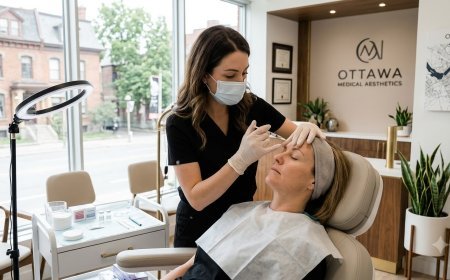
The treatment process generally involves identifying the muscles responsible for the concern, selecting suitable injection locations and administering an appropriate amount of product.
Different neuromodulator products may have different formulations, dosing units and product instructions. Their units should not be treated as directly interchangeable.
The practitioner should explain which product is being considered and why it is appropriate for the proposed treatment area.
Understanding the treatment timeline
One common mistake is expecting an immediate result.
Neuromodulators do not generally produce their full aesthetic effect immediately after injection. The treated muscles gradually respond, and the visible changes develop over the following days.
The exact timeline depends on the product, treatment area and individual response.
Results are temporary. The duration also varies, so a practitioner should avoid promising that every person will experience the same treatment interval.
A follow-up assessment can help determine whether the result is appropriate and whether any further action is necessary.
Five Questions to Ask Before Booking
A consultation should be an opportunity to understand the procedure, not simply a conversation about pricing.
Consider asking the following questions.
-
What is causing my particular lines? Ask whether they are primarily expression-related or associated with skin texture, volume changes or other factors.
-
Which muscles will be treated? Understanding the treatment area helps you make an informed decision about the expected changes.
-
Which product will be used? Ask about the product's identity, approved indications, expected duration and relevant product-specific precautions.
-
What result is realistic for my facial anatomy? A suitable result should take your natural features and movement into consideration.
-
What happens if I experience an unwanted effect? Ask about follow-up arrangements, warning signs and how complications are managed.
When researching a neuromodulator ottawa provider, do not base your decision exclusively on promotional photographs or discounted treatment packages. The practitioner's qualifications, assessment process, product handling and ability to discuss complications are more important considerations.
Common Mistakes That Can Lead to Disappointment
1. Treating every wrinkle as a muscle-related wrinkle
A wrinkle caused primarily by volume loss or skin damage may not respond as expected to muscle relaxation.
Better approach: Identify the underlying concern before selecting a treatment.
2. Requesting the same treatment as someone else
Facial muscles differ in strength, position and activity. Two people with similar-looking forehead lines may require different assessments.
Better approach: Request an individualised treatment plan rather than copying another person's dosage or injection pattern.
3. Expecting a completely motionless forehead
A frozen appearance is not necessarily the desired outcome. Treatment planning should consider the balance between softening selected lines and retaining natural expression.
Better approach: Explain whether you prefer subtle softening or a more noticeable reduction in movement.
4. Scheduling treatment without considering important events
Although downtime is often limited, bruising, redness, tenderness or swelling can occur.
Better approach: Avoid scheduling your first appointment immediately before an important celebration, professional photograph or major event.
5. Ignoring medical history
Certain neurological or muscular conditions, medications, allergies and previous reactions can influence treatment suitability.
Better approach: Provide complete and accurate medical information before proceeding.
Comparison: Which Approach Addresses Your Main Concern?
|
Skin concern |
Possible approach |
Important consideration |
|
Lines that appear when frowning |
Neuromodulator assessment |
Evaluates underlying muscle activity |
|
Horizontal forehead lines |
Individualised muscle assessment |
Natural eyebrow movement must be considered |
|
Dryness and rough texture |
Appropriate skincare |
Hydration and barrier support |
|
Uneven pigmentation |
Pigmentation-focused assessment |
The cause determines the treatment |
|
Deeper lines visible at rest |
Comprehensive facial assessment |
May involve several contributing factors |
|
Loss of facial volume |
Volume-focused assessment |
Muscle relaxation does not restore volume |
These options are not interchangeable. Some concerns may benefit from a combination of approaches, while others may not require an injectable procedure at all.
An Actionable Process for Deciding Whether to Proceed
Use this five-step process before committing to treatment.
Step 1: Observe your expression lines.
Look at your forehead and eye area when your face is relaxed. Then raise your eyebrows, smile and frown naturally.
Notice which lines appear or become more prominent with movement.
Step 2: Identify your main concern.
Choose one primary concern instead of requesting treatment for every visible line. This helps make the consultation more focused.
Step 3: Review your current skincare routine.
Consider whether dryness, sun exposure or inconsistent sun protection may be contributing to the appearance of your skin.
A suitable skincare routine remains important even if you choose an injectable treatment.
Step 4: Arrange an individual consultation.
Discuss your expectations, relevant medical history, treatment alternatives and potential risks.
A qualified practitioner should be comfortable explaining why a treatment may not be appropriate.
Step 5: Make an informed decision.
You should understand the proposed treatment, costs, temporary nature of the results, possible adverse effects and follow-up arrangements before providing consent.
There is no requirement to proceed simply because you attended a consultation.
Practical Examples: Two Different Wrinkle Concerns
Example 1: Forehead lines that appear during conversations
Consider someone who notices prominent horizontal lines whenever they raise their eyebrows.
Their skin may be well hydrated, and their skincare routine may be consistent. However, the lines become much more noticeable during facial movement.
A professional assessment could determine whether forehead muscle activity is the primary contributor.
If treatment is appropriate, the practitioner must also consider eyebrow position and the role of the forehead muscles in maintaining normal expression.
Example 2: Lines that remain visible at rest
Another person notices fine lines around the mouth and cheeks, even when their face is relaxed.
They assume that a muscle-relaxing injection will solve the problem.
However, these lines may be associated with skin quality, volume changes or other structural factors.
A consultation may establish that an alternative approach is more appropriate. This demonstrates why identifying the cause is more useful than choosing a treatment based on the location of a wrinkle alone.
Illustrative Case Study: Avoiding an Unnecessary Treatment
Situation: A hypothetical client in their late thirties is concerned about forehead lines that have become more noticeable in photographs.
Problem: They believe the lines indicate that their skincare routine is no longer working and request an injectable treatment immediately.
Assessment: During consultation, the practitioner observes that the lines are more prominent during eyebrow elevation. The assessment also considers the client's natural eyebrow position, facial movement and medical history.
Solution: Rather than promising complete wrinkle removal, the practitioner explains the potential benefits and limitations of treatment, including the importance of preserving natural movement.
Expected outcome: If the client is considered suitable and chooses to proceed, the goal is a measured reduction in selected expression-related lines. The result would need to be reviewed after the treatment has taken effect.
Transferable lesson: The most appropriate aesthetic decision begins with understanding the cause of the concern. Treatment should follow assessment, not the other way around.
Understanding Safety, Side Effects and Limitations
Neuromodulators are medical injectable products and should not be treated as ordinary beauty services.
Possible side effects include temporary discomfort, redness, bruising, headache and local muscle weakness. Depending on the injection site and circumstances, unwanted effects can include eyelid or eyebrow drooping.
More serious reactions are uncommon but require attention. Symptoms such as difficulty swallowing, speaking or breathing, or generalised muscle weakness require urgent medical assessment.
Treatment suitability can be affected by pregnancy or breastfeeding, certain neurological conditions, previous reactions, medications and other medical circumstances. Discuss these factors with an appropriately qualified healthcare professional.
A safe treatment decision involves more than choosing a clinic with attractive photographs. You should understand the practitioner's qualifications, the product being administered, the consent process and the clinic's arrangements for managing complications.
Exploring Aesthé Medical Aesthetics
For individuals researching a neuromodulator ottawa clinic, the consultation process should be just as important as the procedure itself.
Aesthé Medical Aesthetics offers aesthetic services with an emphasis on subtle enhancement and individual treatment considerations.
You can explore Aesthé Medical Aesthetics to learn more about the clinic and its services.
Before booking, prepare your questions about treatment suitability, expected results, potential side effects and aftercare. This will help make your consultation more productive.
Conclusion: Treat the Cause, Not Just the Appearance
Persistent wrinkles do not necessarily mean that your skincare routine has failed. Some lines develop through repeated facial muscle movement, while others are influenced by changes in skin quality, collagen and facial volume.
The most useful next step is to identify which factors are contributing to your particular concern.
A neuromodulator ottawa consultation can help determine whether temporary muscle relaxation is appropriate, what result may be realistic and whether another approach would better suit your needs.
Choose treatment based on professional assessment, realistic expectations and informed consent rather than pressure to achieve a particular appearance.
Frequently Asked Questions
1. How do I know whether my wrinkles are suitable for neuromodulators?
Lines that become more prominent during facial expressions may be related to muscle activity. A qualified practitioner can assess whether this is the primary cause and whether treatment is appropriate.
2. How quickly do neuromodulator results appear?
Results generally develop over several days rather than immediately. The timing depends on the product, treatment area and individual response.
3. Will I lose my natural facial expressions?
Treatment aims to reduce selected muscle activity, but excessive relaxation can affect natural expression. Appropriate treatment planning should take your facial anatomy and desired appearance into account.
4. How long do the results last?
Results are temporary, and duration varies according to the product, treatment area and individual factors. Your practitioner can explain the expected duration for your specific treatment.
5. Can I use skincare products after treatment?
Your practitioner should provide product-specific aftercare instructions. Continue following appropriate sun protection and skincare advice, but avoid applying products or performing activities that conflict with those instructions.
6. Should I book treatment if I have an important event coming up?
Allow sufficient time before important events, particularly if you are receiving treatment for the first time. Temporary bruising or swelling can occur, and the full aesthetic result takes time to develop.
What's Your Reaction?
 Like
0
 Dislike
0
 Love
0
 Funny
0
 Angry
0
 Sad
0
 Wow
0