

















Microneedling Recovery Mistakes: Why Your Skin May Look Worse Before It Looks Better
Learn what to expect after microneedling, why redness and dryness occur, which skincare mistakes to avoid and how to support your skin during recovery.

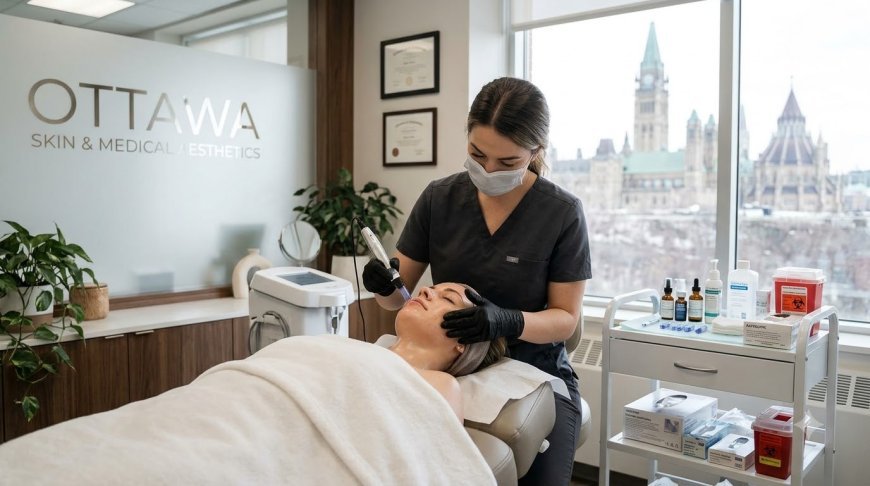
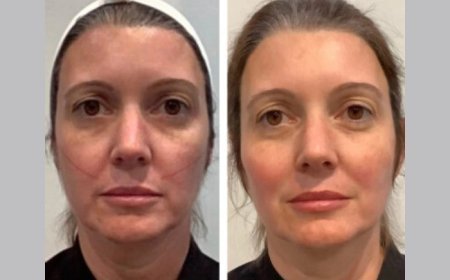
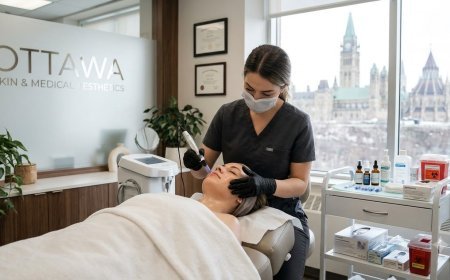
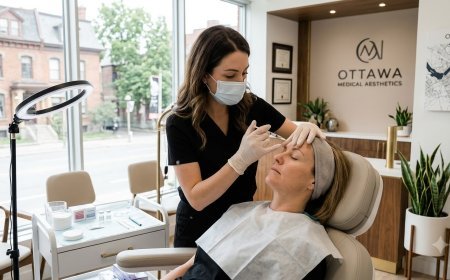
Microneedling is intended to stimulate the skin's natural repair response, but the recovery period can involve temporary redness, sensitivity, dryness and changes in texture. These reactions can concern people who expect their skin to look smoother immediately after treatment. Understanding the recovery process and avoiding irritating skincare products can help reduce unnecessary problems. If you are considering professional microneedling ottawa treatments for improving skin texture and appearance, it is important to understand both the procedure and the aftercare requirements.
Microneedling uses fine needles to create controlled micro-injuries in the skin. These tiny channels stimulate a wound-healing response, which can influence collagen remodelling.
However, the procedure temporarily disrupts the skin barrier. This means your usual skincare routine may not be suitable immediately afterwards.
The objective during recovery is not to force faster results. It is to protect the treated skin while it heals.
Why Does Skin Sometimes Look Worse After Microneedling?
A common misunderstanding is that a successful treatment should produce an immediate improvement.
In reality, microneedling creates a controlled injury. Redness and sensitivity can occur because the skin is responding to the procedure.
1. Redness and warmth
The treated area may appear pink or red after the procedure.
This is associated with the local response to the micro-injuries. The intensity and duration vary according to treatment depth, skin sensitivity and individual healing.
2. Dryness and tightness
Some people notice that their skin feels unusually tight after treatment.
This can happen while the skin barrier recovers. Applying strong active ingredients during this period may increase irritation.
3. Flaking or rough texture
The surface may become temporarily dry or flaky.
Trying to remove this texture through scrubbing or exfoliation can interfere with recovery.
Allow the skin to settle instead of attempting to speed up the process.
4. Temporary sensitivity
Products that were previously comfortable may sting after treatment.
This is an important reason to simplify your skincare routine during the initial recovery period.
5. Breakouts or irritation
Some people may experience irritation or breakouts following a procedure.
The cause can vary, including product sensitivity, occlusive skincare, contamination or an unrelated skin condition.
Persistent or worsening symptoms should be assessed rather than automatically dismissed as normal recovery.
The Skin Barrier: Why It Matters After Treatment
Your skin barrier is the outer protective layer that helps regulate moisture and protect against environmental irritants.
When this barrier is functioning properly, it helps reduce water loss and limits exposure to substances that may irritate the skin.
Microneedling temporarily disrupts the surface barrier.
This is why aftercare is so important.
A product that is suitable for everyday use may not be appropriate immediately after a procedure.
For example, retinoids, exfoliating acids and strong acne treatments can cause additional irritation when the skin is recovering.
The right recovery routine should be based on your practitioner's instructions and the depth and type of treatment performed.
Which Skincare Products Should You Be Careful With?
Instead of immediately returning to your usual routine, understand how different product categories may affect sensitive skin.
|
Product category |
Potential concern after treatment |
Practical approach |
|
Retinoids |
May increase irritation and dryness |
Pause until your practitioner confirms they can be resumed |
|
AHA and BHA exfoliants |
Can irritate recovering skin |
Avoid during the advised recovery period |
|
Strong vitamin C formulations |
May cause stinging or irritation |
Reintroduce only when the skin has recovered |
|
Physical scrubs |
Create additional friction |
Avoid scrubbing treated areas |
|
Fragranced skincare |
May irritate sensitive skin |
Choose suitable gentle alternatives |
|
Gentle moisturiser |
Supports skin comfort |
Use only products approved for your recovery stage |
|
Sunscreen |
Helps protect against ultraviolet exposure |
Follow practitioner guidance on when and which formulation to use |
This table is a general guide, not a substitute for personalised instructions. The timing for restarting active ingredients varies.
A Practical Recovery Routine
A simple routine is often more appropriate than using numerous products.
Immediately after treatment
Your skin may be red, warm and sensitive.
Avoid touching the treated area unnecessarily. Keep your hands clean and follow the clinic's instructions regarding cleansing and moisturising.
Do not apply unapproved products in an attempt to reduce redness.
During the first few days
Continue with gentle care.
Avoid exfoliation, aggressive cleansing and unnecessary friction. Your practitioner may also advise avoiding makeup, heat exposure, strenuous exercise or swimming for a specified period.
The exact recommendations depend on the procedure and your individual circumstances.
As the skin settles
Once sensitivity and redness have improved, your practitioner can advise when to gradually return to your regular skincare products.
Do not restart several strong active ingredients at the same time.
Introducing products gradually makes it easier to identify irritation if it develops.
Five Steps to Protect Your Skin After Microneedling
Step 1: Follow the clinic's written aftercare instructions.
Ask for clear guidance about cleansing, moisturising, sun exposure, exercise and makeup.
If you are unsure about a product, contact the clinic before applying it.
Step 2: Keep your routine simple.
Avoid introducing new serums, exfoliants or home treatments during recovery.
Use only products that are suitable for your skin's current condition.
Step 3: Avoid unnecessary friction.
Do not scrub, pick, scratch or attempt to remove flaky skin.
Friction can worsen irritation and interfere with the healing process.
Step 4: Protect your skin from sunlight.
Ultraviolet exposure can aggravate irritation and contribute to pigmentation concerns.
Follow professional advice on sun avoidance and suitable sunscreen use during recovery.
Step 5: Monitor how your skin responds.
Mild, improving redness is different from worsening pain, spreading redness, increasing warmth, pus or fever.
Seek medical advice if you develop signs that could indicate infection or another complication.
What Should You Avoid Before Your Appointment?
Aftercare matters, but preparation is equally important.
If you arrive with irritated or inflamed skin, the practitioner may recommend postponing treatment.
Before booking, discuss:
-
Recent use of prescription acne treatments.
-
Active cold sores or a history of recurrent cold sores.
-
Eczema, psoriasis or other inflammatory skin conditions.
-
Recent sunburn or tanning.
-
Active acne, open wounds or skin infections.
-
Previous scarring or a tendency to develop keloids.
-
Medications and previous cosmetic procedures.
Microneedling may not be appropriate for every skin type or condition.
The treatment depth, device, technique and individual health factors all influence suitability.
Common Recovery Mistakes That Can Work Against You
Mistake 1: Using exfoliating acids too soon
People who regularly use exfoliating acids may feel that their skin needs additional exfoliation when it becomes rough.
However, the skin is already recovering from controlled micro-injury.
Better approach: Wait until the practitioner confirms that exfoliating products can be reintroduced.
Mistake 2: Applying too many serums
Layering multiple products does not necessarily improve recovery.
It can make it difficult to identify which ingredient is causing irritation.
Better approach: Use a simple, approved routine.
Mistake 3: Trying home microneedling immediately
Professional treatments involve controlled procedures, appropriate equipment and clinical assessment.
At-home devices do not automatically provide the same level of safety or treatment control.
Better approach: Avoid self-administered deep needling and discuss any home skincare tools with your practitioner.
Mistake 4: Expecting acne scars to disappear after one session
Microneedling results develop gradually and vary between individuals.
Some concerns require multiple sessions or a different treatment approach.
Better approach: Discuss realistic expectations and the number of sessions that may be appropriate for your particular skin concern.
Mistake 5: Ignoring worsening symptoms
Not every reaction should be treated as an ordinary part of healing.
Better approach: Contact a healthcare professional if symptoms are worsening, persistent or suggest infection.
Which Skin Concerns May Require a Different Approach?
Microneedling is not a universal solution for every skin problem.
|
Primary concern |
Possible treatment discussion |
Important consideration |
|
Uneven skin texture |
Microneedling assessment |
Results depend on the cause and severity |
|
Selected acne scars |
Scar-focused assessment |
Scar type influences suitability |
|
Fine lines |
Skin rejuvenation assessment |
Changes are gradual and variable |
|
Active inflammatory acne |
Dermatological assessment |
Treatment may need to be postponed |
|
Dark spots |
Pigmentation assessment |
Some pigmentation conditions may worsen with irritation |
|
Deep scars |
Specialist assessment |
Another treatment may be more appropriate |
People with darker skin tones or a history of post-inflammatory pigmentation should discuss individual risks carefully.
Skin injury can sometimes trigger pigmentation changes, particularly in people prone to post-inflammatory hyperpigmentation.
A practitioner should evaluate this risk before recommending treatment.
Two Practical Examples
Example 1: Returning to retinol too quickly
A client regularly uses retinol at night.
After microneedling, the skin feels tight and slightly flaky. Assuming that the texture indicates clogged pores, the client restarts retinol immediately.
The skin becomes increasingly irritated.
A better approach would have been to follow the clinic's recovery instructions and wait for professional guidance before reintroducing active ingredients.
Example 2: Expecting immediate improvement in acne scars
Another client chooses treatment because of old acne scars.
After the first appointment, the skin appears red and the scars look unchanged.
The client becomes disappointed because they expected a dramatic result.
However, collagen remodelling takes time, and the outcome depends on scar type, treatment settings and individual response.
A realistic treatment plan should establish what improvement is possible and whether additional procedures may be necessary.
Illustrative Case Study: Preventing Unnecessary Skin Irritation
Situation: A hypothetical client with an established skincare routine undergoes a professional microneedling session.
Problem: Two days later, the client experiences dryness and mild flaking. They assume the skin needs exfoliation.
Relevant circumstances: The skin is still recovering, and the client regularly uses retinoids and exfoliating acids.
Solution: The client contacts the practitioner, pauses the irritating products according to professional advice and follows a simplified recovery routine.
Expected outcome: If the reaction is uncomplicated and improves, the skin can gradually return to its regular routine under appropriate guidance.
Transferable lesson: Recovery is an important part of the treatment process. Using more skincare products does not necessarily mean achieving better results.
Exploring Microneedling at Aesthé Medical Aesthetics
If you are researching microneedling ottawa treatments, consider whether the clinic explains the procedure, recovery requirements and individual suitability.
Aesthé Medical Aesthetics describes its microneedling service as a skin-rejuvenation procedure and also provides information about PRP enhancement options.
You can visit Aesthé Medical Aesthetics to explore the clinic's services and prepare questions for a consultation.
Ask about the device, treatment depth, hygiene protocols, expected recovery and whether your current skincare routine needs to be adjusted.
Conclusion: Better Recovery Starts With Simpler Skincare
Microneedling creates controlled micro-injuries to stimulate the skin's repair response. Temporary redness, dryness and sensitivity can occur as the skin recovers.
The biggest avoidable mistake is treating recovering skin as though it were ready for an ordinary intensive skincare routine.
Avoid unnecessary exfoliation, follow professional aftercare instructions and pay attention to symptoms that may indicate a complication.
A suitable treatment plan should consider your skin condition, medical history, expectations and ability to follow the recovery instructions.
Frequently Asked Questions
1. How long does redness last after microneedling?
Redness commonly occurs after treatment, but its duration varies with treatment depth, technique and individual skin response. Ask your practitioner what recovery period is expected for your procedure.
2. Can I wear makeup after microneedling?
You may need to avoid makeup during the initial recovery period. Follow the clinic's instructions about when your skin is ready for cosmetic products.
3. Can I use retinol after microneedling?
Retinol may irritate recovering skin. Pause it for the period recommended by your practitioner and restart only when your skin has recovered sufficiently.
4. Does microneedling permanently remove acne scars?
It may improve the appearance of certain types of acne scars, but complete removal cannot be guaranteed. Results vary, and some scars require different treatments.
5. Can microneedling cause pigmentation?
Post-inflammatory pigmentation is a possible risk, particularly in individuals prone to pigmentation changes. Discuss your skin history and suitability before treatment.
6. When should I contact a healthcare professional after treatment?
Seek medical advice for worsening pain, spreading redness, increasing warmth, pus, fever, blistering or other concerning symptoms. Do not assume that worsening symptoms are simply part of normal healing.
What's Your Reaction?
 Like
0
 Dislike
0
 Love
0
 Funny
0
 Angry
0
 Sad
0
 Wow
0