






















Offshore Company Formation UAE: Setup, Costs & Rules
Learn about offshore company formation UAE, including setup steps, registration costs, required documents, tax rules, banking requirements, and legal considerations.
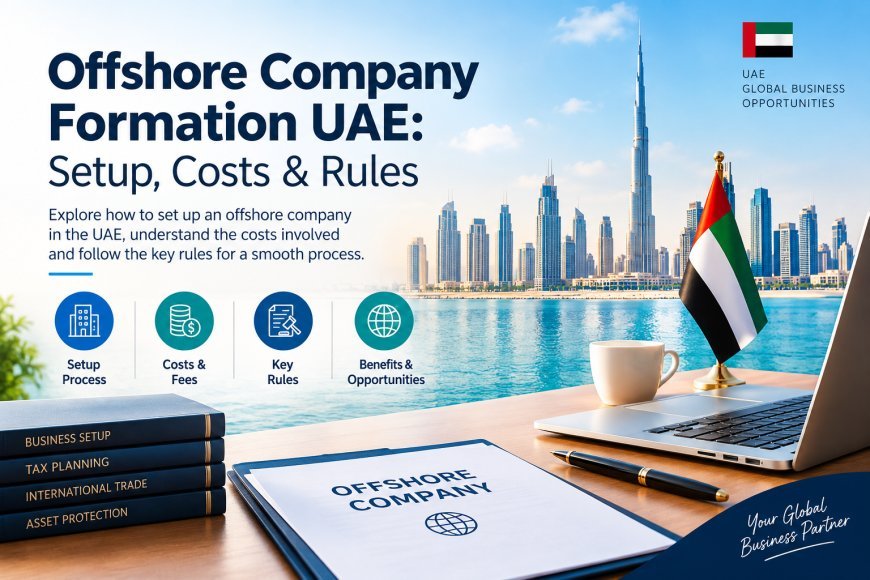
Setting up a company in the UAE can open opportunities for investors who want to manage international assets, hold business shares, or organise cross-border investments. However, choosing the right legal structure is essential before spending money on registration. Understanding offshore company formation UAE helps entrepreneurs compare available options, prepare the required documents, and understand the costs and rules that apply.
What Is an Offshore Company in the UAE?
An offshore company is a legal entity registered under a specific jurisdiction to conduct permitted activities, often involving business interests outside its place of incorporation. In the UAE, offshore companies are commonly used for holding shares, managing eligible investments, and owning certain assets.
These companies differ from mainland and many free zone businesses. An offshore entity generally cannot conduct unrestricted commercial activities within the UAE domestic market or automatically obtain residence visas. Its permitted activities depend on the registration authority and applicable regulations.
Before choosing this structure, investors should identify their business objectives, intended markets, banking requirements, and long-term plans.
How Offshore Company Setup UAE Works
The offshore company setup UAE process begins with selecting an appropriate jurisdiction and confirming that the intended business activity is permitted. Investors commonly explore offshore registration options associated with Ras Al Khaimah International Corporate Centre (RAK ICC) and Jebel Ali Free Zone (JAFZA).
Each jurisdiction has its own application procedures, eligibility criteria, and documentation requirements. The choice should depend on the company's purpose rather than the registration price alone.
The usual setup process includes the following steps:
-
Define the business purpose, such as holding shares or owning eligible assets.
-
Select a suitable offshore jurisdiction and confirm its current rules.
-
Choose a company name that meets the authority's requirements.
-
Prepare shareholder, director, and beneficial ownership information.
-
Submit the application through the appropriate channel or authorised registered agent.
-
Complete identity checks and any additional compliance reviews.
-
Receive the incorporation documents after approval and payment of applicable fees.
Processing times depend on document accuracy, verification requirements, and the registration authority.
Offshore Company Registration UAE: Required Documents
Preparing the correct paperwork can help reduce delays during offshore company registration UAE. Although requirements vary, applicants may need to provide:
-
Valid passport copies for shareholders and directors
-
Proof of residential address
-
Proposed company name and business activities
-
Details of shareholders and directors
-
Beneficial ownership information
-
Corporate documents when a shareholder is another company
-
Additional records requested for compliance checks
Some authorities may require certified or notarised documents. Banks and service providers may also request information about the source of funds, expected transactions, and the company's intended activities.
Applicants should confirm the latest document checklist before submitting an application.
Offshore Company Formation in Dubai: Understanding the Options
Entrepreneurs researching offshore company formation in Dubai should understand that Dubai-based business services and offshore registration are not necessarily the same thing. An offshore company may be registered through a relevant offshore framework, but that does not automatically give it permission to trade directly with customers in the UAE.
Investors who need employees, residence visas, a physical operating office, or regular domestic commercial activities may need to consider a mainland or free zone company instead.
The right choice depends on how the business will operate, where its customers are located, and which licences it requires.
Offshore Company Incorporation UAE: What Does It Cost?
The cost of offshore company incorporation UAE varies according to the jurisdiction, service provider, company requirements, and ongoing obligations. There is no single fee that applies to every offshore company.
The main cost components may include:
-
Initial registration and incorporation fees
-
Company name reservation, where applicable
-
Registered agent or registered office charges
-
Document preparation and certification
-
Annual renewal fees
-
Compliance and administrative services
-
Additional professional advice, where required
Request an itemised quotation before proceeding. Confirm whether the quoted amount covers government fees, service charges, renewals, and any additional documentation.
Investors should also budget separately for banking-related expenses and professional tax advice if these services are needed.
UAE Offshore Holding Company: Common Uses
A UAE offshore holding company may be suitable for investors who want to organise ownership of shares, manage eligible investments, or hold certain assets through a separate legal entity.
For example, an investor with interests in several businesses may use a holding structure to centralise share ownership. This can make ownership records easier to organise, although the structure must comply with the laws governing each company and jurisdiction.
Property ownership requires additional care. Eligibility depends on the relevant emirate, property location, and applicable registration rules. Investors should confirm these conditions before purchasing property through an offshore entity.
An offshore holding company is not automatically tax-free, and it does not remove reporting obligations that apply to its owners or activities.
International Company Structuring UAE: Tax and Legal Rules
International company structuring UAE requires careful consideration of corporate tax, tax residency, beneficial ownership, and cross-border reporting.
The UAE has a federal corporate tax regime. Offshore registration alone does not guarantee an exemption from corporate tax. A company's treatment depends on the applicable legislation, its circumstances, and whether it qualifies for any relevant exemption or special tax treatment.
Investors should also consider the tax rules in countries where the company is managed, where its owners reside, and where its investments generate income. These rules can affect reporting requirements and the overall suitability of the structure.
Before incorporation, obtain advice from a qualified legal or tax professional who understands the relevant jurisdictions.
Banking and International Business Setup UAE
Company registration does not guarantee approval for a corporate bank account. Banks conduct independent due diligence and may ask for identification documents, ownership records, proof of funds, business plans, and details of expected transactions.
Businesses planning international business setup UAE should review banking requirements before choosing an offshore structure. They should confirm whether the intended company type is eligible for the services they need.
An offshore entity may not be appropriate for a business that requires regular domestic payments, local employees, or a standard operating licence.
How OneDeskCSP Can Support the Process
Businesses exploring offshore registration may consider onedeskcsp for information about company formation and international structuring services. Before appointing a provider, confirm its service scope, relevant authorisations, experience with the chosen jurisdiction, and complete fee schedule.
Ask whether the service includes application preparation, document verification, registration support, and annual renewal assistance. Clarifying these details helps investors compare providers and understand which responsibilities remain with the company owner.
Is Offshore Company Formation UAE Right for You?
An offshore structure can be useful for permitted investment holding and international ownership arrangements. However, it may not meet the needs of every entrepreneur.
Compare offshore, mainland, and free zone options based on your business activities, tax position, banking requirements, and plans for operating in the UAE. Reviewing these factors before registration can help you avoid unnecessary costs and select a structure that fits your goals.
Frequently Asked Questions
1. How much does offshore company formation in the UAE cost?
Costs depend on the jurisdiction, registration fees, service provider, documentation, and annual renewal requirements.
2. Can an offshore company operate in Dubai?
It generally cannot conduct unrestricted business in the UAE domestic market. The permitted activities depend on the relevant authority and applicable licensing rules.
3. How long does offshore company registration take?
The timeline varies according to the registration authority, document completeness, and compliance checks.
4. Can an offshore company open a UAE bank account?
It can apply, but approval depends on the bank's eligibility criteria, due diligence, and assessment of the business.
5. Is a UAE offshore company exempt from corporate tax?
No automatic exemption applies simply because a company is offshore. Its tax treatment depends on the relevant rules and circumstances.
What's Your Reaction?
 Like
0
 Dislike
0
 Love
0
 Funny
0
 Angry
0
 Sad
0
 Wow
0