




























What Should Businesses Consider Before Disposing of an Unroadworthy Truck?
Learn what businesses should consider before disposing of an unroadworthy truck, including repair costs, salvage value, paperwork and responsible recycling.

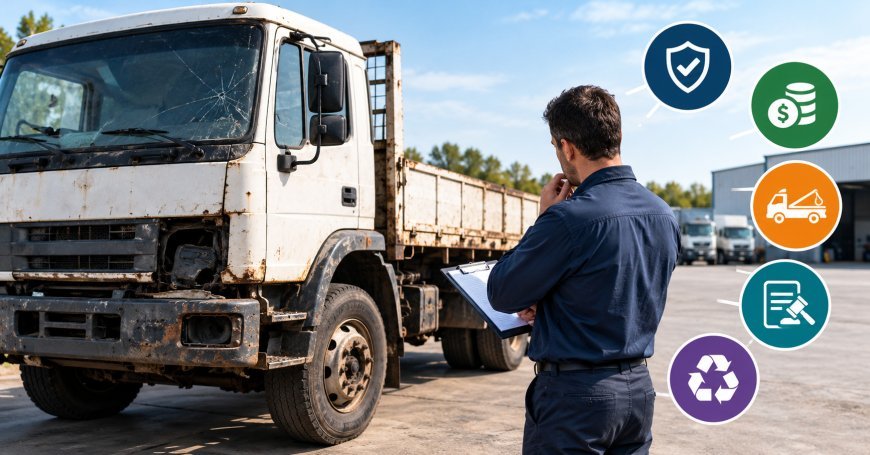
For businesses that rely on commercial vehicles, keeping trucks safe and operational is essential for maintaining day-to-day operations. However, there may come a time when a truck develops serious mechanical problems, sustains significant damage or becomes too expensive to maintain.
When a truck is no longer considered roadworthy, deciding what to do with it requires more than simply finding somewhere to store it. Businesses need to consider safety, repair costs, vehicle ownership documents, potential salvage value and the environmental responsibilities associated with disposal.
Understanding these factors can help business owners and fleet managers make a practical decision while avoiding unnecessary expenses and administrative complications.
Quick Answer: What Should Businesses Consider Before Disposing of an Unroadworthy Truck?
Before disposing of an unroadworthy truck, businesses should assess its condition, compare repair costs with its remaining value, confirm ownership and finance details, and review the relevant registration requirements. They should also obtain quotes from suitable buyers or recycling facilities, arrange safe collection and retain the necessary transaction records.
1. Assess the Truck's Overall Condition
The first step is to understand why the truck is no longer suitable for road use. Some vehicles develop relatively minor faults, while others suffer extensive damage that makes repairs impractical.
Common problems affecting older commercial trucks include engine failure, transmission damage, brake system faults, structural deterioration and significant accident damage. Electrical faults and persistent cooling system problems can also affect reliability.
A qualified heavy vehicle mechanic can assess the truck and explain which repairs are necessary. This information helps businesses distinguish between a vehicle that can be repaired economically and one that may have reached the end of its useful working life.
It is also important to identify any safety issues that could affect handling, loading or transportation. If the truck is unsafe to drive, it should not be driven to a disposal facility. Appropriate towing or heavy vehicle transport arrangements may be required.
2. Compare Repair Costs With the Truck's Remaining Value
Repair expenses can quickly become a concern when an older commercial vehicle develops major mechanical problems. Before investing further money, businesses should compare the estimated repair cost with the truck's current market value and expected future usefulness.
Consider the following factors:
-
The estimated cost of parts and labour.
-
The truck's age, mileage and maintenance history.
-
The likelihood of additional mechanical problems.
-
The vehicle's expected reliability after repairs.
-
The cost of replacing the truck or using an alternative vehicle.
For example, a delivery business may own an older truck that requires extensive engine and transmission repairs. If the total repair bill is high and further breakdowns are likely, replacing or disposing of the vehicle may be more practical than returning it to service.
However, age alone should not determine the decision. A well-maintained truck with a repairable fault may still provide useful service for several years.
3. Check Ownership, Finance and Registration Requirements
Commercial vehicle disposal involves administrative responsibilities that should be addressed before the truck is handed over.
Businesses should gather relevant ownership documents and confirm that the person or organisation arranging the disposal has the authority to complete the transaction.
Important considerations include:
-
Ownership documentation: Confirm the registered operator and gather the documents required for the sale or disposal.
-
Outstanding finance: Check whether the vehicle has an existing loan, lease or other financial interest that must be resolved.
-
Registration status: Confirm whether the truck is registered, unregistered or subject to any registration restrictions.
-
Number plates and cancellation: Check the applicable requirements for cancelling registration and returning or retaining number plates.
-
Business records: Keep copies of relevant receipts, transfer documents and disposal paperwork.
Requirements may differ according to the vehicle type and the circumstances of the transaction. Businesses operating in New South Wales should check the current guidance from the relevant state authority before completing the process.
Where the truck is leased or financed, contact the relevant finance provider before arranging its sale or dismantling.
4. Determine Whether the Truck Has Salvageable Value
A truck that cannot be driven may still have components or materials that retain value. Its condition, make, model, age and availability of replacement parts can all influence what a potential buyer may be willing to pay.
Depending on the damage, useful components may include:
-
Engines and transmission components.
-
Axles, differentials and suspension parts.
-
Wheels and selected tyres in suitable condition.
-
Body panels, doors and mirrors.
-
Electrical components and other reusable fittings.
The truck's chassis, body and other metal components may also have recycling value, depending on their condition and the facility's capabilities.
Not every component will be reusable. Parts affected by severe damage, wear or contamination may have little or no resale value, and some components require specialist handling.
Businesses should provide an accurate description of the truck's condition when requesting quotes. Information about missing parts, mechanical faults and accident damage can help buyers assess the vehicle more realistically.
5. Compare Truck Buyers and Recycling Options
Once the business understands the truck's condition and potential value, it can compare suitable disposal options.
Depending on the vehicle, these may include selling it privately, approaching a commercial vehicle dealer, contacting a dismantler or arranging disposal through a vehicle recycling facility.
Businesses looking for specialist options can also research Sydney Truck Wreckers when considering the dismantling and recycling of an unwanted commercial vehicle. A suitable operator may assess whether the truck contains reusable components or recyclable materials, depending on its condition and the services offered.
Before selecting a provider, ask questions such as:
-
How is the truck's value assessed?
-
Is collection available for vehicles that cannot be driven?
-
Are towing or transport charges included in the quote?
-
What ownership and registration documents are required?
-
Will the business receive a receipt or other disposal records?
-
How are reusable parts and recyclable materials handled?
Compare quotes on a like-for-like basis. A higher initial offer may not necessarily be the best option if additional transport charges or other deductions apply.
Businesses should also confirm the payment method and agreed collection arrangements before handing over the vehicle.
6. Arrange Safe Collection and Transport
An unroadworthy truck may be too damaged or mechanically unreliable to move under its own power. Planning its removal is therefore an important part of the disposal process.
The appropriate transport method will depend on the truck's size, weight, condition and location. A heavy recovery vehicle or suitable commercial transport equipment may be necessary.
Before booking collection, provide the operator with accurate information about the vehicle, including whether it has steering or braking problems, damaged wheels, leaking fluids or other issues that could complicate recovery.
Businesses should also consider access to the truck's location. Narrow entrances, low clearances, restricted loading areas and limited turning space can affect the equipment required for collection.
If the vehicle is parked at a depot, warehouse or construction site, coordinate the collection time with site managers to avoid interfering with deliveries or other operations.
Do not attempt to drive a truck that is unsafe for road use simply to save on transport costs. Arrange appropriate professional recovery instead.
7. Consider Environmental Responsibilities
Commercial trucks contain a range of materials that need to be managed appropriately when a vehicle reaches the end of its working life.
Depending on its construction, a truck may contain substantial quantities of steel, aluminium, plastics, rubber, batteries, lubricants and coolant. Some components may be recovered for reuse, while recyclable materials can be separated and processed through suitable facilities.
Fluids, batteries and other potentially hazardous materials require appropriate handling to reduce the risk of leaks, contamination or unsafe storage.
Businesses should choose a disposal provider that can explain its handling and recycling procedures. They should also ask how materials that cannot be reused are managed.
Where the vehicle is subject to specific waste, environmental or heavy vehicle requirements, the business should confirm its obligations before arranging disposal.
Responsible handling can help businesses manage end-of-life vehicles more effectively and reduce the likelihood of abandoned equipment or improperly discarded materials.
8. Review the Impact on Fleet Operations
Disposing of a truck can affect more than the vehicle's financial value. Businesses also need to consider how its removal will influence transport capacity, delivery schedules and future fleet requirements.
If the truck was used regularly, consider whether another vehicle can cover its duties temporarily. For larger fleets, reviewing vehicle utilisation may reveal opportunities to redistribute work or replace an ageing vehicle with a more suitable alternative.
It is also useful to review maintenance records for other trucks in the fleet. Repeated repairs, rising downtime and persistent reliability issues may indicate that a broader fleet review is worthwhile.
Planning the replacement or redistribution of work before disposing of a truck can help limit disruption to customers and staff.
9. Keep Records of the Disposal
After the truck has been collected or sold, retain the relevant documentation. Accurate records can help with business accounting, fleet management and any questions about the transaction.
Depending on the circumstances, these records may include:
-
The sale agreement or disposal receipt.
-
Payment confirmation.
-
Collection or transport documentation.
-
Registration cancellation or transfer records, where applicable.
-
Relevant finance settlement documents.
-
Internal asset disposal records.
Businesses should also update their vehicle registers and accounting records to reflect the removal of the truck from the fleet.
The documentation required will depend on the business structure, transaction type and applicable rules. If the truck is a significant business asset, an accountant can advise on the appropriate accounting and tax treatment.
Conclusion
Disposing of an unroadworthy truck requires careful consideration of its condition, repair costs, potential salvage value and the administrative requirements associated with the transaction.
Businesses should obtain an informed assessment before deciding whether to repair or replace the vehicle, confirm ownership and finance details, and compare suitable buyers or recycling facilities. Safe collection and responsible handling of vehicle materials are equally important, particularly when the truck cannot be driven.
By planning the process and keeping accurate records, business owners and fleet managers can make a more informed decision, manage unnecessary costs and reduce disruption to their operations.
What's Your Reaction?
 Like
0
 Dislike
0
 Love
0
 Funny
0
 Angry
0
 Sad
0
 Wow
0