




















Root Canal Therapy in Ottawa: Benefits and Treatment
Learn how Root Canal Therapy in Ottawa relieves tooth pain, treats infection, and protects natural teeth with proper treatment and aftercare.


Tooth pain can interfere with everyday activities, making it difficult to eat, sleep, or concentrate. While some dental discomfort results from minor problems, persistent pain or sensitivity may indicate an infection inside a tooth. When the inner pulp becomes inflamed or infected, root canal treatment may be necessary to protect the natural tooth and prevent further complications.
Understanding Root Canal Therapy in Ottawa can help patients recognize when treatment may be needed, what the procedure involves, and how proper aftercare supports recovery. Modern dental techniques have made root canal procedures a routine approach to treating certain types of dental infection while preserving natural teeth.
What Is Root Canal Therapy?
Root canal therapy is a dental procedure used to treat infection or inflammation within the pulp, the soft tissue located inside a tooth. The pulp contains nerves, blood vessels, and connective tissue that contribute to tooth development.
When bacteria enter the pulp through deep decay, cracks, fractures, or dental trauma, the tissue can become infected. Without appropriate treatment, the infection may spread beyond the tooth and affect surrounding tissues.
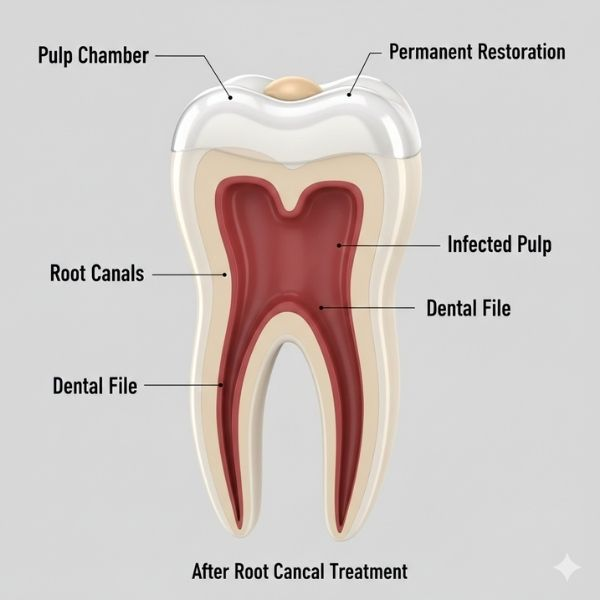
During a root canal procedure, the dentist removes the damaged or infected pulp, cleans and disinfects the internal canals, and seals the space with a suitable filling material.
In many cases, the treated tooth is restored with a dental crown to provide additional protection and help it function during normal chewing.
Common Signs That You May Need a Root Canal
Not every toothache requires root canal treatment. However, certain symptoms may indicate damage or infection within the tooth.
Some common warning signs include:
- Persistent toothache: Pain that continues or occurs without an obvious trigger may indicate deeper dental problems.
- Sensitivity to temperature: Discomfort from hot or cold foods and drinks that lingers after the source is removed can be a warning sign.
- Pain when chewing: Pressure or biting discomfort may suggest inflammation around the tooth.
- Swollen or tender gums: Swelling near a painful tooth can sometimes indicate an underlying infection.
- Tooth discoloration: A tooth that becomes darker may have experienced internal pulp damage.
- A recurring gum pimple: A small bump near the affected tooth may indicate an infection draining through the gum.
Some infected teeth cause little or no noticeable discomfort. Regular dental examinations are therefore important for identifying problems before they become more complicated.
How Does the Root Canal Procedure Work?
Understanding each stage of treatment can make the experience less intimidating. Although the exact approach depends on the tooth and the severity of the infection, most procedures follow a similar process.
1. Examination and Diagnosis
The dentist begins by examining the affected tooth and reviewing the patient's symptoms. Dental X-rays may be taken to evaluate the root structure and identify signs of infection around the surrounding bone.
This assessment helps determine whether root canal therapy is appropriate.
2. Local Anesthesia
Local anesthesia is generally administered to numb the affected area. This helps patients remain comfortable during the procedure.
A dental isolation method, commonly a rubber dam, may also be used to keep the treatment area clean and prevent contamination.
3. Cleaning the Root Canals
The dentist creates a small opening in the tooth to access the pulp chamber. Infected or damaged tissue is carefully removed, and the root canals are cleaned, shaped, and disinfected.
This stage is essential because removing bacteria and affected tissue helps reduce the risk of persistent infection.
4. Filling and Sealing
After cleaning, the canals are filled with a biocompatible material, commonly gutta-percha, and sealed to help prevent bacteria from entering again.
5. Final Restoration
Depending on the tooth's condition, a permanent filling or dental crown may be recommended. A crown can strengthen a weakened tooth and reduce the risk of fracture during everyday use.
Benefits of Root Canal Treatment
One of the main advantages of Root Canal Therapy in Ottawa is its ability to preserve a natural tooth that might otherwise require extraction.
Other potential benefits include:
Relief From Dental Pain: Treating infected pulp addresses an important source of dental discomfort.
Preservation of Natural Teeth: Keeping the original tooth helps maintain natural chewing function and dental alignment.
Prevention of Further Infection: Removing infected tissue and sealing the canals helps control the spread of bacteria.
Restored Function: With an appropriate final restoration, the treated tooth can continue to support normal biting and chewing.
Saving a natural tooth is generally preferable when it can be restored successfully, although the dentist must assess each situation individually.
Recovery and Aftercare Following a Root Canal
Most patients can return to their regular routines shortly after treatment, depending on the procedure and individual circumstances. Some tenderness or mild discomfort around the treated tooth may occur for several days.
Following a few simple precautions can support recovery:
- Avoid chewing hard or sticky foods on the treated tooth until the permanent restoration is completed.
- Maintain regular brushing and flossing habits.
- Follow the dentist's instructions regarding prescribed or recommended medication.
- Attend follow-up appointments to complete the restoration process.
- Contact the dental office if pain becomes severe, swelling develops, or symptoms do not improve as expected.
It is also important not to delay placement of a recommended permanent crown or restoration, as an inadequately protected tooth may be more vulnerable to damage.
Choosing Professional Dental Care for Root Canal Treatment
Successful root canal treatment involves more than removing infected tissue. Accurate diagnosis, careful cleaning, proper sealing, and an appropriate final restoration all contribute to the long-term outcome.
Patients should feel comfortable discussing their symptoms, treatment alternatives, expected recovery, and any concerns about the procedure.
Ottawa Dental Centre provides information about restorative dental procedures, including root canal treatment. Patients interested in understanding the treatment process can explore its root canal therapy service information to learn more about addressing infected teeth and preserving natural dental structure.
A clear discussion with a dental professional can help patients understand their options and make informed decisions about their oral health.
Conclusion
Root canal therapy is an effective way to treat infection inside a tooth while preserving its natural structure. Recognizing warning signs, seeking timely dental assessment, and following appropriate aftercare can help prevent more serious complications.
For patients considering Root Canal Therapy in Ottawa, the most important step is obtaining an accurate diagnosis and a treatment plan suited to their dental needs. With proper professional care and a suitable final restoration, a treated tooth can often remain functional for many years.
What's Your Reaction?
 Like
0
 Dislike
0
 Love
0
 Funny
0
 Angry
0
 Sad
0
 Wow
0