


















Understanding the Skills Behind Professional Sound Production
Discover the essential skills behind professional sound production, from audio recording and mixing to music creation and sound design. Learn how practical training, technical knowledge, and creative experience can help aspiring professionals explore career opportunities in the music and audio industry.

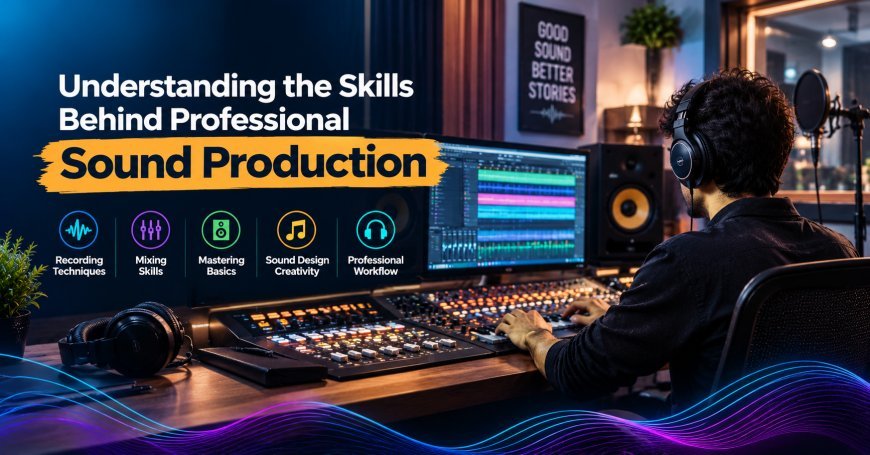
Sound plays an important role in the way people experience music, films, television programmes, podcasts, and digital content. Behind every clear recording and enjoyable listening experience, there are professionals who understand how to capture, edit, mix, and improve audio. Sound production combines creativity with technical knowledge, making it an interesting career choice for people who enjoy music and technology. From recording a singer in a studio to creating sound effects for a film, this field offers opportunities to work on different types of creative projects. Learning the right techniques and gaining practical experience can help beginners develop the skills needed to explore a career in the audio industry.
Understanding the Basics of Professional Sound Production
Professional sound production involves several stages, including recording, editing, mixing, and preparing audio for its final use. Each stage requires attention to detail and an understanding of how different sounds work together. Recording involves capturing vocals or instruments using suitable microphones and equipment. Editing helps remove unwanted noise, correct timing issues, and improve the overall quality of a recording. Mixing brings individual audio tracks together by adjusting volume, equalisation, effects, and other settings. When these processes are handled carefully, the final result becomes clearer, more balanced, and more enjoyable for listeners. Beginners can develop these skills gradually through regular practice and guided learning.
Why Technical Knowledge Matters in Audio Production
Creative ideas are important in music, but technical knowledge helps transform those ideas into professional results. Understanding microphones, audio interfaces, mixing consoles, speakers, and recording software allows learners to work confidently with studio equipment. Basic knowledge of sound waves, frequency, acoustics, and signal flow also helps them understand why audio sometimes sounds unclear or unbalanced. Digital audio workstations are especially useful because they allow users to record, arrange, edit, and mix multiple tracks in one place. Learning how to use these tools effectively can improve both the quality of a project and the efficiency of the production process. Combining technical understanding with creativity helps aspiring professionals approach audio projects with greater confidence.
Choosing the Right Educational Path
For students who want to enter the audio industry, selecting an appropriate educational programme is an important first step. Exploring the Sound Engineering Courses in Kerala can help aspiring sound professionals understand the training options available to them. Before making a decision, students should compare course subjects, studio facilities, practical sessions, instructor experience, and opportunities to work on real projects. A suitable learning environment should explain technical concepts in a simple way while encouraging students to practise what they learn. It is also useful to ask about the software and equipment included in the training. Researching these factors can help learners choose a programme that matches their interests and long-term career plans.
Developing Creativity Through Music Production
Music production gives learners the opportunity to turn musical ideas into complete compositions. The process may involve creating melodies, arranging instruments, recording vocals, selecting sounds, and adjusting different elements to achieve a particular style. Producers often work with singers, musicians, composers, and other creative professionals to bring a musical project together. Beginners can start by experimenting with virtual instruments, drum patterns, loops, and simple arrangements. As their understanding improves, they can explore more advanced techniques such as layering, automation, and detailed mixing. This combination of artistic thinking and technical practice allows learners to develop their own creative approach while understanding the requirements of professional music production.
Building Practical Experience Through Structured Training
Practical training helps students understand how audio production works beyond textbooks and demonstrations. Working on recording assignments, editing exercises, and mixing projects gives learners the chance to apply their knowledge in different situations. For those interested in creating original music, Audio Engineering Courses In India can offer a pathway to learning production software, arrangement techniques, recording methods, and mixing fundamentals. When comparing programmes, students should look for opportunities to complete individual and collaborative projects. These experiences can help them become more comfortable with studio workflows, solve common technical problems, and learn how to manage their time effectively. Completed projects can also form the foundation of a portfolio that demonstrates their abilities to future employers or clients.
Exploring Career Opportunities in the Audio Industry
Professional sound skills can be useful across several areas of the entertainment and media industries. Recording studios need people who can manage recording sessions and maintain audio quality. Film and television productions use audio professionals for dialogue recording, sound effects, and post-production. Live events require sound technicians who can manage microphones, speakers, and mixing equipment. Other possible career directions include podcast editing, voice-over recording, audio content creation, sound design, and independent music production. The opportunities available to each learner depend on their skills, experience, interests, and professional network. Developing a strong portfolio and staying familiar with changing technologies can help beginners prepare for different roles as they gain experience.
Essential Qualities for a Successful Sound Professional
Along with technical knowledge, sound professionals benefit from patience, communication, teamwork, and problem-solving skills. Recording sessions do not always go according to plan, so the ability to identify problems and find practical solutions is valuable. Listening carefully is equally important because small changes in volume, tone, timing, or background noise can affect the final result. Professionals also need to understand project requirements and communicate effectively with clients, musicians, and production teams. Regular practice helps learners improve their listening skills and become more confident when using audio equipment. Keeping up with new software, production methods, and industry developments can also support continuous learning throughout their careers.
Take the First Step Towards Your Audio Career
Building a career in sound production begins with curiosity, consistent practice, and a willingness to learn. Students do not need to master every technique at once. Starting with basic recording, exploring production software, and completing small projects can provide a strong foundation for future development. As their skills grow, they can experiment with different audio styles, collaborate with other creative people, and develop a portfolio that reflects their progress. Choosing suitable training and gaining hands-on experience can make the learning journey more focused and productive. For anyone interested in combining creativity with technology, professional sound production offers an opportunity to develop practical skills and explore a wide range of possibilities in the modern audio industry.
What's Your Reaction?
 Like
0
Like
0
 Dislike
0
Dislike
0
 Love
0
Love
0
 Funny
0
Funny
0
 Angry
0
Angry
0
 Sad
0
Sad
0
 Wow
0
Wow
0