


























What Makes Calcium Stearate an Important Industrial Additive?
Industrial manufacturing requires materials that deliver consistent performance, smooth processing, and reliable product quality. In plastic, rubber, PVC, and other manufacturing applications, even small formulation issues can affect production efficiency and the quality of finished goods. Manufacturers often face challenges such as material sticking, poor dispersion, surface defects, and inconsistent processing. Calcium stearate is an important industrial additive that helps address several of these problems when selected and used correctly.
Choosing a reliable calcium stearate manufacturer is equally important because product quality, purity, particle size, and consistency can influence manufacturing results. Calcium stearate is commonly used as a lubricant, release agent, and processing aid in different industries. Understanding its properties and applications helps manufacturers select the right grade and improve their production processes.
1. What Is Calcium Stearate?
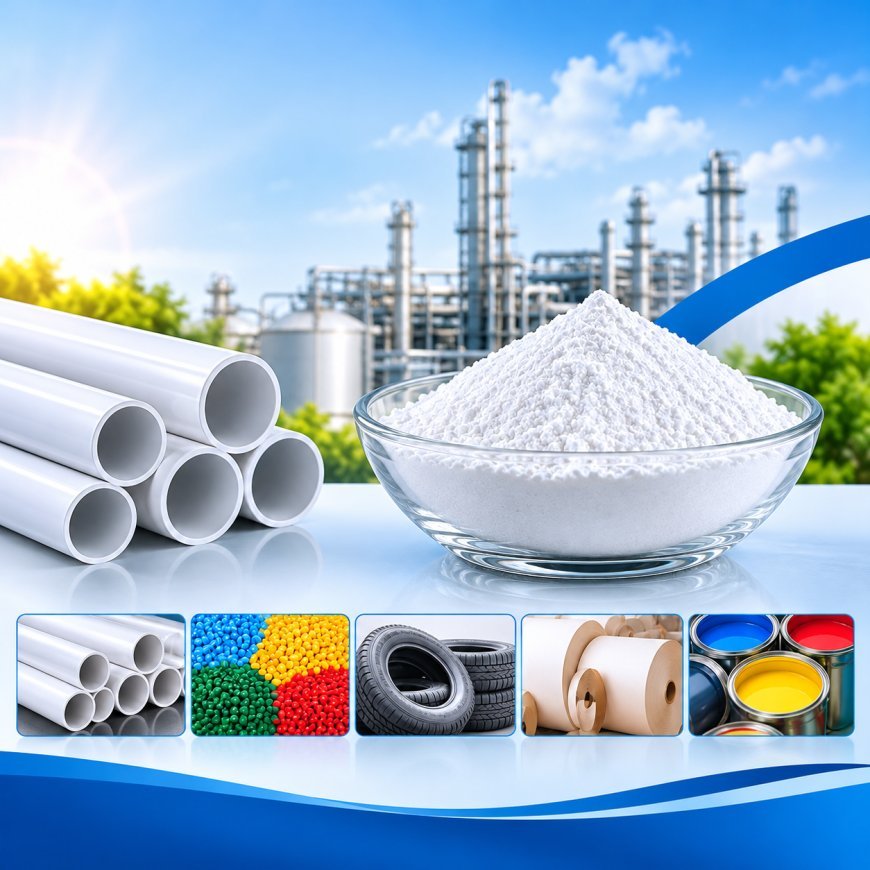
Calcium stearate is a calcium salt of stearic acid, generally available as a fine white powder. It is known for its water-repellent properties, lubricating behaviour, and ability to support smooth material processing.
It is widely used in plastics, rubber, construction materials, coatings, and other industrial applications. Depending on the formulation and production requirements, calcium stearate can perform different functions, including lubrication, mould release, and moisture resistance.
Its versatility makes it a useful additive for manufacturers looking to improve processing conditions and maintain consistent product quality.
2. Improves Processing Efficiency
One common challenge in industrial manufacturing is friction between materials and processing equipment. Excessive friction can affect material flow, increase equipment load, and create difficulties during production.
Calcium stearate acts as a lubricant in suitable formulations. It helps reduce friction and supports smoother processing in applications such as plastic compounding and rubber manufacturing.
Manufacturers can achieve better processing results by selecting the appropriate grade and maintaining the correct additive proportion. However, excessive use may affect product properties, so formulation testing is important before large-scale production.
3. Supports PVC Manufacturing
PVC manufacturing requires careful control of formulation, temperature, and material flow. Processing difficulties can lead to uneven surfaces, sticking, and inconsistent product quality.
Calcium stearate is used in certain PVC formulations as an internal or external lubricant, depending on the overall formulation and processing requirements. It can help control friction, improve material flow, and support smoother processing.
It is important to maintain a suitable balance between calcium stearate and other additives. Manufacturers should consider the PVC application, processing temperature, and compatibility with stabilizers and lubricants before finalizing the formulation.
4. Helps Improve Moisture Resistance
Moisture can create challenges in many industrial applications. It may affect material handling, storage conditions, and the performance of certain finished products.
Calcium stearate has water-repellent properties that make it useful in applications where moisture resistance is required. It is used in construction materials, coatings, and other formulations to help reduce water absorption.
For example, in some cement-based products, calcium stearate can function as a water-repellent additive. The final performance depends on the formulation, dosage, and application method.
Manufacturers should conduct suitable testing to confirm that the additive provides the required level of moisture protection.
5. Acts as a Release Agent
Material sticking to moulds, processing surfaces, or equipment can slow down manufacturing and increase product rejection. This issue is particularly important in industries where smooth mould release is necessary.
Calcium stearate can serve as a release agent in selected applications. Its lubricating characteristics help reduce adhesion between materials and surfaces, making product removal easier.
This function can support smoother production cycles and reduce handling difficulties. Selecting the right grade and quantity is essential because unsuitable application may affect surface finish or other product characteristics.
6. Important in Rubber Manufacturing
Rubber manufacturing involves mixing, shaping, moulding, and curing processes. During these operations, friction and material sticking can create production challenges.
Calcium stearate is used in certain rubber applications as a processing aid and release agent. It can help improve handling and reduce sticking during selected manufacturing stages.
However, its suitability depends on the rubber compound, processing method, and required finished-product properties. Manufacturers should evaluate compatibility and conduct formulation trials to achieve the desired results.
7. Key Factors That Determine Calcium Stearate Quality
Not all calcium stearate products deliver the same performance. Differences in manufacturing processes and product specifications can influence their suitability for industrial applications.
Manufacturers should consider the following quality parameters:
-
Purity: Consistent chemical composition supports predictable performance.
-
Particle size: Suitable particle distribution helps achieve better dispersion.
-
Moisture content: Controlled moisture levels support proper handling and storage.
-
Physical appearance: Colour and powder consistency can help identify variations between batches.
-
Application compatibility: The grade should match the intended industrial formulation.
Checking these parameters before purchasing helps manufacturers reduce formulation problems and maintain production consistency.
8. How to Choose the Right Calcium Stearate Supplier
Selecting a dependable supplier is important for maintaining uninterrupted manufacturing operations. Poor-quality or inconsistent additives may lead to processing difficulties, product defects, and unnecessary production costs.
Before choosing a supplier, manufacturers should review product specifications, quality consistency, application suitability, supply capacity, and technical support. They should also request samples when necessary and conduct trials under actual production conditions.
A supplier that understands industrial requirements can help businesses identify suitable grades and maintain reliable material availability.
How Ala Polystabs Supports Industrial Requirements
Ala Polystabs specializes in manufacturing PVC stabilizers and industrial additives for different manufacturing applications. Its product range includes calcium stearate, zinc stearate, lead stearate, PVC heat stabilizers, PVC One Pack Stabilizers, One Pack Pipe Stabilizers, and Tribasic Lead Sulphate.
The company focuses on product quality, reliable supply, and application-based solutions. By understanding customer requirements and manufacturing challenges, Ala Polystabs aims to support businesses with suitable additives for consistent processing and dependable production results.
Conclusion
Calcium stearate is an important industrial additive because of its lubricating, water-repellent, and release properties. It supports different manufacturing applications, including PVC processing, plastics, rubber, and construction materials.
However, achieving the desired results depends on selecting the correct grade, maintaining suitable additive proportions, and checking product quality. Manufacturers should work with reliable suppliers and evaluate formulations according to their specific requirements. Proper additive selection can help reduce processing difficulties, improve production efficiency, and maintain consistent finished-product quality.
What's Your Reaction?
 Like
0
 Dislike
0
 Love
0
 Funny
0
 Angry
0
 Sad
0
 Wow
0