





















What Should You Consider Before Choosing PTFE Glass-Filled Rods?
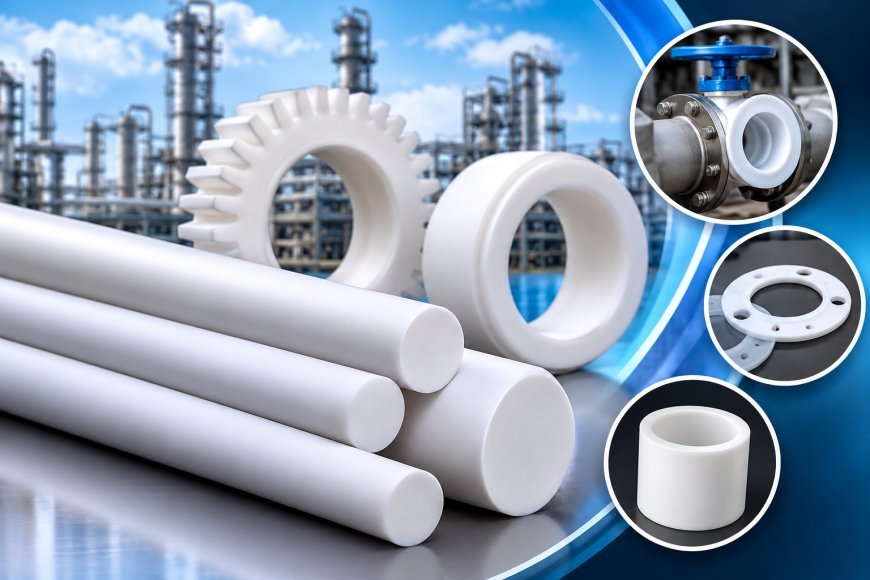
Choosing the right industrial material is essential for ensuring equipment performance, durability, and operational efficiency. In applications involving high friction, chemical exposure, and demanding operating conditions, selecting an unsuitable material can lead to frequent maintenance, unexpected equipment failures, and increased production costs. This is why engineers and manufacturers must carefully evaluate material properties before making a purchasing decision. Understanding the specific requirements of your application can help you select a material that delivers reliable performance and long-term value.
Industrial applications require materials that provide reliable mechanical strength, dimensional stability, and wear resistance. Manufactured by incorporating glass fibre into PTFE, PTFE Glass-Filled Rods offer improved performance compared to standard PTFE while retaining many of its useful properties. However, choosing the right grade requires more than comparing prices. Factors such as operating temperature, load requirements, chemical compatibility, friction, and application-specific performance should also be considered.
1. Understand Your Application Requirements
The first step is to identify where and how the material will be used. Different industrial applications have different performance requirements, so choosing a rod without understanding its intended use can create problems later.
For example, a component used in a chemical processing system may require excellent chemical resistance, while a component used in heavy machinery may need greater mechanical strength and wear resistance.
Before selecting a rod, consider:
-
What type of machinery or equipment will use it?
-
Will the component experience continuous friction?
-
Will it operate under heavy loads or pressure?
-
Is it exposed to chemicals, moisture, or environmental contaminants?
-
Does the application require precise dimensions?
Answering these questions will help narrow down the most suitable material specifications.
2. Check Mechanical Strength and Load-Bearing Capacity
One common problem with standard PTFE is its relatively low mechanical strength and tendency to deform under continuous loading. Although PTFE offers excellent low-friction properties, it may not always provide sufficient structural stability for demanding applications.
Glass-filled PTFE helps address this limitation by improving stiffness, compressive strength, and resistance to deformation. This makes it suitable for applications where components must maintain their shape under mechanical stress.
Before purchasing, evaluate the expected load and operating pressure. If your equipment operates under continuous heavy loads, check the manufacturer's technical specifications to ensure the selected material can handle those conditions.
Choosing the right strength level can help reduce premature wear, component distortion, and unnecessary replacement costs.
3. Evaluate Operating Temperature Requirements
Temperature is another important factor when selecting industrial materials. Components exposed to extreme heat or fluctuating temperatures must maintain their performance without losing dimensional stability.
PTFE is known for its wide operating temperature range, making it useful in applications involving heat exposure. Glass reinforcement can improve mechanical stability, particularly under demanding conditions.
However, the actual temperature performance depends on the material formulation, load, operating environment, and manufacturer specifications.
Consider the following questions:
-
What is the normal operating temperature?
-
Will the component experience sudden temperature changes?
-
Is it exposed to continuous heat?
-
Does the application require dimensional accuracy at elevated temperatures?
Always compare the recommended operating temperature with your actual working conditions before making a decision.
4. Consider Chemical Compatibility
Chemical resistance is one of the main reasons industries choose PTFE-based materials. These materials are commonly used in chemical processing, pharmaceutical equipment, and industrial fluid-handling systems.
However, an important point to remember is that glass reinforcement can affect the chemical compatibility of the finished material. Although the PTFE base offers excellent resistance to many chemicals, the glass fibres may be vulnerable to certain environments, particularly some strong alkaline conditions.
If your application involves direct chemical contact, carefully evaluate the complete compound rather than relying only on the chemical resistance of pure PTFE.
Check the following:
-
Type of chemicals involved
-
Chemical concentration
-
Operating temperature
-
Exposure duration
-
Possibility of moisture or chemical absorption
Consulting the supplier's chemical compatibility data can help prevent material degradation and unexpected equipment failures.
5. Examine Wear Resistance and Friction Properties
Friction and wear can significantly affect the lifespan of industrial components. Materials with poor wear resistance may require frequent replacement, increasing maintenance expenses and production downtime.
Glass-filled PTFE generally offers improved wear resistance and mechanical stability compared to virgin PTFE. This makes it useful for manufacturing bearings, seals, bushes, and other components exposed to repeated movement.
However, glass reinforcement can increase the abrasive nature of the material against mating surfaces. Therefore, it is important to consider the material that will come into contact with the rod.
If the application involves sliding movement, evaluate both friction characteristics and the wear behaviour of the complete material combination.
Selecting the right material pairing can improve component life and reduce maintenance requirements.
6. Check Dimensional Accuracy and Machining Requirements
Industrial components often require precise dimensions to function correctly. Even minor dimensional variations can affect alignment, sealing performance, and equipment efficiency.
Before selecting a PTFE glass-filled rod, check the available diameter, length, dimensional tolerances, and machining possibilities.
You should also consider whether the rod will be used directly or machined into custom components.
Important factors include:
-
Required rod diameter and length
-
Machining tolerance
-
Surface finish requirements
-
Dimensional stability
-
Availability of custom sizes
Working with a reliable supplier can help ensure that the material meets your manufacturing and engineering requirements.
7. Compare Quality, Specifications, and Supplier Reliability
Price should never be the only deciding factor when purchasing industrial materials. Low-cost products may not always provide consistent quality or the required performance.
A dependable supplier should provide clear technical specifications, material composition details, dimensional information, and quality documentation.
Before placing an order, check:
-
Product consistency and manufacturing quality
-
Glass fibre content
-
Technical data sheets
-
Available sizes and customization options
-
Quality certifications, where applicable
-
Delivery timelines and after-sales support
Comparing suppliers based on these factors can help you avoid quality-related problems and ensure a more reliable purchasing experience.
8. Consider Long-Term Cost and Maintenance
The initial purchasing price does not always reflect the actual cost of a material. A cheaper rod that wears out quickly can increase maintenance expenses and production interruptions.
Instead of focusing only on the purchase price, consider the total cost of ownership.
Evaluate how long the material is expected to last, how frequently components need replacement, and whether it can reduce equipment downtime.
A suitable glass-filled PTFE rod may offer better long-term value when its improved mechanical properties match the application's requirements.
Conclusion
Choosing the right PTFE glass-filled rod requires careful consideration of mechanical strength, temperature resistance, chemical compatibility, wear performance, dimensional accuracy, and supplier reliability. Every industrial application has different requirements, so selecting a material based on actual operating conditions is essential.
By evaluating these factors before purchasing, you can minimize maintenance problems, improve component performance, and achieve better long-term operational efficiency. Always review technical specifications and consult an experienced material supplier to ensure the selected rod is suitable for your specific industrial application.
What's Your Reaction?
 Like
0
 Dislike
0
 Love
0
 Funny
0
 Angry
0
 Sad
0
 Wow
0