
























Am I a Good Candidate for Invisalign? A Guide for Preston Residents
Discover whether Invisalign is right for you. Explore eligibility, dental health requirements, treatment challenges, and expert tips for Preston residents.

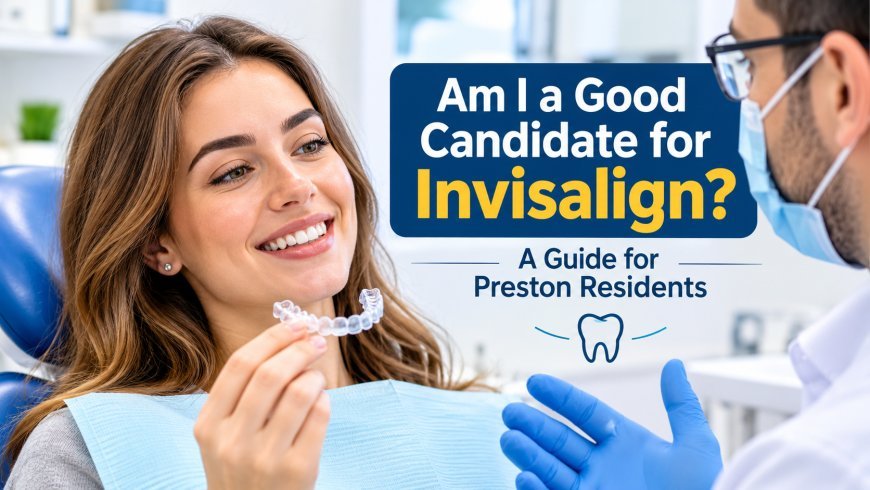
Although Invisalign can address several common orthodontic concerns, it is not suitable for every patient. Factors such as tooth alignment, bite problems, gum health, age, and daily habits can influence treatment outcomes. Knowing what dentists look for during an assessment can help you make a more informed decision before committing to orthodontic treatment.
What Makes Someone a Good Candidate for Invisalign?
Invisalign uses a series of custom-made, transparent plastic aligners to gradually move teeth into their desired positions. Each set applies controlled pressure to specific teeth, with patients changing to the next set according to their dentist's treatment schedule.
Unlike traditional braces, clear aligners can be removed for eating, drinking, brushing, and flossing. This flexibility makes them attractive to people who want orthodontic treatment without significant changes to their everyday routines.
Generally, good candidates have healthy teeth and gums, mild to moderate alignment concerns, and the discipline to wear their aligners consistently. However, suitability depends on more than simply wanting straighter teeth.
Common dental concerns Invisalign may help address include:
-
Crowded teeth: When teeth overlap or compete for limited space in the jaw.
-
Gaps between teeth: When noticeable spaces exist between neighboring teeth.
-
Overbite: When the upper front teeth extend too far over the lower teeth.
-
Underbite: When the lower front teeth sit ahead of the upper front teeth.
-
Crossbite: When some upper teeth sit inside the lower teeth rather than outside.
-
Open bite: When the upper and lower front teeth do not meet when the mouth closes.
The severity of these conditions matters. While Invisalign can treat many alignment and bite concerns, complex cases may require additional orthodontic techniques or traditional braces.
How to Determine Whether Invisalign Is Right for You
Choosing an orthodontic treatment should involve a proper dental assessment rather than relying on online photographs or other people's experiences. The following steps can help you understand whether clear aligners are appropriate for your situation.
1. Evaluate Your Current Dental Alignment
Start by identifying what you want to improve about your smile. Are your front teeth crowded? Do you have spaces between certain teeth? Perhaps your bite feels uncomfortable, or some teeth appear uneven.
Write down your main concerns before attending a dental consultation. This helps you explain your expectations clearly.
For example, someone with slightly overlapping front teeth may be a straightforward candidate for Invisalign. Another person with significant jaw misalignment may need a more comprehensive orthodontic assessment.
It is also important to remember that cosmetic concerns and functional problems are not always the same. A dentist needs to evaluate both before recommending treatment.
2. Check Your Gum and Dental Health
Healthy gums and teeth provide the foundation for successful orthodontic treatment. Moving teeth when active dental problems are present can create unnecessary complications.
Before starting Invisalign, your dentist may check for:
-
Untreated cavities or tooth decay.
-
Gum inflammation or periodontal disease.
-
Existing dental infections.
-
Damaged teeth or poorly fitting restorations.
-
Excessive plaque buildup.
If you have gum disease or untreated cavities, these issues generally need attention first.
For example, a patient with crowded teeth may struggle to clean certain areas properly, resulting in plaque accumulation and gum irritation. Addressing the existing dental problems before beginning orthodontic treatment helps create healthier conditions for tooth movement.
3. Consider Your Age and Dental Development
Invisalign is available for different age groups, including teenagers and adults. However, age alone does not determine eligibility.
Adults often appreciate clear aligners because they can straighten their teeth without the appearance of conventional metal braces. This can be particularly useful for professionals who regularly attend meetings, interact with customers, or work in public-facing roles.
Teenagers may also benefit from Invisalign when their permanent teeth have developed sufficiently. Special treatment options are designed to accommodate growing patients, although parental involvement and compliance remain important.
For younger children, traditional orthodontic monitoring or other early interventions may be more appropriate, depending on dental development.
4. Assess Your Daily Routine and Commitment
One of the biggest differences between Invisalign and traditional braces is that patients must manage their aligner-wearing schedule themselves.
For treatment to work effectively, aligners generally need to be worn for approximately 20 to 22 hours each day, following the orthodontist's instructions.
Consider your daily habits honestly. If you frequently forget important routines, travel extensively, or regularly remove dental appliances, maintaining the required schedule may become challenging.
Someone who works a predictable office schedule may find aligner management relatively simple. However, a person with frequent social events or irregular working hours may need to develop a more structured routine.
Common Challenges That Can Affect Invisalign Treatment
Even suitable candidates can experience difficulties during treatment. Understanding these challenges beforehand helps prevent unnecessary delays and disappointment.
Inconsistent Aligner Wear
Skipping several hours of wear regularly can interfere with planned tooth movement. When aligners are not worn as instructed, teeth may fail to move into their expected positions.
This can result in poor aligner fit and the need for additional adjustments.
A practical solution is to establish a daily routine. Put aligners back in immediately after meals and set reminders when necessary.
Losing or Damaging Aligners
Because Invisalign trays are removable, they can easily be misplaced when taken out during meals or social activities.
Avoid wrapping aligners in napkins, as they may accidentally be thrown away. Instead, carry a dedicated storage case whenever you leave home.
If an aligner becomes damaged or disappears, contact your dental provider rather than deciding independently which tray to wear next.
Unrealistic Expectations
Some patients expect dramatic changes within a few weeks. However, treatment duration depends on the complexity of the case, individual tooth movement, and consistency.
Although minor corrections may take less time, more involved cases can require many months or longer.
A realistic treatment plan should explain the expected improvements, possible limitations, and estimated timeline before treatment begins.
Practical Tips for Getting the Best Results
Once your dentist confirms that Invisalign is suitable, a few everyday habits can make treatment easier and more predictable.
Maintain excellent oral hygiene: Brush your teeth before reinserting aligners whenever possible. Food particles trapped beneath trays can increase the risk of cavities and gum problems.
Clean your aligners regularly: Follow your provider's cleaning instructions. Avoid hot water because excessive heat can distort the plastic and affect the fit.
Remove aligners before eating: Eating with removable trays can damage them and trap food against your teeth. Water is generally suitable while wearing aligners, but remove them for other drinks unless your dentist advises otherwise.
Attend scheduled appointments: Regular checkups allow your dentist to monitor progress and identify problems early. Even when treatment appears to be going smoothly, professional supervision remains important.
Understand the importance of retainers: Completing active treatment does not mean your teeth will automatically remain in their new positions. Teeth can gradually shift over time, so wearing retainers according to your dentist's instructions is essential for maintaining results.
When Should You Consider an Alternative to Invisalign?
Invisalign is versatile, but traditional braces or other orthodontic treatments may be more appropriate for certain patients.
Severe crowding, complicated bite problems, significant jaw discrepancies, or movements requiring more precise control may benefit from alternative treatment approaches.
Patients with untreated periodontal disease or poor oral hygiene may also need to address these problems before beginning orthodontic treatment.
A responsible dental professional should explain why a particular approach is recommended rather than suggesting clear aligners simply because they are popular.
If Invisalign is not suitable, ask about alternative treatments, expected outcomes, costs, and long-term maintenance requirements. Understanding these differences helps you choose a treatment based on dental health rather than appearance alone.
Conclusion
Being a good candidate for Invisalign depends on several factors, including your dental alignment, gum health, age, bite condition, and willingness to follow treatment instructions. Clear aligners can be an effective option for many adults and teenagers, particularly those with mild to moderate orthodontic concerns.
The best starting point is a professional dental assessment that considers both your cosmetic goals and oral health. By understanding your options, maintaining consistent aligner wear, and following your dentist's recommendations, you can make a confident decision about whether Invisalign is the right approach to achieving a healthier, more balanced smile.
What's Your Reaction?
 Like
0
 Dislike
0
 Love
0
 Funny
0
 Angry
0
 Sad
0
 Wow
0