























Aspadol for Pain: How It Works and When to Take It
Aspadol is a brand name associated with tapentadol, a prescription opioid analgesic. It is intended for certain types of moderate-to-severe or severe pain, depending on the product, formulation and local approval. Tapentadol is not an ordinary over-the-counter painkiller.

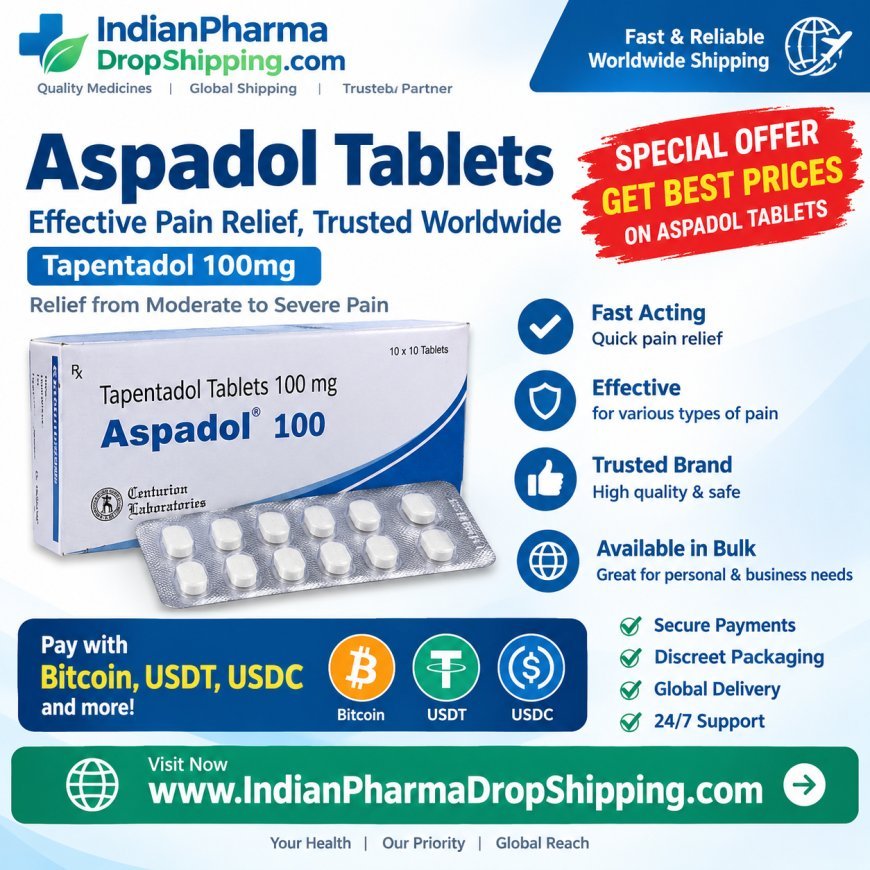
Pain can affect movement, sleep, work and everyday activities. An ankle injury, surgery, back problem or nerve condition may sometimes cause severe discomfort that requires medical attention. Aspadol is a brand name associated with tapentadol, an opioid medicine used in selected pain-management situations. It works through the central nervous system rather than simply treating an injured area. This guide explains how tapentadol works, when it may be prescribed, why Aspadol 100mg requires careful supervision, and what patients should know about safer pain management.
What Is Aspadol?
Aspadol is a brand name associated with tapentadol, a prescription opioid analgesic. It is intended for certain types of moderate-to-severe or severe pain, depending on the product, formulation and local approval. Tapentadol is not an ordinary over-the-counter painkiller.
The active ingredient, tapentadol, affects the way pain signals are processed in the nervous system. It may be considered when other suitable pain treatments have not provided enough relief, cannot be used or are not appropriate for a particular patient.
Aspadol tablets may be marketed in different strengths in some countries. However, a brand name or strength displayed online does not establish that a product is approved or legally available in a particular market. Patients should verify the exact medicine with a qualified prescriber or pharmacist.
It is also important to distinguish immediate-release and extended-release formulations. They are not interchangeable. The formulation determines how the medicine is released and how it is intended to be used.
How Does Tapentadol Work?
Tapentadol has two main actions. First, it activates opioid receptors in the central nervous system. This reduces the transmission and perception of pain signals. Second, it inhibits the reuptake of noradrenaline, a chemical messenger involved in the body's pain-control pathways.
These combined actions can help reduce certain types of severe pain. However, the medicine does not repair damaged muscles, heal ligaments, remove inflammation or correct a spinal problem.
For example, a patient recovering from a major operation may experience significant pain even after the surgical procedure has been completed. A clinician may consider an opioid as part of a broader pain-management plan if other treatments are insufficient.
Similarly, some patients with complex pain conditions may require specialist assessment. The treatment decision depends on the cause of pain, medical history, previous treatment response and individual risks.
When May Aspadol Be Prescribed?
Tapentadol may be prescribed when pain is severe enough to require an opioid and other appropriate treatment options are inadequate. The decision should be made by a qualified healthcare professional.
The medicine may be considered in selected cases of acute pain, including pain following certain surgical procedures or serious injuries. Some tapentadol formulations may also be used in specific chronic pain settings, depending on their approved indications and local prescribing guidance.
However, it should not be assumed that every painful condition requires an opioid. A minor sprain, ordinary muscle soreness or uncomplicated joint discomfort is generally managed with other approaches.
Before treatment is considered, the clinician should assess the cause of pain and whether safer alternatives can provide adequate relief.
Aspadol 100mg: Why the Strength Matters
The phrase Aspadol 100mg is commonly used in online searches. However, a 100mg strength should never be treated as a standard starting dose or a suitable choice for every patient.
Tapentadol dosing depends on the formulation, the patient's previous opioid exposure, the severity of pain, other medicines and individual health factors. Immediate-release and extended-release tablets have different instructions.
A prescription should specify the exact product and directions. Patients should not increase the amount, take extra tablets or change the timing to obtain faster relief.
Some online listings also use terms such as Tapentadol 100mg tablet or Tapentadol 100mg. These search descriptions do not replace the product information supplied with an authorised medicine.
If pain remains uncontrolled, the prescriber should review the treatment plan. Taking more medicine without advice can increase the risk of serious harm.
Aspadol for Ankle Pain: Is It Appropriate?
Ankle pain can develop after a sprain, ligament injury, fracture, tendon problem or other condition. The correct treatment depends on the type and severity of the injury.
A mild ankle sprain is usually managed without opioid medication. Rest from painful activity, suitable support, elevation and a clinician-approved pain-relief approach may be recommended. Rehabilitation exercises can later help restore strength, balance and movement.
More serious injuries may require imaging, immobilisation or specialist treatment. Severe pain after a fracture or major injury should be assessed rather than masked with pain medicine.
Aspadol for ankle pain is not a routine first-line treatment. Tapentadol may only be considered in selected severe cases where a clinician determines that an opioid is necessary and suitable.
Searches such as Tapentadol for ankle pain, ankle pain medication, ankle sprain pain relief and best painkiller for ankle injury should therefore lead to an assessment of the injury, not an automatic choice of a strong opioid.
Recognising a Serious Ankle Injury
Medical assessment is important when:
-
The ankle looks deformed or cannot support weight.
-
Pain is severe or rapidly increasing.
-
Significant swelling or bruising develops.
-
The foot becomes numb, cold or unusually pale.
-
An open wound or suspected fracture is present.
-
Symptoms do not improve as expected.
Sudden calf swelling, warmth or pain also requires prompt medical assessment, particularly after surgery or prolonged immobility.
Aspadol and Calf Pain
Calf pain can have several causes. Muscle strain, overuse, tendon injury and nerve irritation are possible explanations. However, calf discomfort may also be associated with a blood clot or circulation problem.
A medicine should not be selected until the cause has been considered. In particular, new swelling in one calf, redness, warmth or tenderness should be assessed promptly. Chest pain or sudden breathing difficulty requires emergency medical care.
The phrase Aspadol 100mg Tablet for the treatment of calf pain may appear in search results, but it should not be interpreted as a general treatment recommendation. Tapentadol does not treat the underlying cause of a muscle injury or a blood clot.
Aspadol for Back Pain
Back pain may be caused by muscle strain, disc problems, arthritis, nerve irritation or other medical conditions. Most episodes do not require opioid medication.
Treatment may include appropriate movement, physiotherapy, activity adjustments and non-opioid medicines when suitable. Persistent or severe symptoms may require further investigation.
Tapentadol may be considered in selected severe pain situations, depending on the diagnosis and local prescribing guidance. However, it should not replace an assessment of the underlying spinal condition.
The phrase Aspadol for back pain is therefore too broad to establish whether the medicine is appropriate. Patients with back pain accompanied by new leg weakness, numbness around the groin or difficulty controlling bladder or bowel function need urgent medical assessment.
Aspadol for Knee Pain and Joint Pain
Knee pain can result from osteoarthritis, ligament damage, cartilage injury, inflammation or surgery. Treatment depends on the cause.
For many patients, physiotherapy, strengthening exercises, weight management and appropriate non-opioid treatment may provide useful relief. Following surgery, a personalised rehabilitation plan is also important.
Aspadol for joint pain should not be viewed as a general solution. Tapentadol may be considered only in selected cases of severe pain when a clinician believes that an opioid is necessary.
The same principle applies to wrist pain, elbow pain and other musculoskeletal conditions. Pain relief should support recovery, not replace diagnosis and treatment.
Aspadol for Surgery Pain
Pain after surgery can vary according to the procedure, the extent of tissue injury and the patient's health. A surgeon or anaesthesia team normally develops a pain-management plan based on these factors.
A combination of treatment methods may be used. These can include local or regional anaesthesia, non-opioid medicines and other supportive measures. An opioid may be considered when pain is severe and alternative options are insufficient.
Aspadol 100mg for surgery pain should only be used if the treating clinician has specifically prescribed that product and formulation. Patients should not use leftover tablets from an earlier procedure.
Increasing pain, fever, wound redness, unusual discharge or sudden swelling after surgery should be reported to the treating team. These symptoms may indicate a complication that requires attention.
Aspadol and Neuropathic Pain
Neuropathic pain develops when nerves are damaged or affected by disease. It may feel like burning, tingling, electric shocks, pins and needles or shooting pain.
Possible causes include diabetes-related nerve damage, nerve compression and certain injuries. Treatment depends on the diagnosis.
Tapentadol has actions that affect both opioid receptors and noradrenaline pathways. Some tapentadol formulations have approved uses for specific severe pain conditions, including certain neuropathic pain settings in some jurisdictions. Approval varies by country and product.
However, it is not automatically the best treatment for nerve pain. Other medicines and non-drug approaches may be considered, depending on the cause and patient needs.
A patient experiencing persistent burning, numbness or weakness should be assessed rather than relying on a painkiller alone.
Aspadol for Muscle Pain and Ligament Injuries
Muscle pain may follow exercise, overuse, trauma or an underlying medical condition. Ligament injuries can range from mild stretching to complete tears.
For ordinary muscle soreness, rest from aggravating activity, gradual return to movement and suitable supportive care may be sufficient. A significant ligament injury may require imaging, bracing or rehabilitation.
Tapentadol is not a routine treatment for minor muscle pain or uncomplicated ligament injuries. Even when severe pain is present, the underlying injury must be evaluated.
A strong pain medicine may reduce the sensation of pain without restoring tissue strength. Returning to sport or heavy activity too soon can therefore worsen an injury.
How to Take Aspadol Safely
Aspadol and other tapentadol products must be taken exactly as prescribed. The correct instructions depend on the formulation and individual prescription.
Patients should read the medicine information and ask a pharmacist if any direction is unclear. Extended-release tablets must not be crushed or chewed unless the product information specifically allows an alternative method. Altering a modified-release tablet can release too much medicine at once.
Important safety practices include:
-
Use only the medicine prescribed to you.
-
Follow the exact directions on the prescription label.
-
Do not take extra doses if pain continues.
-
Do not share tablets with another person.
-
Avoid alcohol during treatment.
-
Do not drive if you feel sleepy, dizzy or impaired.
-
Keep the medicine securely stored away from children and other people.
-
Ask the prescriber before stopping regular treatment, as withdrawal symptoms may occur.
Patients should also disclose all prescription medicines, non-prescription products and supplements they use.
Side Effects and Important Risks
Tapentadol can cause side effects. Commonly reported effects include nausea, constipation, vomiting, dizziness, headache, tiredness and drowsiness.
More serious risks must also be understood. These include opioid dependence, misuse, overdose and respiratory depression. Respiratory depression means that breathing becomes dangerously slow or ineffective.
The risk may be higher when treatment is started, after a dose increase, or when tapentadol is combined with other medicines that depress the central nervous system.
Alcohol, benzodiazepines, sedatives and other opioids can increase the risk of profound sedation and breathing problems. Some antidepressants and other medicines may also create important interactions.
Seek emergency help if someone taking tapentadol becomes unresponsive, cannot be woken, or has slow, shallow or difficult breathing. Do not wait for symptoms to improve.
Who Should Take Extra Care?
Tapentadol may be unsuitable or require special assessment in people with certain medical conditions. These include significant breathing problems, severe asthma in an unmonitored setting, some gastrointestinal conditions and a history of serious medicine reactions.
Older adults and people with liver or kidney problems may require additional consideration. Pregnancy and breastfeeding also require professional advice.
Patients with a history of substance-use problems should discuss their circumstances openly with their healthcare professional. This allows risks and suitable alternatives to be considered.
A complete medication review is important before treatment begins. It can help identify interactions and reduce preventable complications.
Safe Access to Prescription Pain Medicines in the USA
In the United States, tapentadol is a Schedule II controlled substance. It is subject to strict prescribing and dispensing controls.
People searching for Aspadol pain tablets USA, Aspadol Tablet USA or Tapentadol online should understand that a website advertisement does not establish that a product is approved or legally supplied.
Prescription medicines should be obtained through authorised channels under the applicable federal and state requirements. Patients should verify the pharmacy and discuss treatment with a licensed healthcare professional.
Search phrases such as buy painkillers online USA or back pain medicine online USA should never be used as a substitute for checking pharmacy credentials and prescription requirements.
Prescription Rules in the UK
In the United Kingdom, tapentadol is a controlled prescription medicine. Patients should follow the instructions of their prescriber and obtain treatment through an appropriately regulated pharmacy.
Search terms such as Aspadol Tablet UK, Aspadol for chronic back pain and back pain medicine online UK do not confirm that a particular brand is authorised or available.
The brand name Aspadol should not be assumed to have the same regulatory status in every country. Patients should ask a pharmacist to verify the active ingredient, product authorisation and supply route.
Tapentadol Safety in Australia
In Australia, tapentadol is classified as a Schedule 8 controlled medicine. This category includes medicines subject to strict controls because of their potential for dependence and misuse.
Patients should follow the prescription and local dispensing requirements. A pharmacist can explain the medicine's approved product information, safe storage and disposal.
Searches for Aspadol Tablet Australia or Aspadol pain medicine should be checked against official Australian medicine information. A brand advertised online may not be registered or approved for supply in Australia.
Unused opioid medicines should be returned to a pharmacy for safe disposal rather than kept for possible future use.
European Access and Local Considerations
Medicine authorisation and controlled-drug requirements vary across Europe. Patients in cities such as London, Paris, Berlin, Madrid, Rome, Amsterdam, Brussels, Dublin and Zurich should follow the rules that apply in their country.
A product advertised as Aspadol Tablet Europe may not be authorised in every European market. The active ingredient, formulation and local product registration should be verified.
Patients should use legitimate healthcare services and authorised pharmacies. Cross-border online claims should be treated carefully, especially when prescription requirements are unclear.
Why Online Bulk and Wholesale Claims Need Caution
Search results may include phrases such as Aspadol bulk, Aspadol wholesale, Aspadol wholesale supplier, generic medicines suppliers, bulk generic medicines and wholesale pharmaceutical suppliers.
However, tapentadol is a controlled opioid, not an ordinary wholesale consumer product. Its supply is subject to strict legal and professional controls. Bulk ordering, resale or informal distribution can create serious legal and patient-safety risks.
The same caution applies to advertisements for Aspadol with BTC, Aspadol cryptocurrency payment or Aspadol USDT payment. Bitcoin, USDT and other payment methods do not establish that a medicine is genuine, approved or lawfully supplied.
Patients should not use online discounts, bulk offers or payment promotions to bypass medical assessment. Healthcare providers and authorised distributors must follow the relevant controlled-medicine requirements in each market.
Alternatives and a Complete Pain-Management Plan
The most suitable pain treatment depends on the cause, severity and duration of symptoms. Non-opioid medicines may be appropriate for many injuries and musculoskeletal conditions, depending on a person's medical history.
Physiotherapy can help restore movement, strength and function. Supportive devices may be recommended for selected ankle, knee or wrist injuries. In some cases, injections, surgery or specialist pain services may be considered.
For chronic pain, a broader plan may include graded exercise, sleep support, psychological treatment and management of underlying conditions.
The goal should be improved function and quality of life, not simply temporary suppression of pain.
Frequently Asked Questions
Is Aspadol 100mg suitable for every type of pain?
No. It is a prescription opioid and is not appropriate for every painful condition. A healthcare professional must assess the diagnosis, severity of pain and individual risks.
Can Aspadol be used for an ankle sprain?
It is not a routine first-choice treatment for an ordinary ankle sprain. Most sprains are managed with injury assessment, appropriate support, activity modification and rehabilitation. Severe injuries require medical evaluation.
Does tapentadol treat neuropathic pain?
Tapentadol may have a role in selected severe pain conditions involving nerve pain, depending on the formulation and local approval. It is not suitable for every neuropathic condition.
Can Aspadol be used for back pain?
It may be considered in selected severe cases when a clinician determines that an opioid is necessary. Most back pain does not require opioid treatment. The underlying cause should be assessed.
Is Aspadol the same as tapentadol?
Aspadol is a brand name associated with tapentadol. Patients should verify the active ingredient and exact formulation on the packaging and through a pharmacist.
Can I take Aspadol with alcohol?
No. Alcohol can increase sedation and the risk of dangerous breathing problems when combined with tapentadol. Patients should avoid alcohol during treatment.
Can I stop tapentadol suddenly?
People who have been using tapentadol regularly should not stop it abruptly without medical advice. A prescriber may recommend a gradual reduction to reduce withdrawal symptoms.
Is Aspadol available in every country?
No. Brand availability and product approval vary by country. Patients should check local regulatory information and consult an authorised pharmacist.
Conclusion
Pain management requires more than choosing a strong tablet. The cause of pain, the severity of the condition and the patient's medical history must all be considered.
Aspadol is associated with tapentadol, an opioid medicine that changes how pain signals are processed in the central nervous system. It may be prescribed for selected cases of severe pain when other suitable treatments are inadequate. However, it is not a routine solution for ankle sprains, minor muscle injuries or everyday joint discomfort.
Aspadol 100mg and other tapentadol formulations must be used only under professional guidance. The risks of dependence, overdose and dangerous breathing problems should never be overlooked.
For patients in the USA, UK, Australia and Europe, the safest approach is to obtain an accurate diagnosis, follow local prescription rules and use authorised pharmacies. When pain persists, the underlying condition should be reviewed. A balanced treatment plan can then focus on both relief and recovery.
What's Your Reaction?
 Like
0
 Dislike
0
 Love
0
 Funny
0
 Angry
0
 Sad
0
 Wow
0