


















Best LASIK Hospital in Delhi: A Complete Guide to Laser Vision Correction
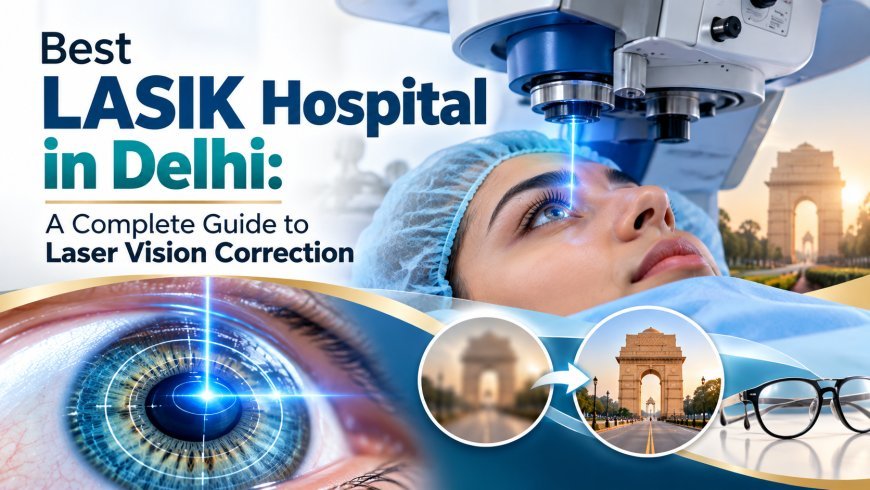
For many people, glasses and contact lenses are an important part of everyday life. However, some individuals explore laser vision correction because they want to reduce their dependence on glasses or contact lenses. LASIK is one of the commonly discussed refractive procedures, but it is not suitable for everyone.
If you are searching for the Best LASIK Hospital in Delhi, it is important to look beyond promotional claims and understand factors such as eye health, corneal measurements, available diagnostic facilities, treatment options, doctor expertise, and follow-up care. Bajaj Eye Care Centre provides comprehensive eye care and vision correction consultations in Delhi.
What Is LASIK?
LASIK, or Laser-Assisted In Situ Keratomileusis, is a refractive eye procedure designed to change the shape of the cornea so that incoming light can be focused more appropriately on the retina.
The procedure involves creating a corneal flap, reshaping the underlying corneal tissue using a laser, and repositioning the flap. The exact approach and suitability depend on the patient's eye measurements and clinical condition.
LASIK is generally considered for people with certain refractive errors, including myopia, hyperopia, and astigmatism. However, the appropriate procedure can vary from person to person.
Who May Be Considered for LASIK?
Not everyone who wears glasses is automatically suitable for LASIK. A detailed evaluation is required before any refractive procedure.
Factors that may be considered include:
- Age and visual stability
- Type and degree of refractive error
- Corneal thickness
- Corneal shape
- Overall eye health
- Tear-film and dry-eye status
- Previous eye procedures
- Medical history
- Individual visual requirements
A comprehensive assessment helps the eye specialist determine whether LASIK may be appropriate or whether another vision-correction option should be considered.
Why Is a Pre-LASIK Eye Examination Important?
A pre-LASIK evaluation is an important part of planning refractive surgery. The purpose is not simply to check the spectacle prescription but to assess the overall health and characteristics of the eyes.
Depending on the individual case, the evaluation may include:
- Refraction testing
- Corneal topography
- Corneal tomography
- Pachymetry
- Tear-film assessment
- Slit-lamp examination
- Eye-pressure measurement
- Retinal examination
- Other tests based on clinical findings
These investigations can provide information about corneal shape, thickness, eye-surface health, and other factors relevant to treatment planning.
LASIK and Other Vision Correction Procedures
LASIK is not the only refractive procedure available. Depending on the patient's eye condition and clinical measurements, an eye specialist may discuss alternatives such as SMILE, PRK, or phakic intraocular lenses.
LASIK
LASIK reshapes the cornea using laser technology after creating a corneal flap. It may be considered for selected patients with suitable corneal characteristics and refractive errors.
SMILE
SMILE, or Small Incision Lenticule Extraction, uses a small corneal incision to remove a precisely created lenticule from within the cornea. Suitability depends on individual eye measurements and the type of refractive error.
PRK
PRK is another laser vision correction procedure. Unlike LASIK, it does not involve creating a traditional corneal flap. It may be considered in certain situations where another refractive procedure may not be appropriate.
ICL
An Implantable Collamer Lens may be an option for selected patients, particularly in situations where laser corneal procedures are not suitable. It involves placing a lens inside the eye rather than reshaping the cornea.
The most appropriate option can only be determined after a detailed eye examination.
What Should You Consider When Choosing a LASIK Hospital in Delhi?
People searching for the Best LASIK Hospital in Delhi should consider several practical and clinical factors rather than relying only on advertising language.
1. Detailed Diagnostic Evaluation
The centre should have appropriate diagnostic capabilities for assessing corneal shape, thickness, refractive error, and overall eye health.
2. Experienced Eye Care Professionals
Consider the qualifications, training, and relevant experience of the ophthalmologists performing or supervising refractive procedures.
3. Treatment Options
A centre offering multiple refractive options may be able to discuss alternatives when LASIK is not appropriate.
4. Individualized Treatment Planning
Vision correction should be planned according to the patient's eye measurements and clinical requirements rather than using the same approach for everyone.
5. Clear Communication
Patients should receive understandable information about the procedure, suitability, potential risks, recovery, and follow-up requirements.
6. Follow-Up Care
Post-procedure monitoring is an important part of refractive eye care. Ask about the follow-up schedule and what support is available if symptoms or concerns develop.
What Are the Potential Benefits of LASIK?
For appropriately selected patients, LASIK may reduce dependence on spectacles or contact lenses. The extent of vision correction and individual experience can vary.
Patients should discuss their expectations with their ophthalmologist before deciding on treatment. Laser vision correction should not be considered a guaranteed way to achieve a particular visual outcome.
Understanding realistic expectations is an important part of informed decision-making.
What Are the Possible Risks and Side Effects?
Like other medical procedures, LASIK has potential risks and side effects. Some patients may experience temporary dryness, fluctuations in vision, glare, halos, or other visual symptoms after treatment.
The likelihood and severity of these effects can vary between individuals.
Before undergoing surgery, patients should discuss potential complications, limitations, recovery, and alternatives with their eye specialist. A thorough consultation helps patients make an informed decision based on their individual circumstances.
LASIK Recovery and Follow-Up
Recovery can vary depending on the individual and the specific procedure. Patients are generally advised to follow their ophthalmologist's instructions regarding eye drops, eye protection, hygiene, and activity restrictions.
Follow-up examinations allow the eye care team to monitor healing and address any concerns.
Patients should avoid making assumptions about recovery time based on another person's experience because healing can differ from one individual to another.
Why Choose Bajaj Eye Care Centre?
Bajaj Eye Care Centre provides eye care and refractive surgery consultations in Delhi. Patients considering LASIK can undergo an appropriate evaluation to understand their refractive error, corneal characteristics, overall eye health, and available vision correction options.
The centre's approach focuses on evaluating individual suitability and discussing appropriate treatment choices based on clinical findings.
If LASIK is not appropriate for a particular patient, other refractive options may be discussed depending on the examination results.
Frequently Asked Questions
Is LASIK suitable for everyone?
No. LASIK suitability depends on several factors, including refractive error, corneal thickness and shape, eye health, tear-film condition, age, and other clinical considerations.
Can LASIK completely remove glasses?
LASIK can reduce dependence on glasses for suitable patients, but individual results vary. No specific visual outcome should be considered guaranteed.
Is LASIK better than SMILE?
Neither procedure is universally better for every patient. The appropriate option depends on individual eye measurements, refractive error, lifestyle, and clinical findings.
How do I know whether I am suitable for LASIK?
A comprehensive refractive and eye-health examination is required. Your ophthalmologist can assess your eyes and discuss whether LASIK or another option may be appropriate.
What should I ask before LASIK?
Ask about your suitability, available procedures, potential risks, expected recovery, alternatives, follow-up schedule, and any factors that may affect your individual treatment.
Conclusion
LASIK can be an option for selected patients who want to reduce their dependence on glasses or contact lenses. However, suitability cannot be determined from spectacle power alone. Corneal shape, thickness, eye health, tear-film condition, refractive stability, and other factors should be evaluated before treatment.
If you are searching for the Best LASIK Hospital in Delhi, focus on comprehensive evaluation, qualified eye care professionals, appropriate diagnostic facilities, transparent communication, treatment options, and follow-up care.
Bajaj Eye Care Centre provides consultations for LASIK and other vision correction options in Delhi. A detailed eye examination can help you understand your available choices and determine which approach, if any, may be appropriate for your individual eye health and vision requirements.
What's Your Reaction?
 Like
0
Like
0
 Dislike
0
Dislike
0
 Love
0
Love
0
 Funny
0
Funny
0
 Angry
0
Angry
0
 Sad
0
Sad
0
 Wow
0
Wow
0